
Traveling with your dog can turn an ordinary trip into a memorable adventure, but it requires more planning than traveling alone. Transportation rules, accommodation policies, food, identification, health requirements, weather, exercise, and your dog’s temperament all need to be considered before you leave.
Whether you are taking a short road trip, flying to another state, staying at a pet-friendly hotel, or traveling internationally, preparation can make the experience safer and less stressful for both you and your dog.
This complete guide to traveling with your dog explains how to prepare before departure, what to pack, how to travel by car or plane, how to manage meals and bathroom breaks, and what to consider when crossing state or international borders.
Why Planning Ahead Matters When Traveling With a Dog
A dog cannot tell you when it is uncomfortable, anxious, thirsty, overheated, or overwhelmed by a new environment. Planning ahead helps reduce situations in which you have to make important decisions at the last minute.
Your dog’s age, health, breed, temperament, and previous travel experience can all affect the trip. A dog that happily rides in a car may react very differently to an airport, airplane, crowded hotel lobby, or unfamiliar city.
Start planning early enough to research transportation rules, accommodation policies, veterinary requirements, and destination-specific regulations.
Before the Trip: Create a Dog Travel Plan
Begin by writing down the basic details of your trip:
- Destination and travel dates
- Transportation method
- Expected travel time
- Overnight stops
- Pet-friendly accommodation
- Veterinary contact information
- Emergency veterinary options at the destination
- Food and medication requirements
- Identification and travel documents
This simple plan makes it easier to identify potential problems before departure.
Schedule a Veterinary Checkup
A veterinary visit can be particularly useful before a long trip, especially if your dog has a medical condition, takes medication, is elderly, or has never traveled before.
Ask your veterinarian whether your dog is physically suited to the planned journey and whether vaccinations, preventive treatments, medications, or other preparations need to be updated.
Do not assume that the same documentation works everywhere. USDA APHIS states that destination countries establish their own pet-entry requirements, and some may require specific vaccinations, tests, treatments, microchips, or health certificates.
Check Identification Before You Leave
Proper identification is one of the most important parts of responsible pet travel.
Your dog should have reliable identification and current owner contact information. Check that the information connected with your dog’s microchip, if applicable, is accurate before leaving home.
A collar or harness with identification information can provide an additional layer of protection.
Carry a recent photograph of your dog on your phone. If your dog becomes separated from you, an accurate photograph can make it easier to create an effective lost-pet notice.
Prepare Your Dog for Travel
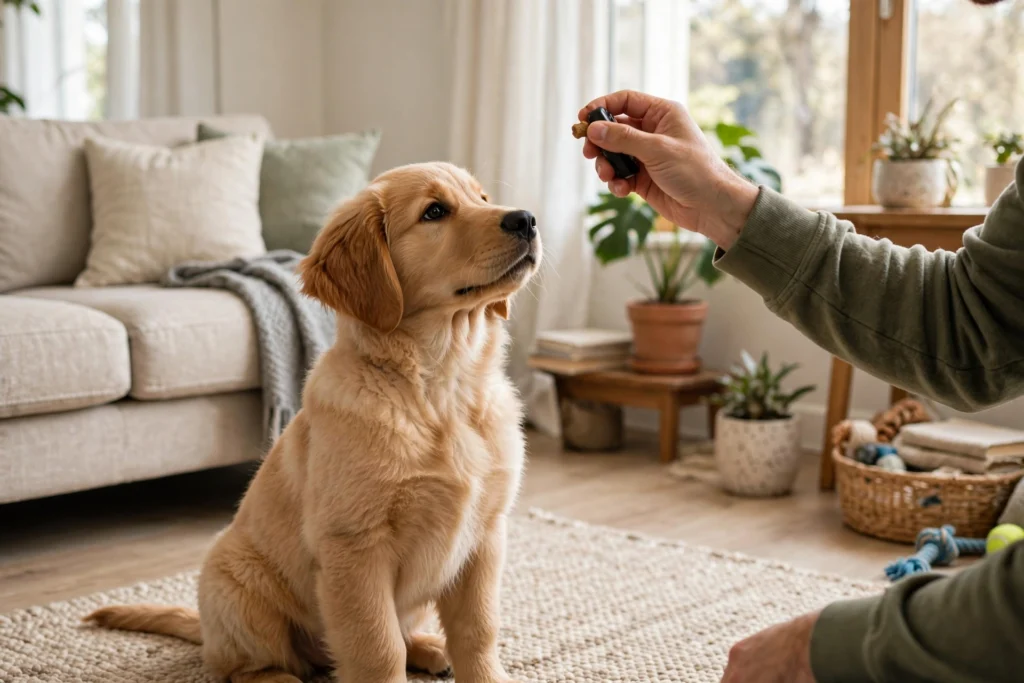
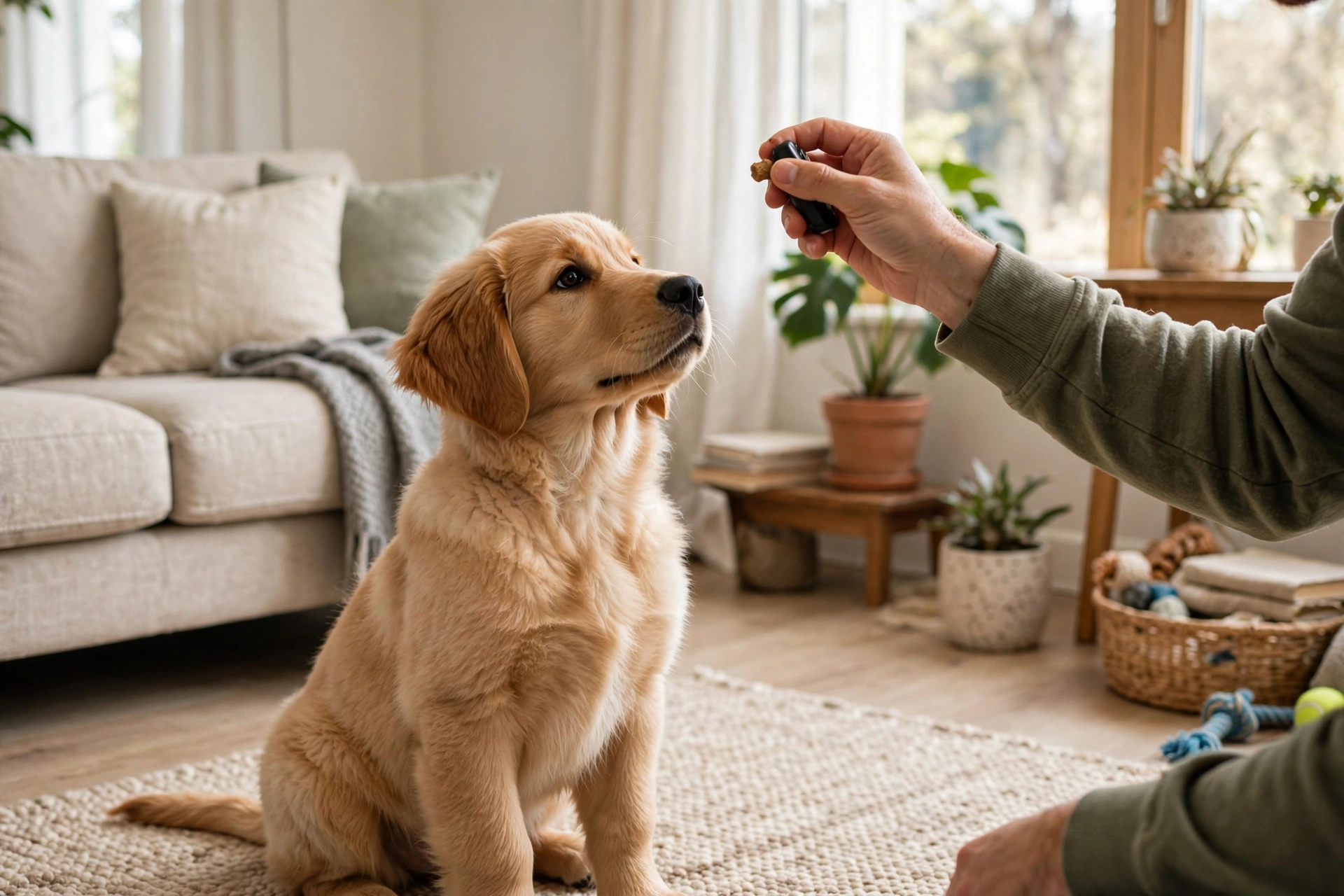
If your dog is not accustomed to traveling, do not make the first experience a long journey.
Start with short, controlled trips and gradually increase the duration. Reward calm behavior and observe how your dog responds.
For dogs traveling in a carrier, introduce the carrier well before the trip. Allow your dog to explore it at home and create positive associations rather than forcing the dog inside only when it is time to leave.
Dogs that become anxious in unfamiliar situations may benefit from additional behavioral preparation. Speak with your veterinarian if anxiety is severe rather than giving medication without professional guidance.
What to Pack for Your Dog
A dedicated dog travel bag can make the journey much easier to manage.
Essential Dog Travel Checklist
- Regular dog food
- Food and water bowls
- Fresh drinking water
- Leash and collar or harness
- Identification tags
- Waste bags
- Medication, if prescribed
- Health and vaccination records
- Microchip information
- Travel carrier or secure restraint
- Comfortable bedding or familiar blanket
- Favorite toy
- Treats
- Basic grooming supplies
- Pet-safe cleaning supplies
- Towels
- First-aid supplies appropriate for pets
Bring more food than you expect to need if practical, particularly when traveling to remote destinations where your dog’s usual food may not be available.
For more information about choosing and handling your dog’s diet while traveling, you can also read our guide to ingredients you should avoid in pet food.
Traveling With Your Dog by Car
For many dogs, traveling by car is easier than flying because the environment is more familiar and you can control the pace of the journey.
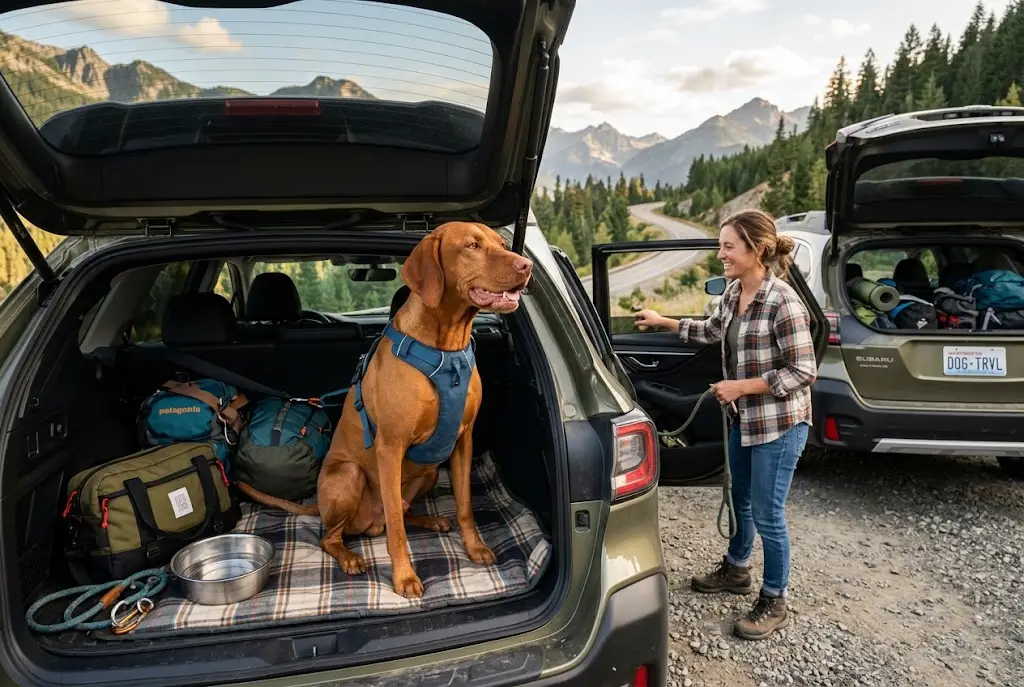
However, your dog should not be allowed to move freely around the vehicle. A loose dog can become a distraction or be injured during sudden braking or a collision.
Use a properly designed travel crate, carrier, harness restraint, or other appropriate system that keeps your dog secure without restricting normal breathing.
Take Regular Breaks
Long car journeys require regular stops. Give your dog opportunities to drink, stretch, walk, and relieve itself in a safe area.
Do not wait until your dog appears desperate before stopping. Planned breaks can make the trip more comfortable and predictable.
Never Leave Your Dog Alone in a Hot Car
Temperatures inside a parked vehicle can become dangerous quickly, even when the outside weather does not initially feel extreme.
The safest approach is simple: do not leave your dog unattended in a parked vehicle.
How to Make Long Car Trips Easier
Try to maintain as much of your dog’s normal routine as possible.
- Feed meals at approximately familiar times.
- Take bathroom breaks regularly.
- Use familiar bedding or a blanket.
- Keep the vehicle comfortably ventilated.
- Avoid sudden changes to food during the journey.
- Give your dog appropriate exercise before longer travel periods.
- Keep important supplies within easy reach.
If your dog experiences motion sickness, speak with a veterinarian before the journey. Do not give human medications unless your veterinarian specifically recommends them.
Traveling With Your Dog by Airplane
Air travel requires more preparation than a typical car trip. Airline rules can vary, and your dog’s health, size, breed, carrier, destination, and travel route can all affect the available options.
Check the airline’s current pet policy directly before booking and again shortly before departure.
USDA APHIS notes that airlines can have their own requirements in addition to government requirements. Owners should check with the airline to determine what documentation and conditions apply to their specific journey.
Choose the Safest Available Travel Arrangement
When possible and appropriate, consider whether your dog can safely travel in the cabin with you. Airline policies differ, so availability should never be assumed.
If a dog must travel in a different part of an aircraft, carefully review the airline’s current requirements and the suitability of the arrangement for your individual dog.
Consider Breed and Health Factors
Some dogs may be at greater risk during air travel, particularly dogs with short or flattened facial structures. USDA guidance specifically warns that brachycephalic dogs can have increased risks involving breathing difficulties and heat stress during air travel.
Discuss air travel with your veterinarian if your dog has breathing problems, heart or respiratory disease, significant anxiety, advanced age, or another condition that could make travel difficult.
Use the Correct Travel Carrier
If your dog will travel in a carrier, the carrier should be appropriate for the method of transportation and your dog’s size.
Your dog should have enough room to stand, turn around, and lie down comfortably according to the applicable carrier requirements.
Introduce the carrier gradually at home instead of waiting until the airport.
For airline travel, always follow the airline’s current carrier specifications because dimensions and acceptable carrier types can differ.
International Travel With Your Dog
International pet travel can involve considerably more paperwork than domestic travel.
The destination country determines its entry requirements. USDA APHIS explains that there is no single international pet passport or universal health certificate that works for every country. Requirements can include vaccinations, testing, treatments, microchips, and veterinary health certificates.
Some destinations also require official endorsement of a health certificate. If USDA endorsement is required for a dog leaving the United States, the health certificate must generally be completed by a USDA-accredited veterinarian before APHIS endorsement.
Start International Preparation Early
Do not leave international pet paperwork until the week before departure.
USDA APHIS says the process can take from a few weeks to several months depending on the destination’s requirements.
Start by checking the official requirements for every country involved in your journey, including countries where you may have to clear customs during transit.
Traveling With Your Dog Between U.S. States
Domestic travel within the United States can also involve health requirements.
USDA APHIS explains that interstate pet-movement requirements are established by the destination state or territory rather than by APHIS. Depending on the destination, requirements can involve health certificates, vaccinations, testing, or treatments.
Check the requirements for your destination state before traveling, particularly when crossing several state lines during a road trip.
Keep Your Dog’s Food Routine Consistent
Travel is not the ideal time to experiment with a completely new diet unless there is a specific reason to do so.
Bring your dog’s regular food when practical and maintain normal meal portions and schedules.
Store food in a clean, sealed container and protect it from heat and moisture.
If you are staying somewhere for an extended period, make sure you know where you can obtain the correct food before your supply becomes low.
Water Is Especially Important During Travel
Always make clean drinking water available during travel.
Dogs may drink differently when they are excited, stressed, exercising, or exposed to warmer conditions. Offer water regularly rather than assuming that your dog will drink only during normal meal times.
When traveling by car, keep water and a portable bowl somewhere that is easy to reach during planned stops.
Managing Bathroom Breaks
A dog that follows a regular bathroom routine at home may need adjustments while traveling.
Give your dog an opportunity to relieve itself before leaving, during longer stops, and after arriving at a destination.
Always clean up after your dog and use designated pet-relief areas where available.
Choosing a Dog-Friendly Hotel
Never assume that a hotel is pet-friendly simply because a booking website shows a pet filter.
Confirm the hotel’s current pet policy before booking. Ask about:
- Pet fees or deposits
- Breed or size restrictions
- Number of pets permitted
- Whether dogs can be left alone in the room
- Designated pet areas
- Elevator or room restrictions
- Cleaning policies
- Nearby walking areas
Policies can change, so confirmation directly with the property is worthwhile.
How to Help Your Dog Settle Into a Hotel
A hotel room can be strange and stimulating for a dog. New sounds, unfamiliar smells, elevators, doors, hallway traffic, and other guests can create stress.
Bring a familiar blanket, bed, or toy to make the environment feel more recognizable.
Give your dog time to explore the room calmly. Avoid immediately leaving the dog alone for several hours in an unfamiliar environment.
Keep the first evening relatively quiet if possible.
Respect Other Travelers
Responsible pet travel also means respecting people who are sharing the same transportation, hotel, campground, or public space.
- Keep your dog under control in public areas.
- Clean up immediately after your dog.
- Prevent unnecessary barking.
- Respect other people’s personal space.
- Follow leash rules.
- Do not allow your dog to enter restricted areas.
- Follow accommodation and transportation policies.
A well-managed dog makes pet-friendly travel easier for everyone.
Traveling With a Nervous Dog
Some dogs become anxious during travel because of unfamiliar environments, vehicle movement, crowds, noise, or separation from their normal routine.
Watch for signs such as excessive panting, trembling, pacing, whining, hiding, drooling, repeated yawning, or attempts to escape.
Keep the environment as predictable as possible and avoid overwhelming your dog with unnecessary stimulation.
If your dog has significant travel anxiety, speak with your veterinarian well before the trip. A veterinarian can help determine whether behavioral preparation or another intervention is appropriate.
Traveling With a High-Energy Dog
High-energy dogs may struggle if a long journey prevents them from getting their usual physical and mental activity.
Plan opportunities for safe exercise before and after major travel periods.
Training games, scent activities, puzzle toys, and short obedience sessions can also provide mental stimulation when physical exercise is temporarily limited.
Our article about why some dogs rank among the smartest breeds explains why certain intelligent working dogs often need meaningful mental challenges in addition to ordinary exercise.
Traveling With a Herding Breed
Herding breeds can have strong instincts to monitor movement and control their surroundings.
Busy airports, crowded sidewalks, children running, bicycles, and unfamiliar animals may therefore create additional challenges for some dogs.
Good leash management and advance training can help prevent unwanted chasing or herding behavior.
If you own a sheepdog or another herding breed, understanding its working instincts can make travel easier. Our guide to the changing role of sheepdogs explores how traditional working behaviors continue to influence modern companion dogs.
Traveling With a Hound
Hounds may require special consideration because many retain strong scenting or prey-drive instincts.
A dog that becomes fascinated by a scent can be difficult to redirect, particularly in an unfamiliar environment. Keep your hound securely restrained and be particularly careful around open doors, unfamiliar outdoor areas, and busy roads.
For more information about how hounds differ from other breed groups, read our guide to hounds versus other breeds.
What to Do if Your Dog Gets Lost During Travel
Getting lost in an unfamiliar location can be frightening, so act quickly.
- Keep your dog’s photograph ready on your phone.
- Contact local animal shelters and animal-control organizations.
- Notify nearby veterinary clinics.
- Use local lost-pet groups and community networks.
- Confirm that your dog’s microchip information is current.
- Search the immediate area carefully.
- Provide accurate identifying details and a reliable contact number.
Do not wait several days before reporting a missing dog.
Emergency Planning for Dog Travel
Before departure, identify veterinary clinics near your destination and overnight stops.
Keep a digital and physical copy of important health information when appropriate. Include your veterinarian’s contact details and information about medications or ongoing treatment.
If your dog becomes seriously ill or injured, seek veterinary attention rather than attempting to manage a serious condition yourself.
Should You Travel With Your Dog or Leave Them Home?
Traveling with your dog is not automatically the best option for every trip.
Consider your dog’s temperament, health, age, travel experience, and the length and nature of the journey.
A relaxed road trip with frequent breaks may be suitable for one dog, while a long flight, extreme weather, crowded destination, or complicated international journey may be unnecessarily stressful for another.
The decision should be based on what is safest and most comfortable for the individual dog rather than the owner’s desire to avoid traveling separately.
Dog Travel Checklist Before Departure
| Task | Before Leaving |
|---|---|
| Veterinary check | Confirm health and travel suitability |
| Identification | Check microchip and ID information |
| Vaccinations | Confirm current requirements for the destination |
| Documents | Prepare health records and required certificates |
| Transportation | Confirm carrier, restraint, and transportation rules |
| Accommodation | Confirm pet policy directly |
| Food | Pack enough familiar food for the trip |
| Medication | Pack prescribed medication and instructions |
| Emergency plan | Identify veterinary care near the destination |
| Comfort items | Pack familiar bedding and toys |
Final Thoughts
Traveling with your dog can be enjoyable when the trip is designed around your dog’s needs as well as your own. The most important steps are preparing early, checking current transportation and destination requirements, securing your dog appropriately, maintaining familiar routines, and planning for emergencies.
For domestic trips, check the requirements of your destination state or territory. For international journeys, begin much earlier because each country can establish its own entry requirements and documentation process. USDA APHIS recommends contacting a USDA-accredited veterinarian as soon as you decide to travel internationally with your pet.
Most importantly, consider whether the trip is genuinely suitable for your dog. With thoughtful preparation, appropriate equipment, regular breaks, and realistic expectations, many dogs can become confident and enjoyable travel companions.