

Bringing a kitten home is equal parts excitement and nervousness. Between the tiny paws and the wobbly first explorations, one question worries almost every new cat owner: how do I actually litter train a kitten without turning the house into a minefield? The good news is that kittens are among the easiest pets to house-train. Most arrive with strong instincts to dig and bury their waste — your job is to set up the environment so those instincts point in the right direction. This guide walks you through everything from choosing the right box to handling the inevitable early accident.
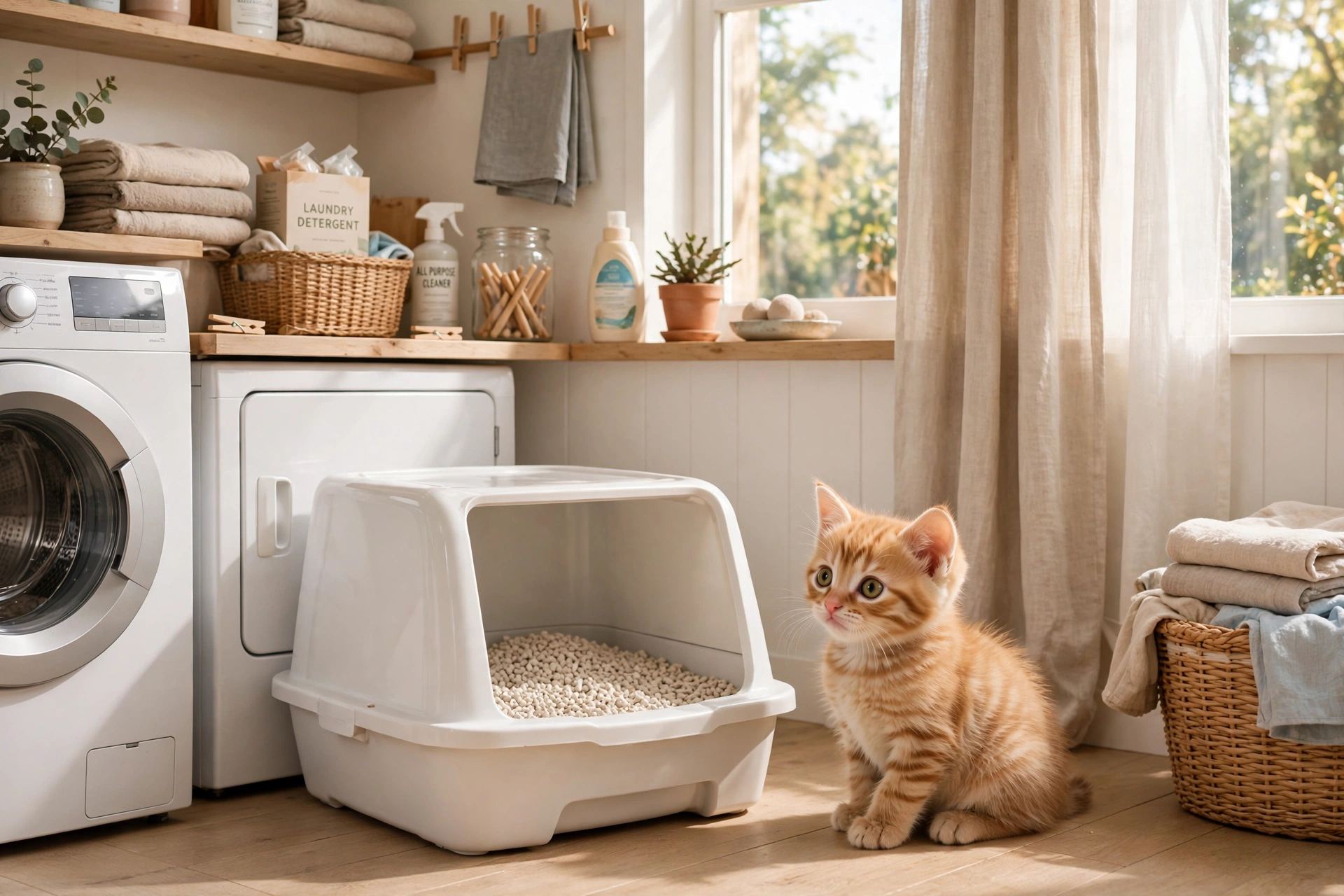
What You Need Before Your Kitten Arrives
Choosing the Right Litter Box
For a kitten under four months old, accessibility matters more than style. A standard adult box is often too tall for tiny legs, so start with a low-sided box or shallow pan. Open boxes are the best beginner choice: nothing intimidates a newcomer, and you can see at a glance when cleaning is needed. Covered boxes with flaps can wait until the kitten is bigger and confident.
The long-term rule is one box per cat, plus one extra. For a single kitten starting out, one box in its home-base room is enough — add more as its territory expands.
Choosing the Right Litter
Unscented, fine-grained clumping litter is the safest default: it mimics the soft soil cats naturally prefer, it is gentle on kitten paws, and clumping makes scooping quick. Avoid heavily scented litters — the fragrance can overwhelm a kitten’s sensitive nose and drive it away from the box.
For very young kittens under eight weeks who taste everything, use a non-clumping paper or pellet litter temporarily, since swallowed clumping litter can cause blockages. Transition to clumping litter by mixing the two types over a week. Fill the box with two to three inches of litter — deep enough to dig in, shallow enough for a small kitten to feel stable.
Where to Place the Litter Box
Placement is where most litter training problems are born. Cats want privacy, quiet, and an escape route — a box next to a noisy washing machine or two feet from the food bowl will get ignored no matter how well you set up the rest.
Choose a calm, low-traffic corner with at least two open sides so the kitten never feels trapped, and keep it away from food and water. In the first week, keep the box in the kitten’s “home base” room. As the kitten gains confidence and access to more rooms, add boxes so there is always one within easy reach — a kitten playing upstairs should not have to sprint down two flights to find one.
The Step-by-Step Litter Training Routine
Here is the simple daily routine that gets nearly every kitten trained within a week or two.
Step 1: Show the box on arrival
When you bring the kitten home, place it gently into the litter box before anything else — before the tour, the food, or the cuddles. Let it sniff, paw at the litter, and climb out on its own. This first introduction plants the location in the kitten’s mind as “the bathroom spot.”
Step 2: Place the kitten in the box after meals, naps, and play
Kittens usually need to go within 15–20 minutes of eating, right after waking up, and after energetic play. During the first week, carry the kitten to the box at each of these moments. If it uses the box, great. If it walks out, no problem — try again next time.
Step 3: Let curiosity do the work
Between scheduled visits, let the kitten explore on its own. A digging motion means it is figuring it out — resist the urge to pick the kitten up mid-dig. Keep early play sessions near the box area so the kitten learns the zone.
Step 4: Reward success calmly
When the kitten uses the box, respond with quiet, warm praise and a gentle pet. You do not need treats or a party — a calm, pleased tone is enough. Kittens learn fast when the right spot gets a pleasant association. Never hover over the box watching; privacy helps.
Step 5: Expand access gradually
Keep the kitten in one room with the box for the first few days, then open one new room at a time over a week or two, showing the kitten the nearest box each time. Expanding too fast is the most common cause of week-two accidents — the kitten simply could not find a box in time.
Troubleshooting: Common Problems and Quick Fixes
The kitten avoids the box entirely
Start with the environment, not the kitten. Is the box too tall, too far away, too dirty, or in a noisy spot? Is the litter scented or a texture the kitten dislikes? Move the box somewhere quieter, switch to unscented fine-grained litter, and check the sides are low enough to climb. In a home with a dog, stress can also play a role — read up on introducing a new cat to your dog so the kitten feels safe enough to relax and use the box.
Accidents happen (and how to clean them)
Expect a few accidents in the first week — they are a normal part of learning, not defiance. Never scold or punish; fear makes litter problems worse. If you catch the kitten mid-squat, calmly place it in the box. Clean with an enzymatic pet-stain cleaner, not regular soap or ammonia products — enzyme cleaners remove the odor completely, while anything less leaves a scent marker inviting a repeat.
Digging and scratching around the box
Some kittens scratch the floor next to the box instead of inside it — usually a texture or depth complaint. Try a full three inches of finer-grained litter, or place a washable mat under and around the box. Also check the box is big enough: a kitten that has to perch awkwardly to fit will improvise outside the rim.
The kitten was using the box and suddenly stopped
Run through this checklist: is the box overdue for a scoop? Did you move it, change the litter brand, or add a cover? Is there a new stressor — visitors, construction, a new pet? Stress is a top driver of sudden box avoidance. (If a barking dog is part of the stress, these tips on how to stop a dog from barking excessively can restore the quiet the kitten needs.) Calming the environment often fixes the problem within a day or two.
When to Call the Vet
Most litter problems are environmental, but some signs deserve a prompt vet visit: straining or crying while using the box, very small amounts very frequently, blood in urine or stool, or sudden box avoidance despite a clean, well-placed setup. Constipation (no stool for 48+ hours) or diarrhea lasting more than a day in a young kitten also warrants a call — kittens dehydrate quickly, so do not wait and see.
Conclusion
Litter training a kitten is one of the most forgiving parts of new cat ownership. Choose a low, open box, fill it with unscented fine litter, put it somewhere quiet and easy to reach, and show your kitten where it is after meals, naps, and play. Scoop daily, stay patient through the first week’s accidents, and let instinct do the heavy lifting. Within a couple of weeks, the box will simply be part of the kitten’s daily routine. (It is also noticeably quicker than training a puppy at home — kittens arrive with the burying instinct already installed.)
Frequently Asked Questions
How long does it take to litter train a kitten?
Most kittens figure it out within one to two weeks, and kittens eight weeks or older usually train fastest. If accidents continue past three weeks despite a clean, well-placed box, review the setup or check in with your vet.
What is the best litter for a new kitten?
Unscented, fine-grained clumping litter suits most kittens. For kittens under eight weeks who still mouth everything, use a non-clumping paper or pellet litter until the chewing phase passes.
Should I get a covered or open litter box for a kitten?
Start with an open box. It is less intimidating, easier to access, and lets you monitor cleanliness. You can move to a covered box later once the kitten is confident and the habit is solid.