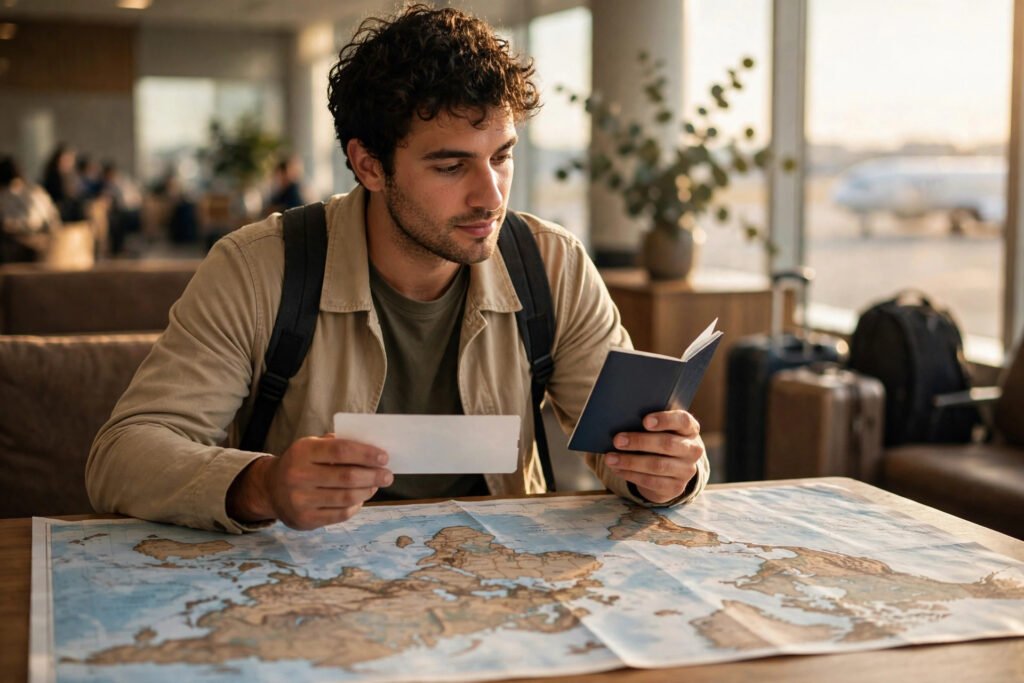

Learning how to pack a carry on well is one of the highest-leverage travel skills you can build. It saves you baggage fees, kills the wait at the carousel, and removes the single most common travel disaster: the lost suitcase. Whether you are heading off for a long weekend or a two-week adventure, a well-packed carry-on is entirely possible — it just takes a system rather than stuffing and hoping. If you are planning your first international trip, mastering this now will make every journey after it dramatically less stressful.
Why Carry-On Only Travel Wins
Traveling with just a carry-on changes the entire rhythm of a trip. You land, walk straight past the baggage carousel, and you are already in a taxi while everyone else is still staring at an empty conveyor belt. No checked bags also means no bags left behind during tight connections — a blessing on itineraries with short layovers.
Then there is the money. Many budget airlines now charge the same — or more — for a checked bag as the seat itself. Flying carry-on only is one of the simplest ways to keep costs down when traveling on a budget, and it forces the kind of ruthless editing that makes packing easier every time you do it. Finally, smaller bags are simply easier to haul up stairs, squeeze into overhead bins, and keep an eye on in crowded stations.
Rolling vs Folding: What Really Works
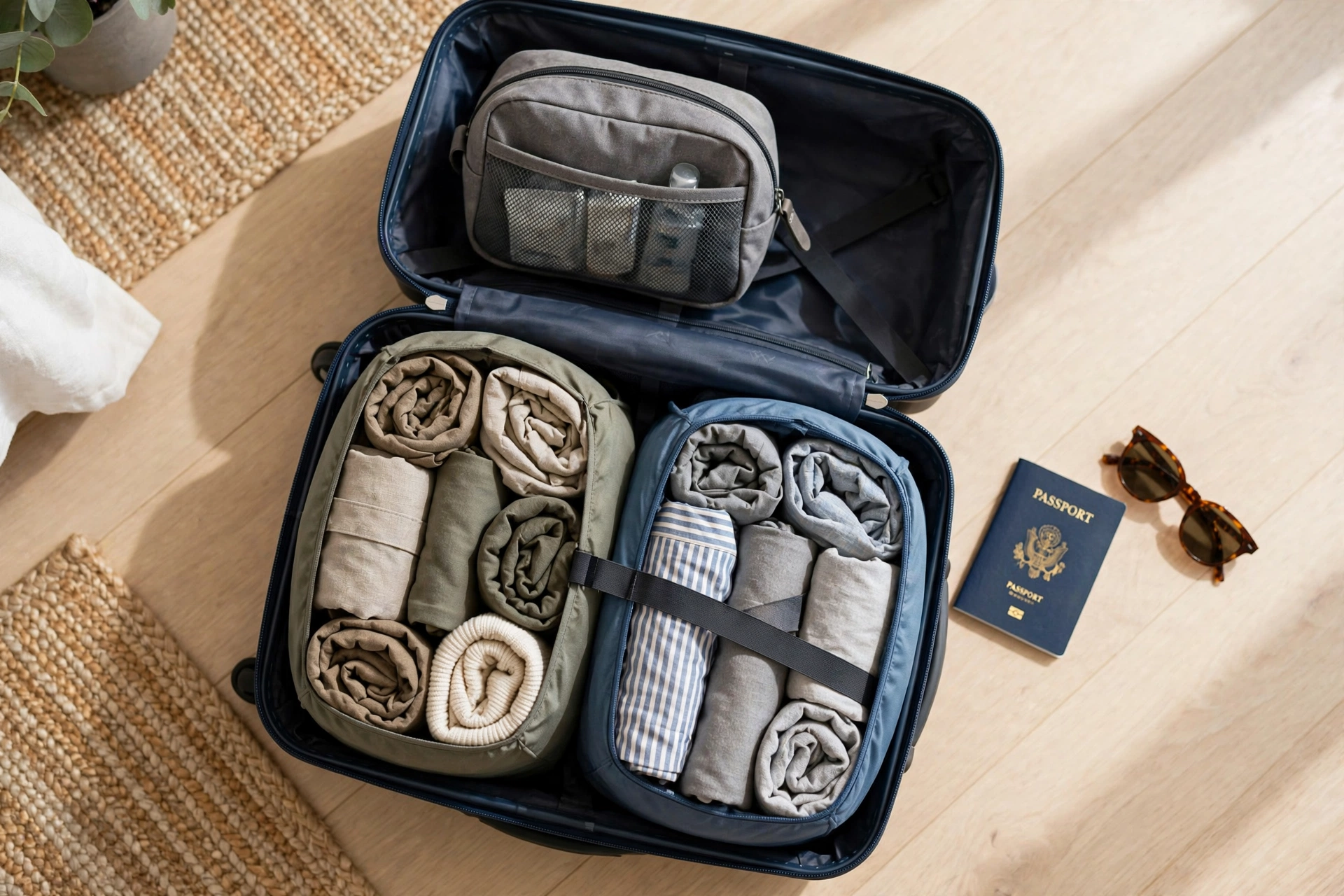
The internet treats this as a war, but the honest answer is that both methods have a place. Rolling works best for soft, wrinkle-resistant fabrics: t-shirts, jeans, knitwear, underwear, and casual dresses. A tight roll compresses the garment and, more importantly, fills the awkward gaps between bulkier items.
Folding is better for structured pieces — blazers, button-down shirts, and anything with a collar you want to stay crisp. For those, try the bundle technique: lay shirts flat with sleeves crossed, place a folded pair of trousers on top, and wrap everything around a soft core like a sweater. The layers cushion each other and arrive far less creased than a stack of individually folded items.
Packing Cubes and Organizers Are Your Secret Weapon
Ask any frequent traveler and they will tell you the same thing: packing cubes turned packing from chaos into order. They compress clothes, keep categories separated, and let you pull out one cube at a hotel without exploding the whole bag.
Tip 1: Sort by category, not by day. One cube for tops, one for bottoms, one for underwear and socks. Day-by-day cubes fall apart the moment plans change.
Tip 2: Use compression cubes for bulky layers. A zippered compression cube can shrink a sweater or fleece to nearly half its volume — the single biggest space win in a carry-on.
Tip 3: Give small items a home. A slim pouch for cables, chargers, and adapters stops them migrating to the bottom of the bag and tangling into a knot.
Tip 4: Keep a flat packing folder for the outfit you will wear on arrival. One wrinkle-free set — shirt, trousers — folded in a folder means you step off the plane looking sharp even after a red-eye.
Build a Capsule Wardrobe for the Trip
A capsule wardrobe is a small set of pieces that all mix and match. For a carry-on trip, pick a neutral base (black, navy, grey, beige) and add one or two accent colors. Suddenly five tops and three bottoms make a dozen outfits instead of five.
Tip 5: Lay everything out, then remove a third. Almost everyone overpacks the first draft. The outfits you are unsure about are the ones you will never wear — leave them home.
Tip 6: Plan around the heaviest items. Wear your bulkiest shoes, jacket, and jeans on travel days. What is on your body does not count against your bag.
Tip 7: Choose fabrics that forgive. Merino wool, technical synthetics, and wrinkle-resistant blends can be worn multiple times between washes and bounce back from a roll. Cotton looks great but creases fast and dries slowly.
Shoes and Toiletries Strategy
Shoes are the space hogs. The rule is simple: two pairs maximum — the ones on your feet plus one packed pair. Make the packed pair flat and flexible, and stuff the toes with socks or underwear so no space goes to waste.
Tip 8: Limit shoes to two pairs, period. For most trips, comfortable walking shoes plus one dressier flat or sandal covers everything. A third pair rarely earns its space.
Tip 9: Decant toiletries into small bottles. Travel-size containers, a solid shampoo bar, and multi-use products (a tinted moisturizer with SPF, a 2-in-1 cleanser) shrink the liquids bag dramatically — and keep you within the carry-on liquids rule.
Tip 10: Put a small personal-safety kit in your personal item. A portable door lock, a whistle, and copies of key documents take almost no room. Solo travelers, especially women, should also review these travel safety tips for women before deciding what goes in the day bag versus the overhead bin.
A Sample Carry-On Packing List
Here is what a 7-day carry-on can realistically hold using the system above:
- Tops: 4–5 mix-and-match tops in your palette (roll these)
- Bottoms: 2 pairs of trousers or jeans, 1 skirt or shorts depending on climate
- Layers: 1 lightweight jacket or blazer (worn on the plane), 1 sweater or fleece
- Dresses: 1 casual dress that doubles for dinners (optional, replaces a top/bottom set)
- Underwear and socks: 5–7 sets in a dedicated cube
- Shoes: 1 pair worn, 1 flat pair packed with socks stuffed inside
- Toiletries: one quart-size bag of decanted liquids, solid toiletries, travel toothbrush
- Tech: phone, charger, universal adapter, earbuds, and a power bank in a cable pouch
- Documents: passport, bookings, insurance details — in your personal item, never the overhead bag
- Extras: a packable tote for souvenirs or laundry, a scarf that doubles as a blanket
Common Packing Mistakes to Avoid
Even good packers sabotage themselves with the same few habits. Watch for these:
Tip 11: Stop packing for “just in case.” The formal outfit for the gala that is not on your itinerary, the third “backup” book, the full-size umbrella — if the scenario is imaginary, the item stays home.
Tip 12: Do not bury your essentials. Passport, medications, phone charger, and a change of underwear belong in your personal item, not under five cubes in the overhead compartment.
Tip 13: Check the airline’s actual size limits. Carry-on dimensions vary wildly between airlines, and budget carriers measure at the gate. A bag that fit fine on one airline can earn you a fee on another.
Tip 14: Skip the giant toiletry bag. Full-size bottles are the fastest way to blow both your space and the liquids rule. Decant, go solid, or buy basics at your destination.
Tip 15: Pack the bag the night before, then do a morning edit. A fresh-eyes review catches the duplicates and the “why did I pack this” items that late-night packing always sneaks in.
Final Thoughts
Packing a carry-on like a pro is not about owning fancy gear — it is about decisions. A capsule wardrobe, a couple of packing cubes, and the discipline to leave the “just in case” items behind will fit a week of travel into a bag that never leaves your sight. Try the system on your next short trip, refine it once, and you will never go back to wrestling a checked bag through an airport again.