
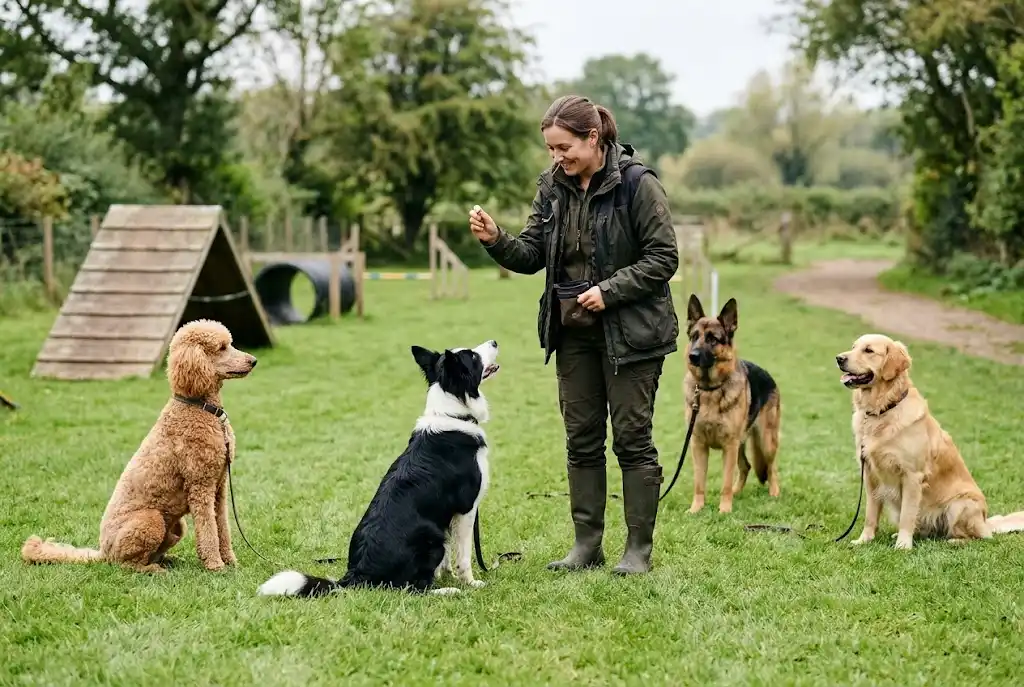

Some dog breeds are famous for learning commands quickly, solving problems, working independently, or responding closely to human direction. But canine intelligence is more complicated than simply asking which dog learns the most tricks.
Dogs can demonstrate intelligence through instinctive abilities, problem-solving, memory, communication, trainability, and their ability to work with people. Breeds developed for demanding jobs often stand out because generations of selective breeding emphasized specific mental and behavioral skills.
That is why breeds such as Border Collies, Poodles, German Shepherd Dogs, Golden Retrievers, Doberman Pinschers, Shetland Sheepdogs, and Labrador Retrievers are frequently discussed among the smartest or most trainable dogs.
This guide explains why they rank among the smartest breeds, what canine intelligence actually means, and why a highly intelligent dog can still require considerable training, exercise, and mental stimulation.
What Does It Mean for a Dog to Be Smart?
There is no single measurement that completely defines canine intelligence.
Dog researcher Stanley Coren has described canine intelligence through several dimensions, including instinctive intelligence, adaptive problem-solving, and learning through human instruction. These categories help explain why a dog can be exceptionally capable in one area without necessarily being the easiest dog to train in every situation.
The American Kennel Club similarly emphasizes that dogs can be intelligent in different ways. Some working breeds learn jobs quickly because of their instincts and natural abilities, while other dogs may demonstrate intelligence through their willingness to cooperate with people.
In practical terms, a smart dog may be able to learn quickly, remember previous experiences, solve problems, adapt to unfamiliar situations, or understand what a person is asking.
Why Working History Matters
Many of the breeds commonly associated with intelligence were developed to perform demanding jobs.
Herding dogs needed to observe livestock, respond to changing movements, and work with human handlers. Retrievers were developed to locate and return game. Protection and working breeds needed alertness, confidence, and the ability to respond appropriately to commands.
These historical jobs rewarded dogs that could learn and perform useful behaviors consistently.
This is one reason intelligence and working ability are closely connected in many popular dog breeds.
1. Border Collie
The Border Collie is widely regarded as one of the most intelligent and trainable dog breeds. Its reputation is strongly connected to its history as a working sheepdog.
Border Collies were developed to work closely with shepherds while controlling livestock. They needed to interpret movement, respond to signals, maintain focus, and make decisions while working over large areas.
The breed’s intelligence can be both impressive and demanding. A Border Collie that learns quickly may also learn undesirable habits quickly if it lacks appropriate training and stimulation.
Modern Border Collies often excel in herding, obedience, agility, and other activities that allow them to use both their physical and mental abilities.
2. Poodle
Poodles are sometimes underestimated because of their distinctive appearance, but intelligence and trainability are major parts of the breed’s history.
Poodles were developed as water retrievers and working dogs, and their ability to learn and cooperate with people helped make them versatile companions.
Standard, Miniature, and Toy Poodles can all demonstrate strong learning ability, although individual temperament varies.
Poodles often respond well to training that gives them clear objectives and keeps them mentally engaged.
3. German Shepherd Dog
German Shepherd Dogs are another breed frequently associated with intelligence, trainability, and purposeful work.
Their working history includes herding, but modern German Shepherds are also widely associated with police, military, protection, search, detection, and service-related work.
These roles require dogs that can learn complex tasks, respond to handlers, remain focused, and adapt to changing environments.
The breed’s intelligence therefore goes beyond simply learning obedience commands. Its value comes from combining learning ability with confidence, work ethic, and responsiveness.
4. Golden Retriever
Golden Retrievers are known for their friendly personalities, but their working abilities are equally important to understanding their intelligence.
Originally developed as hunting and retrieving dogs, Goldens were expected to work with people and return game without damaging it.
Today, their trainability and willingness to cooperate make them popular in obedience, assistance, therapy-related, and other working roles.
Their combination of intelligence, sociability, and desire to work with people can make them easier to train than some more independent breeds.
5. Doberman Pinscher
The Doberman Pinscher was developed as a personal protection dog and has a long association with alertness, confidence, and close work with people.
Dobermans can learn commands quickly and retain trained behaviors when training is consistent. Their intelligence is particularly valuable when combined with their ability to remain attentive and responsive.
However, an intelligent and energetic dog also needs responsible socialization and training. Intelligence does not eliminate the need for structure.
6. Shetland Sheepdog
The Shetland Sheepdog, often called the Sheltie, is a smaller herding breed with a reputation for being quick, responsive, and eager to learn.
Its herding background helps explain its alertness and ability to respond to movement and direction.
Shelties often perform well in obedience and agility because these activities combine learning, movement, communication, and problem-solving.
The breed is a useful reminder that physical size has little to do with intelligence.
7. Labrador Retriever
Labrador Retrievers are among the most popular dogs in the United States and are also recognized for their versatility and trainability.
Originally developed as retrieving dogs, Labradors were expected to work cooperatively with hunters and handle demanding outdoor tasks.
Their combination of intelligence, enthusiasm, sociability, and willingness to please has helped them become popular in assistance, detection, service, sporting, and family roles.
Labradors also tend to respond well to reward-based training, particularly when sessions are engaging and consistent.
8. Papillon
The Papillon demonstrates that intelligence is not limited to large working dogs.
This small companion breed is known for alertness, curiosity, and trainability. Papillons can perform well in obedience and agility despite their compact size.
Their ability to learn quickly makes them a good example of why intelligence should not be judged by physical appearance.
9. Rottweiler
Rottweilers were developed as working dogs and have historically been used for livestock management, guarding, and other demanding tasks.
The breed is intelligent, confident, and capable of learning structured work. Because of its size and strength, consistent training and responsible socialization are particularly important.
A well-trained Rottweiler can channel its intelligence into obedience, working activities, and a close relationship with its owner.
10. Australian Cattle Dog
The Australian Cattle Dog was developed to help manage cattle in demanding environments, which required stamina, persistence, independence, and problem-solving ability.
This is an energetic breed that often needs more than a short daily walk. Mental challenges can be just as important as physical activity.
Training, interactive games, structured work, and activities that encourage problem-solving can help provide appropriate outlets for its abilities.
11. Pembroke Welsh Corgi
The Pembroke Welsh Corgi is another example of a relatively small dog with a strong working background.
Corgis were developed as herding dogs and needed to manage livestock despite their low stature. Their intelligence is often expressed through alertness, independence, responsiveness, and enthusiasm for learning.
They can perform well in obedience and dog sports when given consistent training and appropriate mental stimulation.
12. Miniature Schnauzer
Miniature Schnauzers were developed as farm dogs and ratters, giving them a history that required alertness, persistence, and independence.
They are generally active, curious, and responsive to training.
Their intelligence can be particularly noticeable during problem-solving activities, interactive play, and obedience work.
13. English Springer Spaniel
English Springer Spaniels were developed as hunting dogs and were expected to work alongside people in the field.
Their working role required energy, responsiveness, persistence, and the ability to locate and flush game.
Modern Springers can excel in training and sporting activities when their physical and mental needs are properly addressed.
How Do Experts Measure Dog Intelligence?
Dog intelligence can be considered through several different abilities rather than one universal score.
Instinctive Intelligence
This refers to abilities that dogs are naturally predisposed to perform because of their breeding and original purpose.
A herding dog controlling livestock, a retriever naturally carrying objects, or a scent-focused breed following a trail can all demonstrate instinctive intelligence.
Adaptive Intelligence
Adaptive intelligence involves how a dog responds to problems and learns from its environment.
For example, a dog may discover how to reach a toy, navigate an obstacle, or change its behavior after learning that one approach does not work.
Learning From People
Another important component is the ability to learn from human instruction.
This includes understanding cues, remembering commands, responding to feedback, and applying previously learned behaviors.
These different forms of intelligence explain why a dog that is not considered highly obedient can still be exceptionally capable in other areas.
Why Trainability Is Not Exactly the Same as Intelligence
People often use the words “smart” and “trainable” as if they mean exactly the same thing. They do not.
Trainability depends on intelligence, but it is also affected by motivation, temperament, instinct, attention, distractions, and the relationship between the dog and handler.
The American Kennel Club notes that when people ask whether a dog is smart, they often really want to know how trainable the breed is. It also points out that genetic heritage, personality, instinctive drive, and training methods all influence how readily a dog learns.
A highly independent dog may understand a command perfectly but be less motivated to perform it repeatedly.
That does not necessarily mean the dog is less intelligent.
Why Intelligent Dogs Can Be Challenging
High intelligence is not automatically easier for an owner.
A clever dog can discover ways to obtain food, open doors, escape barriers, demand attention, or create its own entertainment.
Intelligent working breeds may also become bored when they lack sufficient mental stimulation.
This is why many highly trainable dogs need owners who are willing to provide consistent training, enrichment, exercise, and structure.
Intelligence and the Changing Role of Sheepdogs
Herding dogs provide one of the clearest examples of how canine intelligence developed around a working purpose.
Sheepdogs had to observe livestock, interpret movement, respond to handlers, and make decisions while working. Those abilities remain visible in modern herding breeds, even when the dogs now live primarily as companions.
Our related guide on the changing role of sheepdogs explores how these working dogs moved from traditional farm roles into modern family, sporting, and professional environments.
How Hounds Demonstrate Intelligence Differently
Hounds also demonstrate why intelligence should not be reduced to obedience rankings.
Scenthounds can possess extraordinary abilities to follow scents, while sighthounds were developed to detect movement and pursue prey using vision and speed.
A hound that appears distracted during obedience training may be intensely focused on information in its environment that humans cannot perceive.
For a closer comparison, read our guide to hounds versus other dog breeds.
How to Keep a Smart Dog Mentally Stimulated
Intelligent dogs generally benefit from activities that require them to think rather than simply move.
- Obedience training: Teach new cues and gradually increase difficulty.
- Puzzle toys: Use appropriate food-based challenges to encourage problem-solving.
- Scent games: Hide treats or toys and encourage your dog to locate them.
- Dog sports: Agility, obedience, rally, herding, retrieving, and other activities can provide structured challenges.
- Trick training: Teaching new behaviors can provide short but meaningful mental workouts.
- Interactive play: Games that require the dog to make choices can be more stimulating than repetitive exercise.
- New environments: Safe exposure to different places, surfaces, sounds, and situations can provide mental enrichment.
Smartest Dog Breeds at a Glance
| Breed | Primary Working Strength | Common Modern Strength |
|---|---|---|
| Border Collie | Herding and problem-solving | Herding, agility, obedience |
| Poodle | Retrieving and cooperation | Training, sports, companionship |
| German Shepherd Dog | Herding and working tasks | Service, police, protection, obedience |
| Golden Retriever | Retrieving | Assistance, service, sporting, family life |
| Doberman Pinscher | Protection and close human work | Obedience, protection, companionship |
| Shetland Sheepdog | Herding | Agility, obedience, companionship |
| Labrador Retriever | Retrieving | Service, detection, sporting, family life |
| Papillon | Companion and alert work | Agility, obedience, companionship |
| Rottweiler | Guarding and working | Obedience, working roles, companionship |
| Australian Cattle Dog | Cattle herding | Working activities and dog sports |
Does Breed Determine How Smart a Dog Will Be?
Breed can influence a dog’s natural abilities and tendencies, but it does not determine the intelligence of every individual dog.
Dogs within the same breed can have different personalities, motivations, attention spans, and learning styles.
Environment and training also matter. A dog given appropriate enrichment and consistent training may develop abilities that are not obvious during ordinary household life.
For this reason, breed intelligence rankings should be viewed as useful general information rather than a guarantee about an individual dog.
Final Thoughts
The breeds commonly described as the smartest stand out for different reasons. Border Collies excel at complex herding work, Poodles are highly trainable and versatile, German Shepherd Dogs combine intelligence with demanding professional work, and retrievers demonstrate exceptional cooperation and learning ability.
Other breeds, including Papillons, Corgis, Shetland Sheepdogs, Rottweilers, and Australian Cattle Dogs, show that canine intelligence can exist across very different body types and working histories.
The most useful way to understand dog intelligence is to look beyond a simple ranking. Instinct, problem-solving, trainability, motivation, genetics, environment, and individual personality all contribute to how a dog learns and works.
A smart dog is therefore not necessarily the dog that performs the most commands. It may be the dog that solves a problem, understands its job, communicates effectively with its handler, or uses its natural abilities in an impressive way.