
Bringing a puppy home is exciting — and a little overwhelming. Between the midnight whimpers, the puddles on the floor, and those needle-sharp teeth on everything you own, it is easy to wonder whether you made a mistake. You didn’t. You just need a plan. Learning how to train a puppy at home comes down to simple habits repeated every day: short positive sessions, a consistent routine, and rewards for the behaviour you want to see more of. This beginner-friendly guide walks you through the whole process, step by step.
1. Prepare Your Home Before Training Starts
Puppies learn fastest when their environment makes the right choices easy. Before your first training session, puppy-proof the rooms they will use: move electrical cords out of reach, pick up small objects they could swallow, secure bins, and block off stairs with a baby gate.
Set up a dedicated “puppy zone” with these essentials:
- A crate or pen — your puppy’s own den for sleeping and quiet time.
- Chew toys of different textures — so they learn what is allowed to chew.
- Small, soft training treats — pea-sized pieces they can eat in one second.
- An enzymatic cleaner — regular cleaners mask odours; enzymatic ones remove them so your puppy isn’t drawn back to the same spot.
- A flat collar and lightweight leash — fitted snugly enough that two fingers fit underneath.
A calm, organized space makes every later step — house training, crate training, and basic commands — dramatically easier.
2. Start House Training on Day One
House training is most beginners’ first priority, and the good news is that it follows a predictable rhythm. Puppies have tiny bladders and need to go out often: first thing in the morning, after every meal, after every nap, after playtime, and right before bed.
Use this routine:
- Pick one door and one spot outside. Carry your puppy to the same place every time so the scent tells them what to do.
- Reward within seconds. The moment they finish, praise enthusiastically and give a treat. Timing matters more than the size of the reward.
- Supervise constantly indoors. If you can’t watch them, use the crate or pen. A puppy who never gets the chance to have an accident indoors learns much faster.
- Never punish accidents after the fact. Rubbing a puppy’s nose in a mess or scolding minutes later teaches nothing except to hide from you. Clean it quietly and supervise better next time.
Most puppies are reliably house-trained between four and six months of age. Consistency beats speed — every family member should follow the same routine.
3. Teach Sit, Stay, and Come
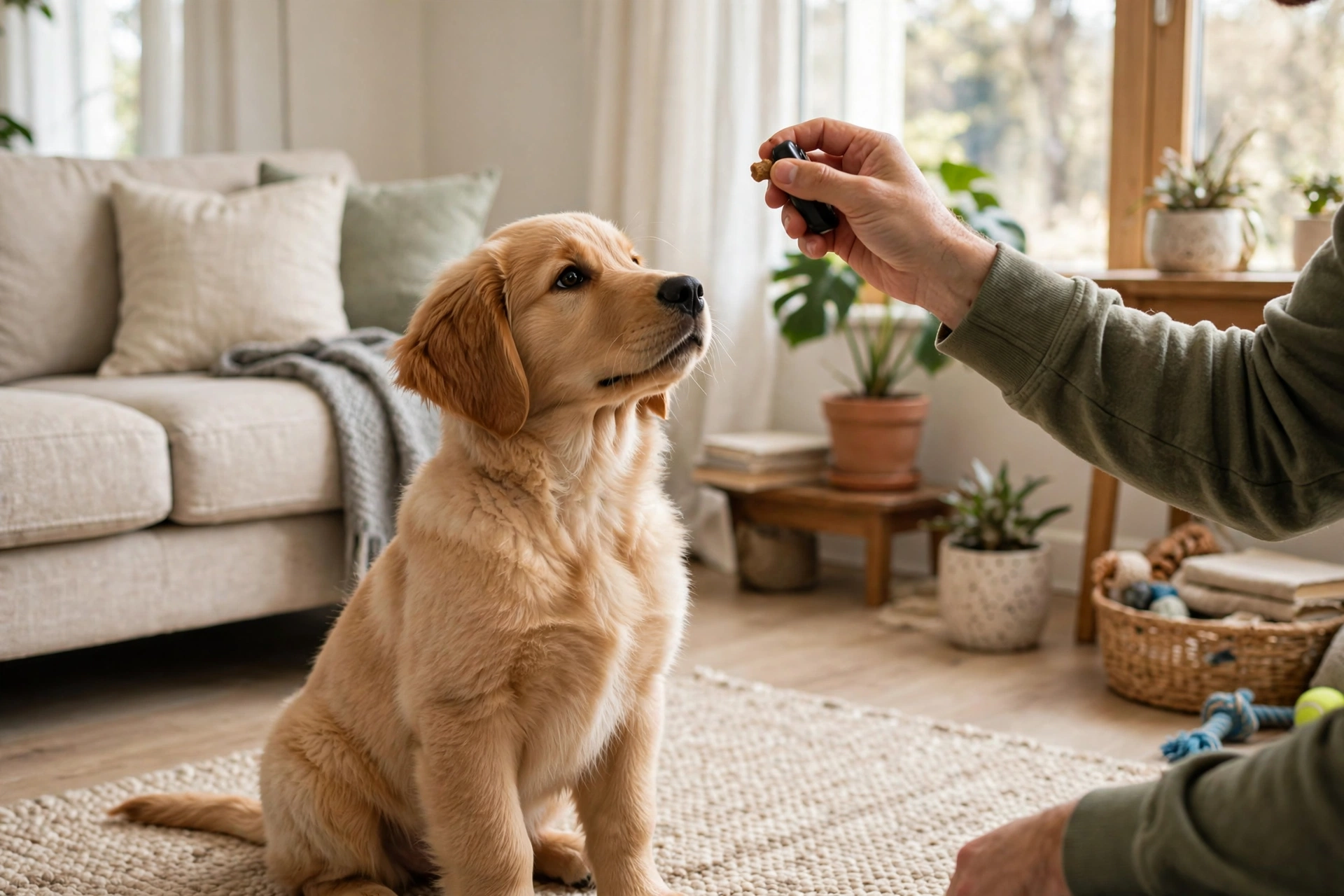
Basic commands are the foundation of all later training. Start with sit, the easiest win: hold a treat just above your puppy’s nose, move it slowly back over their head, and the moment their bottom touches the floor, say “Yes!” and reward. Repeat a few times per session and add the word “sit” once the movement is reliable.
For stay, ask for a sit, hold your palm up like a stop sign, take one step back, and reward them for holding position for even two seconds. Build duration slowly — two seconds today, ten next week.
For come, crouch down a few feet away with an excited voice and reward generously when they run to you. Never call your puppy and then do something unpleasant; coming to you must always feel like winning.
Keep sessions to five minutes, two or three times a day. Short, fun sessions beat long, boring ones every time. And because training goes through a lot of treats, be selective about what you use — it is worth knowing the ingredients to avoid in pet food so the treats you rely on every day are genuinely safe and healthy.
4. Start Leash Training Indoors First
Don’t wait for the first neighbourhood walk to introduce the leash. Let your puppy wear their collar around the house for short periods so it feels normal, then clip on the leash and let them drag it under supervision in a safe room.
Practice loose-leash walking inside your home before heading outdoors:
- Reward walking at your side. Every few steps at your side earns a treat — this is the core of loose-leash walking.
- Be a tree. When your puppy pulls, stop moving. They learn that pulling gets them nowhere and slack leash gets them treats.
- Change direction. If they surge ahead, calmly turn around. This keeps their attention on you instead of on the next exciting smell.
Once the basics are solid indoors, short outdoor walks become much easier. When you start venturing further, review these dog walking safety tips to keep every outing safe for you and your pup.
5. Socialize Your Puppy Safely
Socialization — positive exposure to new sights, sounds, people, and animals — is one of the most important parts of puppy training, and it has a deadline. The prime socialization window closes around 14 to 16 weeks, so start early while staying safe around vaccinations.
Before full vaccination, carry your puppy through busy places, invite calm visitors to your home, and let them hear household sounds (vacuum, doorbell, traffic). After your vet gives the all-clear, join a well-run puppy class, arrange playdates with vaccinated, friendly dogs, and explore new environments at your puppy’s pace — watch for stress signals like tucked tails or yawning and give them space when needed.
A well-socialized puppy grows into a confident adult dog who can handle new places calmly — which pays off every time you leave the house together, from weekend trips to full-on traveling with your dog adventures.
6. Common Mistakes Beginners Should Avoid
Almost every new owner makes one of these errors. Avoiding them will save you weeks of frustration:
- Training when frustrated. Puppies read your tone instantly. If you’re losing patience, end the session on a simple win and try again later.
- Sessions that are too long. A tired puppy stops learning. Five focused minutes beats twenty distracted ones.
- Inconsistent rules. If jumping on the sofa is cute today and forbidden tomorrow, your puppy learns nothing. Everyone in the house must enforce the same rules.
- Repeating commands. Saying “sit, sit, SIT!” teaches your puppy to wait for the third repetition. Give the cue once, wait a few seconds, then help them succeed.
- Skipping socialization. Obedience commands mean little if your puppy is terrified of the world. Keep exposure sessions short, positive, and regular.
7. Quick Answers to Beginner Questions
How long does it take to train a puppy at home? You’ll see progress within the first week and solid basics within two to three months of consistent daily work. Full reliability — especially around distractions — typically takes six to twelve months.
When should I start training? Day one. Even an eight-week-old puppy can learn sit, their name, and house-training routines. Training is simply teaching — the earlier you start communicating clearly, the better.
Do I need special equipment? Not really: a crate, collar, leash, chew toys, treats, and an enzymatic cleaner cover 95% of home training. Skip choke chains, prong collars, and shock collars — they suppress behaviour through pain and damage trust.
What if my puppy bites during play? Puppy mouthing is normal. When teeth touch skin, say “ouch” in a high voice and withdraw attention for a few seconds. Redirect to a chew toy. Consistent, calm responses teach bite inhibition over several weeks.
The Bottom Line
Training a puppy at home isn’t complicated — it just takes patience and routine. Puppy-proof the house, start house training immediately, teach sit, stay, and come in short daily sessions, introduce the leash indoors, and socialize early. Avoid punishment, stay consistent, and celebrate the small wins. Do that for a few months, and you’ll have a confident, well-mannered companion for life.