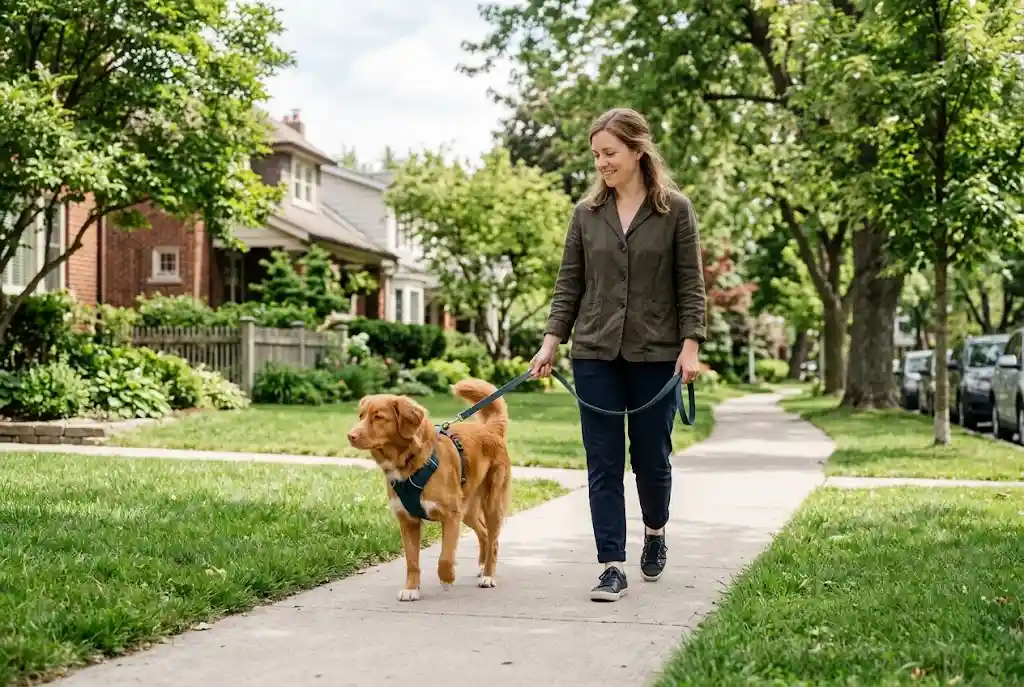

Taking your dog for a walk should be a safe and enjoyable part of everyday life. A regular walk gives dogs exercise, mental stimulation, and time to explore their surroundings. However, unfamiliar environments, traffic, loose dogs, extreme weather, unsafe equipment, and unexpected distractions can create risks.
This guide explains the most common risks during dog walks and practical ways to reduce them so you and your dog can enjoy safer outdoor time.
Why Dog Walking Safety Matters
Even a familiar neighborhood can present unexpected hazards. A dog may suddenly chase another animal, pull toward traffic, react to another dog, eat something dangerous from the ground, or become overheated during a warm-weather walk.
Dogs also differ considerably in size, age, fitness, temperament, and tolerance for weather conditions. A walking routine that works well for one dog may not be appropriate for another.
Responsible walking therefore involves more than simply attaching a leash and heading outside. It requires awareness of the environment and your dog’s individual needs.
Use a Secure Collar or Harness and Leash
One of the simplest ways to reduce risk is to use properly fitted walking equipment.
A collar should fit securely without being excessively tight. If your dog can easily slip backward out of the collar, there is a greater possibility of escape. A properly fitted harness can provide another option, particularly for dogs that pull or are prone to slipping out of traditional collars.
The leash should also be appropriate for your dog’s size and strength. Check the clip, stitching, and connection points regularly for signs of wear.
For dogs that are particularly skilled at escaping, secure equipment becomes even more important. Proper identification should also be maintained in case a dog gets loose.
Keep Identification Information Updated
Even with careful supervision, dogs can occasionally escape. A sudden noise, broken leash, open gate, or unexpected distraction can turn a normal walk into a stressful situation.
A visible identification tag can help someone contact you if your dog becomes lost. Permanent identification such as a microchip can provide an additional layer of protection if a collar or tag is lost.
Before going outside, make sure your contact information is current. An outdated phone number can make reunification much harder.
Choose Safer Walking Routes
The safest route is not always the shortest route. When possible, choose areas with sidewalks, lower traffic, good visibility, and enough space to maintain control of your dog.
Be particularly careful near busy intersections, parking lots, construction zones, bicycle paths, and roads without sidewalks.
If your dog becomes nervous around traffic or crowds, a quieter route may provide a better experience. Reducing exposure to overwhelming situations can also make training and leash walking easier.
Teach Your Dog Basic Walking Skills
Training is an important part of preventing accidents. A dog that understands basic cues such as sit, stay, come, leave it, and heel is easier to manage when something unexpected happens.
Loose-leash walking is especially useful. Instead of allowing a dog to constantly pull toward every interesting smell or distraction, gradual training can teach the dog to walk calmly beside you.
Positive reinforcement can help make desired behaviors more consistent. Reward your dog when they walk calmly, respond to a cue, or ignore a distraction.
If your dog needs more help with leash behavior, structured training can make walks more predictable and enjoyable.
Watch for Other Dogs and Animals
Not every dog wants to interact with another dog. Even friendly dogs can react unexpectedly when they feel frightened, threatened, overstimulated, or restricted by a leash.
When approaching another dog, pay attention to body language and maintain enough distance to keep your own dog under control.
Do not assume that two dogs should automatically greet each other. A calm walk can sometimes be safer and more comfortable when dogs simply pass one another without direct interaction.
For more information about canine behavior and breed differences, you can also explore our guide on how hounds differ from other dog breeds.
Be Careful Around Roads and Traffic
Traffic is one of the most serious hazards during an outdoor walk. Dogs can react instantly to moving cars, bicycles, motorcycles, or other animals.
Keep your dog under control near roads and avoid allowing the leash to extend into traffic areas. When crossing a street, wait for a safe opportunity and maintain a short enough leash to prevent sudden movement toward vehicles.
Extra caution is necessary in parking lots. Drivers may not see a small dog or may move their vehicles unexpectedly.
Check the Weather Before Walking
Weather conditions can change the safety of a walk significantly. Extreme heat is particularly dangerous because dogs can overheat during exercise, and hot surfaces can injure their paw pads.
During hot weather, consider walking during cooler parts of the day and choosing shaded or grassy routes. Always provide access to fresh water and watch your dog for signs of overheating.
Dogs can also be affected by cold weather, ice, snow, and de-icing materials. After winter walks, checking and cleaning your dog’s paws can help remove irritating substances.
The American Kennel Club advises avoiding strenuous activity during extreme heat and taking precautions against hot pavement and heat-related problems. Learn more about protecting dog paws from hot pavement.
Know the Signs of Overheating
Heavy or unusual panting, excessive drooling, weakness, vomiting, confusion, or difficulty walking can indicate that a dog is struggling with heat.
If your dog appears overheated, stop the walk and move to a cooler environment. Provide appropriate cooling and contact a veterinarian promptly if you suspect heatstroke or serious heat stress.
Do not treat a serious heat-related problem as something that will necessarily resolve on its own. Dogs can deteriorate quickly when they become dangerously overheated.
For additional guidance, the American Kennel Club provides information about recognizing and responding to overheating in dogs. Review the signs of overheating in dogs.
Protect Your Dog’s Paws
Your dog’s paws come into direct contact with the walking surface, which makes pavement and environmental conditions important considerations.
Hot asphalt, concrete, sand, and other surfaces can become much hotter than the surrounding air. If the surface is uncomfortable for your hand, it may also be too hot for your dog’s paws.
During hot weather, choose cooler walking surfaces and avoid prolonged exposure during the hottest part of the day. Gradually increasing outdoor activity can also help dogs adapt to different surfaces.
Watch What Your Dog Picks Up
Dogs naturally investigate their environment with their noses and mouths. Unfortunately, sidewalks, parks, and public areas can contain food scraps, litter, chemicals, or other objects that may be unsafe.
Teaching a reliable “leave it” cue can help prevent your dog from immediately picking up something suspicious.
Stay attentive around trash cans, treated lawns, standing water, discarded food, and unknown substances. If you believe your dog has swallowed something potentially harmful, contact a veterinarian for guidance rather than waiting for symptoms to appear.
Consider Your Dog’s Individual Needs
There is no single walking routine that is perfect for every dog.
Puppies may need shorter walks with plenty of opportunities to rest. Older dogs may require gentler routes. Dogs with flat faces can have greater difficulty coping with heat, while some breeds may need more physical and mental stimulation than others.
Your dog’s fitness, age, body condition, behavior, and health should all influence the duration and intensity of outdoor activity.
Our article about the changing role of sheepdogs also explores how different dogs have historically been bred for different working roles, which helps explain why exercise and activity needs can vary between dogs.
Do Not Ignore Your Dog’s Behavior
Behavior can provide useful clues about whether a walk is going well.
If your dog repeatedly stops, refuses to continue, pants excessively, becomes unusually anxious, or attempts to escape from equipment, take a moment to assess what is happening.
The problem could be environmental stress, heat, discomfort, fear, fatigue, or something else that requires attention.
Forcing a dog to continue through obvious distress can make the situation worse. A safer approach is to identify the trigger, create distance from it, and seek professional veterinary or behavioral advice when appropriate.
Carry a Few Essentials
A small walking kit can make unexpected situations easier to handle.
- Fresh drinking water
- A portable water bowl
- Waste bags
- A secure leash
- Updated identification information
- Small training treats
- Basic cleaning supplies
Longer walks or hikes may require additional supplies depending on the location, weather, and dog’s needs.
What to Do If Your Dog Gets Loose
If your dog escapes during a walk, try to remain calm. Chasing a frightened dog can sometimes encourage them to run farther away.
If possible, use a familiar recall cue and create a calm, inviting environment. Avoid making sudden movements that could increase fear.
Visible identification and microchip information can be extremely valuable if the dog cannot be recovered immediately. Contact local shelters, veterinary clinics, and relevant lost-pet resources if necessary.
For more practical information, our dog-safety cluster also includes guidance on dog intelligence and behavior, which can help owners better understand how dogs respond to training and their environment.
Common Dog Walking Mistakes to Avoid
- Using worn or poorly fitted walking equipment
- Walking during dangerously hot weather
- Allowing a dog to approach every unfamiliar animal
- Ignoring signs of fear, stress, fatigue, or overheating
- Walking too close to heavy traffic without adequate control
- Allowing a dog to eat unknown objects from the ground
- Forgetting identification information
- Assuming every dog has the same exercise requirements
Frequently Asked Questions
How can I make dog walking safer?
Use secure and properly fitted equipment, keep your dog under control, choose appropriate routes, monitor the weather, avoid dangerous surfaces, and pay attention to your dog’s behavior.
Should dogs always be walked on a leash?
Leash requirements depend on local laws and the location. In public areas where leash use is required, dogs should remain properly restrained. Even where off-leash activity is permitted, owners should consider their dog’s recall skills and the surrounding environment.
What should I do if pavement is too hot for my dog?
Move the walk to a cooler time of day and choose grass, shade, or another safer surface. Hot pavement can cause paw injuries and contribute to overheating.
How long should a dog walk last?
The appropriate duration depends on the dog’s age, breed, fitness, health, weather conditions, and individual temperament. A veterinarian can provide more specific guidance for dogs with health concerns.
Why does my dog pull on the leash?
Dogs may pull because they are excited, curious, distracted, or have not learned loose-leash walking. Consistent training and positive reinforcement can help develop calmer walking behavior.
Final Thoughts
Safe dog walking is not about eliminating every possible risk. It is about recognizing common hazards and preparing for them before they become problems.
Secure equipment, proper identification, good leash skills, sensible route selection, weather awareness, and close observation can make a significant difference.
Every dog has different needs, so the best walking routine is one that provides appropriate exercise while keeping the dog comfortable, controlled, and protected from avoidable hazards.
With thoughtful preparation and responsible handling, walks can remain one of the simplest and most rewarding ways to support a dog’s physical and mental well-being.