
Hounds stand out from many other dog breeds because they were developed around specialized hunting abilities. Some hounds were bred to follow scent trails for long distances, while others were developed to spot and chase fast-moving prey using exceptional vision and speed.
That working history still influences many hounds today. Their body structure, instincts, energy levels, independence, vocal habits, and training needs can differ significantly from breeds developed primarily for herding, retrieving, companionship, guarding, or other jobs.
If you are comparing a hound vs. other breeds, understanding what makes the Hound Group different can help you choose a dog that fits your lifestyle rather than choosing based only on appearance.
What Is a Hound?
A hound is a dog bred historically to pursue or locate game, particularly mammals. The American Kennel Club’s Hound Group includes a diverse collection of breeds, so there is no single personality or body type that applies to every hound.
Some hounds rely primarily on their noses, while others use their eyes and speed. This broad distinction creates two useful categories: scenthounds and sighthounds.
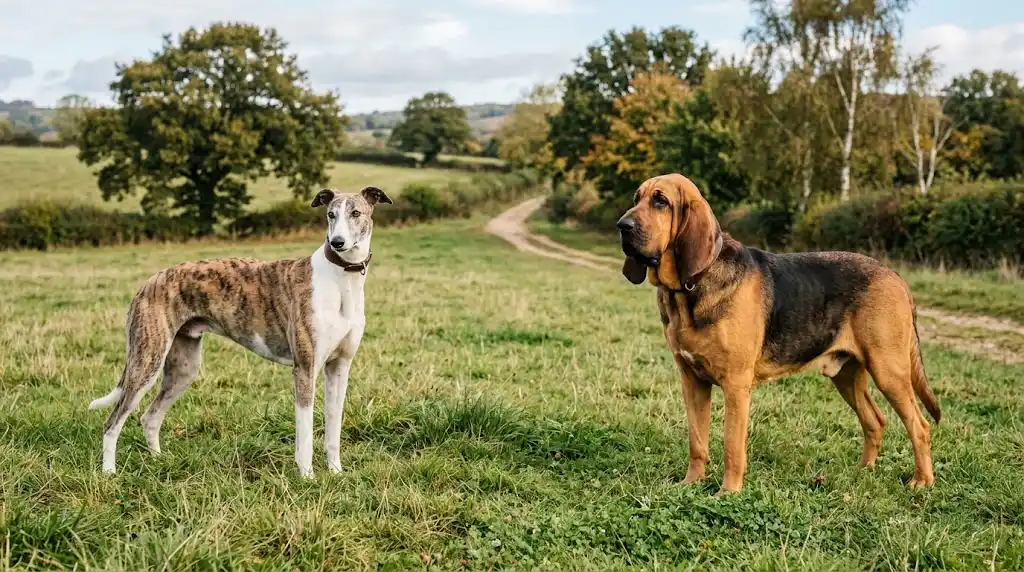
Scenthounds such as Bloodhounds, Beagles, and many Coonhounds are known for their ability to follow scent trails. Sighthounds such as Greyhounds, Whippets, Salukis, and Afghan Hounds were developed to detect movement visually and pursue prey at high speed.
Hound vs. Other Breeds: The Biggest Differences
The most important difference is not simply appearance. Hounds were selected for specific hunting tasks, and those instincts can still influence their behavior as companion dogs.
1. Strong Hunting Instincts
Many hounds retain a powerful prey drive. A scent, moving animal, or interesting visual target can become much more important to the dog than whatever its owner is asking it to do at that moment.
This does not mean every hound is difficult to live with. It does mean owners should understand the dog’s instincts and provide appropriate outlets for them.
Secure fencing and careful leash management can be particularly important for hounds that are highly motivated to chase or follow a trail.
2. Exceptional Sense of Smell in Scenthounds
Scenthounds experience the world through their noses. Breeds developed for tracking can spend considerable time investigating smells that other dogs might ignore.
The American Kennel Club notes that scenthounds can follow aromas in the air, on the ground, and even across water. Their large nasal structures and long ears are among the physical characteristics associated with their scenting work.
This instinct can make scent-based activities especially rewarding for hounds. Games involving searching, tracking, and scent work may provide more meaningful mental stimulation than repetitive activities alone.
3. Speed and Visual Tracking in Sighthounds
Sighthounds are different from scent-focused hounds. Their hunting style depended heavily on detecting movement and rapidly pursuing prey across open terrain.
Breeds such as Greyhounds, Whippets, Salukis, and Afghan Hounds have physical characteristics associated with speed, including streamlined bodies, long legs, flexible backs, and efficient cardiovascular systems.
The result is a group of dogs that can look dramatically different from many other breeds, particularly stockier working or companion breeds.
4. Independence Can Be More Noticeable
Hounds were often expected to work with a degree of independence. Some needed to follow a trail or pursue quarry without constant direction from a person.
That history can influence modern training. A hound may understand what you want but decide that following a scent, watching something move, or investigating the environment is more interesting.
For this reason, successful hound training often benefits from patience, consistency, high-value rewards, and activities that work with the dog’s natural motivations.
5. Vocal Behavior
Some hounds are much more vocal than owners of quieter breeds may expect. Scenthounds in particular can produce distinctive bays, barks, or other sounds while excited or following a trail.
This characteristic can be charming for the right household but challenging in apartments or neighborhoods where noise is a major concern.
Before choosing a hound, research the specific breed rather than assuming every member of the Hound Group behaves the same way.
Hound Body Types Compared With Other Dogs
Hounds demonstrate some of the widest physical variation within a single dog group.
A Basset Hound has a very different build from a Greyhound. A Bloodhound looks completely different from a Whippet, while an Afghan Hound has a coat and silhouette unlike most other dogs.
These differences exist because breeds were developed for different jobs and environments.
Scenthound Build
Many scenthounds have physical features that support long periods of tracking. Depending on the breed, these can include strong endurance, substantial noses, long ears, and bodies suited to moving through challenging terrain.
Sighthound Build
Sighthounds generally have a more aerodynamic appearance. Long legs, deep chests, narrow waists, flexible spines, and lean muscle support rapid pursuit.
The American Kennel Club notes that the lean appearance of many sighthounds reflects their historical function and should not automatically be interpreted as poor body condition.
Hound Temperament vs. Other Breed Groups
It is difficult to describe all hounds with one temperament because the group contains many breeds with different histories.
Some hounds are affectionate and relaxed at home. Others are energetic, persistent, reserved, playful, independent, or highly driven when outdoors.
Compared with some breeds specifically developed to work closely with people, certain hounds may appear less interested in constant direction or repetition.
That does not make them less intelligent. It means that motivation and historical purpose matter when interpreting behavior.
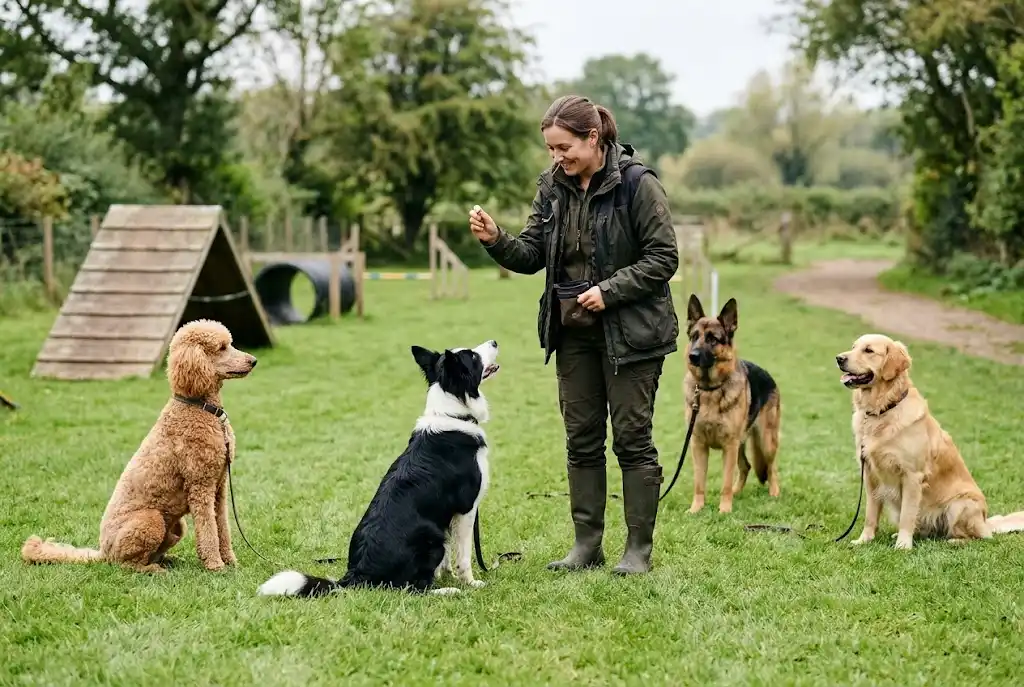
Hounds vs. Herding Breeds
Herding breeds and hounds were generally developed for very different jobs.
Herding breeds were selected to control and move livestock, often while responding closely to human direction. Many therefore have strong tendencies toward observation, responsiveness, and task-oriented interaction with their handlers.
Hounds, by contrast, were generally developed to locate, pursue, or track quarry. Their attention may naturally shift toward scent, movement, or the environment.
This difference can become obvious during training. A herding breed may be highly motivated by structured tasks, while a hound may respond more enthusiastically when training incorporates movement, searching, tracking, or food rewards.
Our related guide on the changing role of sheepdogs explores how another historically specialized group has evolved from working animals into modern companions.
Hounds vs. Sporting Breeds
Sporting breeds were primarily developed to assist hunters with birds and other game. Retrievers, setters, spaniels, and pointers have different working styles from hounds.
Many sporting breeds were selected for close cooperation with human handlers. Hounds were more often expected to pursue or track quarry using their own specialized abilities.
This difference can influence trainability, exercise preferences, and how dogs respond to distractions.
Hounds vs. Working Breeds
Working breeds were developed for a wide variety of tasks, including guarding, pulling, rescue work, protection, and other demanding jobs.
Some working breeds are naturally attentive to their handlers and highly motivated by structured tasks. Hounds can be equally capable but may express their intelligence differently.
A hound that ignores a command while tracking an interesting scent is not necessarily incapable of learning. Its original job rewarded persistence and independent investigation.
Hounds vs. Companion Breeds
Companion breeds were primarily developed to live closely with people rather than perform demanding hunting or working roles.
Because of that history, many companion breeds can have different exercise and behavioral needs from highly driven hounds.
However, individual personality matters. Some hounds are calm and affectionate at home, while some companion breeds can be surprisingly energetic or demanding.
Exercise Needs of Hounds
Exercise requirements vary considerably by breed.
A young Coonhound may need substantial physical activity and opportunities to use its nose. A Greyhound can enjoy bursts of running but may also spend significant amounts of time relaxing at home. A Basset Hound has a completely different physical profile from both.
Instead of asking whether “hounds need a lot of exercise,” consider the individual breed’s original purpose, age, health, and temperament.
A balanced routine can include walks, supervised outdoor activity, scent games, training sessions, and appropriate opportunities to explore.
Training a Hound Compared With Other Dogs
Training a hound can be highly rewarding, but owners may need to approach it differently from training a dog bred for constant handler responsiveness.
- Use motivation: Food, toys, movement, and scent-based rewards can make training more engaging.
- Keep sessions interesting: Repetitive drills may lose a hound’s attention.
- Practice recall carefully: A strong prey or scent drive can make outdoor recall challenging.
- Use secure areas: Off-leash exercise should take place only where it is safe and appropriate.
- Reward desirable behavior: Consistent positive reinforcement can help build reliable habits.
- Work with natural instincts: Tracking and scent games can turn a breed’s natural abilities into useful enrichment.
Are Hounds Good Family Dogs?
Many hounds can make excellent family companions when their individual needs match the household.
Some are affectionate, social, and gentle around family members. Others may be more independent or energetic. The key is choosing a breed whose exercise requirements, vocal tendencies, prey drive, grooming needs, and temperament fit your lifestyle.
Families should also consider the dog’s behavior around children, cats, small pets, and other dogs on a breed-by-breed basis rather than assuming that all hounds behave similarly.
Hound Grooming Needs
Grooming requirements vary widely across hounds.
Short-coated breeds may need relatively simple routine grooming, while Afghan Hounds require substantially more coat care. Basset Hounds, Bloodhounds, and other breeds can also have specific ear, skin, or coat-care considerations.
Potential owners should research the exact breed rather than using the general label “hound” to estimate grooming needs.
Common Misconceptions About Hounds
Myth: All Hounds Are the Same
They are not. The Hound Group includes scent specialists, sight specialists, large breeds, small breeds, smooth-coated dogs, long-coated dogs, and breeds with very different temperaments.
Myth: Hounds Are Difficult to Train
Hounds can be independent, but that does not mean they cannot learn effectively. Training becomes easier when owners understand what motivates the particular breed.
Myth: A Lean Sighthound Is Underweight
Many sighthounds naturally have lean bodies because their physical structure evolved around speed and endurance. Body condition should be evaluated according to the individual breed and veterinary guidance rather than compared with a stockier dog.
Myth: Every Hound Needs Hours of Intense Exercise
Exercise needs differ dramatically. Breed, age, health, and individual temperament all matter.
Which Hound Might Be Right for You?
| Hound Type | Typical Strength | May Suit |
|---|---|---|
| Scenthounds | Tracking and scent work | Owners who enjoy outdoor exploration and enrichment |
| Sighthounds | Speed and visual pursuit | Owners who can provide safe exercise and understand their instincts |
| Small hounds | Compact hunting ability | Households looking for smaller companion options |
| Large hounds | Endurance, tracking, or pursuit | Owners prepared for larger-dog space and exercise needs |
Hound vs. Other Breeds: Which Is Better?
There is no universally better dog breed. The better choice depends on the owner.
A person who enjoys hiking, scent games, outdoor exploration, and independent dogs may find a hound extremely rewarding. Someone who wants a dog that naturally focuses on structured training and frequent handler interaction may prefer another breed group.
The most important comparison is therefore not simply “hound versus other breeds.” It is which dog’s original purpose, temperament, exercise needs, and instincts fit your lifestyle?
Final Thoughts
Hounds are different from many other dog breeds because their physical traits and behavior are closely connected to specialized hunting roles. Scenthounds use extraordinary noses and endurance to follow trails, while sighthounds rely on vision, speed, and athleticism to pursue moving prey.
These instincts can influence modern life with a hound, from training and recall to exercise, vocal behavior, and enrichment. At the same time, the Hound Group is extremely diverse, so broad assumptions can be misleading.
If you are considering a hound, research the specific breed rather than relying only on the group label. Understanding what that breed was developed to do is often one of the best ways to understand what it may need as a companion today.
For more dog-related information, you can also explore our guide to why some dog breeds rank among the smartest breeds, learn about ingredients you should avoid in pet food, or read the complete guide to traveling with your dog.