

South America is one of the world’s most diverse travel regions, combining ancient civilizations, colonial cities, Indigenous cultures, dramatic mountains, tropical rainforests, glaciers, deserts, waterfalls, and extraordinary wildlife. The continent offers travelers opportunities to experience both cultural heritage and some of the planet’s most spectacular natural landscapes.
From the ancient Inca city of Machu Picchu and the colorful streets of Cartagena to the Amazon rainforest, Iguazú Falls, the Galápagos Islands, and Patagonia, the best places to visit in South America offer far more than conventional sightseeing.
If you are searching for interesting places to visit in South America, this guide focuses on destinations where culture and nature can be experienced together or where one provides a particularly memorable complement to the other.
1. Machu Picchu, Peru
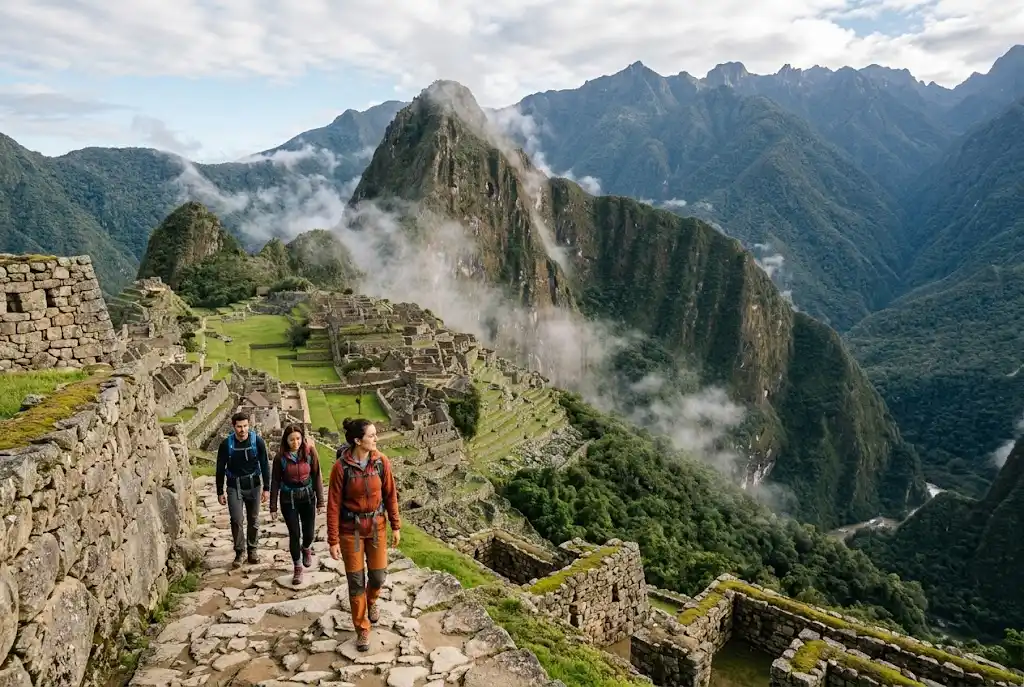
Machu Picchu is one of the most remarkable destinations in South America because its archaeological significance is inseparable from its mountain environment. The 15th-century Inca site sits high in the Andes within the Historic Sanctuary of Machu Picchu.
Visitors can explore stone structures, terraces, pathways, and viewpoints while learning about the achievements of the Inca civilization. The surrounding landscape adds another dimension to the experience, with steep mountains, cloud forests, and diverse habitats surrounding the archaeological complex.
UNESCO recognizes Machu Picchu for both its cultural and natural significance, describing it as an exceptional example of the relationship between human culture and the surrounding mountain environment.
Travelers can reach the area through organized routes from Cusco and other nearby destinations, with hiking and rail options available depending on the itinerary.
2. Cartagena, Colombia
Cartagena is one of the most interesting cities to visit in South America for travelers who enjoy history, architecture, Caribbean culture, and coastal scenery.
The historic walled city is known for colorful buildings, plazas, churches, balconies, and streets that reflect centuries of Spanish colonial influence. Walking through the old city allows visitors to experience its architecture while discovering restaurants, cafés, galleries, and local cultural spaces.
Cartagena also provides access to Caribbean beaches and islands, making it possible to combine cultural sightseeing with time near the water.
For travelers interested specifically in Colombia, our guide to the top places to visit in Cartagena provides another useful starting point.
3. Iguazú Falls, Argentina and Brazil
Iguazú Falls is one of South America’s most spectacular natural attractions and an excellent destination for travelers who want dramatic scenery and wildlife.
The waterfall system extends across the border between Argentina and Brazil, where the Iguazú and Iguaçu national parks protect the surrounding subtropical forest.
UNESCO describes the waterfall system as nearly three kilometers wide, with cascades and vertical drops reaching about 80 meters. The surrounding protected forests also support a wide variety of plants and wildlife.
Visitors can experience the falls from viewpoints and walking routes on both sides of the international border, although each country offers a somewhat different perspective.
4. The Galápagos Islands, Ecuador
The Galápagos Islands are an extraordinary destination for travelers interested in wildlife, geology, conservation, and the natural sciences.
The Ecuadorian archipelago consists of volcanic islands surrounded by a marine reserve. Its isolation and unusual ecosystems have produced distinctive wildlife, including giant tortoises, marine species, land iguanas, and several unique bird species.
UNESCO describes the Galápagos as a living museum of evolution, reflecting the islands’ importance to the development of evolutionary science.
A trip to the Galápagos is less about traditional urban sightseeing and more about observing wildlife, exploring volcanic landscapes, snorkeling, and learning about the islands’ ecosystems.
5. Patagonia, Argentina and Chile
Patagonia is one of the most impressive regions in South America for travelers who want wilderness, mountains, glaciers, hiking, and wide-open landscapes.
The region spans southern Argentina and Chile and includes national parks, mountain ranges, lakes, glaciers, coastal areas, and remote communities.
Travelers can choose from experiences ranging from multi-day trekking and glacier excursions to scenic drives and wildlife viewing. Patagonia also has a strong cultural dimension, with Indigenous heritage, rural traditions, local food, museums, and historic communities contributing to the travel experience.
Argentina’s official Patagonia tourism organization highlights national parks, cultural tourism, archaeology, wildlife watching, rural tourism, gastronomy, glaciers, and adventure activities across the region.
6. The Amazon Rainforest
The Amazon is one of the most important natural destinations in South America and offers a travel experience unlike a conventional city vacation.
The rainforest stretches across several South American countries, with Brazil containing the largest portion. Travelers can explore selected areas through guided river excursions, wildlife experiences, forest walks, conservation programs, and visits to communities.
The Amazon is particularly valuable for travelers interested in biodiversity and ecological systems. Rather than treating it simply as a sightseeing destination, visitors should approach rainforest travel with respect for local communities, wildlife, and conservation rules.
7. Cusco, Peru
Cusco is an excellent destination for travelers who want to experience the cultural history of the Andes before or after visiting Machu Picchu.
The city combines Inca heritage with Spanish colonial architecture. Stone walls, historic plazas, churches, museums, markets, and traditional neighborhoods provide opportunities to understand how different periods of Peruvian history shaped the city.
Cusco is also an important base for exploring the surrounding Andes, making it possible to combine cultural sightseeing with hiking and other outdoor experiences.
8. Rio de Janeiro, Brazil
Rio de Janeiro combines one of South America’s most recognizable urban landscapes with beaches, mountains, forests, and a vibrant cultural scene.
Visitors can explore famous viewpoints, spend time along Copacabana and Ipanema, visit cultural attractions, and experience neighborhoods with distinctive food, music, and local traditions.
The city’s natural setting is one of its greatest strengths. Mountains rise dramatically around the urban area, while Atlantic Forest landscapes provide a green backdrop to the city.
Rio is therefore a strong option for travelers who want a destination where nature and city culture can be experienced during the same trip.
9. Buenos Aires, Argentina
Buenos Aires offers a very different side of South America, with European-influenced architecture, neighborhood culture, food, music, literature, and the traditions associated with tango.
Travelers can explore historic neighborhoods, visit museums and cultural institutions, experience local cafés, and discover different architectural styles throughout the city.
Buenos Aires works especially well as part of a broader Argentina itinerary. It can serve as a cultural starting point before traveling toward Patagonia, Iguazú Falls, wine regions, or other parts of the country.
10. Uyuni Salt Flats, Bolivia
Salar de Uyuni is one of the most unusual landscapes in South America. The enormous salt flat creates a surreal environment where the horizon can appear almost endless.
During periods when a thin layer of water covers portions of the salt surface, reflections can create striking visual effects. During drier conditions, the geometric patterns of the salt crust become more visible.
The surrounding region also offers opportunities to experience high-altitude landscapes, lagoons, volcanoes, and remote communities.
Because conditions can be demanding at high altitude, travelers should plan transportation, accommodation, weather, and acclimatization carefully.
11. Atacama Desert, Chile
The Atacama Desert offers one of the most dramatic natural environments in South America. Its extremely dry conditions, high-altitude landscapes, salt flats, volcanic terrain, and clear skies make it particularly appealing to photographers and adventure travelers.
San Pedro de Atacama is a popular base for exploring surrounding attractions, including lagoons, geysers, desert valleys, and high-altitude landscapes.
The desert is also famous for its exceptional conditions for stargazing. Travelers can combine daytime exploration with nighttime astronomy experiences.
12. Quito, Ecuador
Quito is a fascinating destination for travelers interested in architecture, history, religion, art, and Andean culture.
The city’s historic center contains churches, plazas, colonial buildings, museums, and streets that reflect centuries of Ecuadorian history.
Quito also provides access to dramatic mountain landscapes, giving travelers the opportunity to combine cultural exploration with outdoor experiences.
Its location near the equator adds another interesting dimension to a visit, while nearby natural destinations make it a useful base for exploring more of Ecuador.
13. Torres del Paine, Chile
Torres del Paine National Park is one of Patagonia’s most famous destinations and a major choice for hikers and nature lovers.
The park is known for dramatic granite peaks, glaciers, lakes, rivers, forests, and open landscapes. Multi-day trekking routes allow visitors to experience the scenery at a slower pace, while shorter excursions can provide access to major viewpoints.
The park is best suited to travelers who are prepared for changing weather and outdoor conditions. Proper planning is especially important for longer hikes and remote areas.
14. Salvador da Bahia, Brazil
Salvador offers a strong combination of Brazilian history, Afro-Brazilian culture, architecture, music, food, and coastal scenery.
The historic Pelourinho district is one of the city’s most recognizable areas, with colorful colonial buildings, churches, plazas, and cultural attractions.
Salvador is also known for its strong Afro-Brazilian cultural traditions, making it particularly interesting for travelers who want to explore the cultural diversity of Brazil rather than focusing only on natural attractions.
The city’s coastal setting makes it possible to add beaches and waterfront experiences to a cultural itinerary.
15. Angel Falls and Canaima National Park, Venezuela
Canaima National Park is home to Angel Falls, one of the world’s most famous waterfalls. The surrounding landscape is characterized by enormous table-top mountains known as tepuis, rivers, forests, and dramatic natural scenery.
The destination offers a combination of geological landscapes, Indigenous cultural heritage, wildlife, and adventure travel.
Because Canaima is remote, visitors should arrange transportation and guided experiences carefully and follow local and park guidance.
Best Places to Visit in South America for Culture and Nature
| Destination | Best For | Culture | Nature |
|---|---|---|---|
| Machu Picchu | Ancient history and mountains | Inca heritage | Andes and cloud forest |
| Cartagena | Colonial history and Caribbean scenery | Architecture and local culture | Coast and islands |
| Iguazú Falls | Waterfalls and wildlife | Regional heritage | Rainforest and waterfalls |
| Galápagos Islands | Wildlife and conservation | Local island communities | Volcanic islands and marine ecosystems |
| Patagonia | Adventure and wilderness | Indigenous and rural heritage | Mountains, glaciers, and wildlife |
| Cusco | Andean culture | Inca and colonial heritage | Andean landscapes |
| Rio de Janeiro | City and beach experiences | Music, food, and urban culture | Mountains, forest, and beaches |
| Buenos Aires | Food, architecture, and tango | Urban culture and history | Urban parks and nearby landscapes |
| Uyuni | Unique landscapes | Highland communities | Salt flats and lagoons |
| Atacama Desert | Adventure and stargazing | Andean heritage | Desert, volcanoes, and salt flats |
How to Choose the Right South America Destination
South America is too large to experience properly in one short trip, so choosing destinations based on your interests is usually more effective than trying to cover as many countries as possible.
- Choose Peru for Inca history, Machu Picchu, Cusco, and Andean culture.
- Choose Colombia for colonial cities, Caribbean culture, mountains, and diverse landscapes.
- Choose Argentina and Chile for Patagonia, mountains, glaciers, deserts, and distinctive cities.
- Choose Brazil for major cities, beaches, rainforest, music, food, and cultural diversity.
- Choose Ecuador for the Galápagos, Andes, colonial Quito, and diverse ecosystems.
- Choose Bolivia for Salar de Uyuni and high-altitude landscapes.
- Choose Venezuela for Canaima National Park and Angel Falls, subject to current travel conditions and access.
Best Time to Visit South America
There is no single best month to visit the entire continent because South America covers multiple climate zones and both hemispheres.
Andes and Machu Picchu: The drier months are often preferred for trekking and sightseeing, although conditions vary by location and altitude.
Patagonia: The warmer months in the Southern Hemisphere are generally the main season for many outdoor activities and trekking routes.
Amazon: Conditions vary significantly depending on the specific region and the type of wildlife or river experience you want.
Galápagos: Wildlife and marine conditions vary throughout the year, so travelers should choose dates according to the experiences they most want to see.
Atacama: The desert can be visited throughout the year, although temperatures and conditions vary between daytime and nighttime and across elevations.
Always check current official destination information, weather conditions, park rules, and access requirements before booking outdoor activities.
Tips for Exploring South America
- Do not underestimate distances: South America is a huge continent, and flights between destinations can take several hours.
- Plan around geography: Combining nearby destinations can reduce unnecessary travel time.
- Consider altitude: Destinations such as Cusco, La Paz, and parts of the Andes require travelers to consider altitude and acclimatization.
- Research seasonal conditions: Rainfall, temperatures, trail access, and wildlife opportunities can change throughout the year.
- Use reputable local guides: Guided experiences can be particularly valuable in remote natural areas and protected environments.
- Respect local cultures: Learn basic local customs and follow guidance when visiting Indigenous communities and cultural sites.
- Protect natural areas: Follow park regulations, avoid disturbing wildlife, and minimize environmental impact.
Final Thoughts
The most interesting places to visit in South America are often those where culture and nature come together. Machu Picchu connects Inca history with the Andes, Cartagena combines colonial heritage with Caribbean landscapes, and Patagonia brings together dramatic wilderness with regional traditions.
Other destinations offer a different balance. The Galápagos is ideal for wildlife and conservation, Buenos Aires is perfect for urban culture, Iguazú Falls delivers spectacular natural scenery, while the Atacama Desert and Salar de Uyuni provide landscapes unlike almost anywhere else.
Rather than trying to see the entire continent in one trip, choose a few destinations that match your interests and build your itinerary around them. Whether your priority is ancient history, Indigenous culture, wildlife, mountains, rainforest, beaches, or unusual landscapes, South America offers an extraordinary range of experiences.