

With more than 125 miles of hiking trails, visitors can create anything from a short half-day outing to a full weekend of hiking, wildlife watching, scenic drives, history, and outdoor recreation.
1. Brandywine Falls
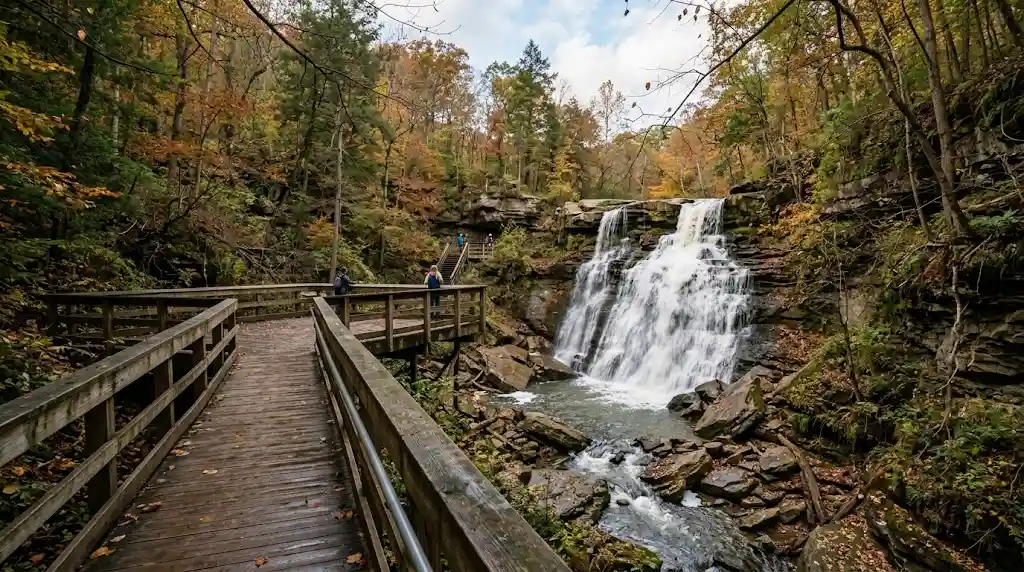
Brandywine Falls is the obvious starting point for many first-time visitors and one of the most popular attractions in Cuyahoga Valley National Park. The waterfall drops approximately 60 feet through a sandstone gorge, creating a dramatic landscape that is especially impressive after periods of higher water flow.
A boardwalk provides views of the falls from observation areas, while the Brandywine Gorge Loop allows visitors to explore farther into the surrounding landscape. The National Park Service notes that the falls are open daily from dawn to dusk, although the boardwalk can close during icy conditions.
Because Brandywine Falls is extremely popular, parking can become difficult during pleasant-weather periods. The National Park Service recommends arriving early or later in the day rather than parking along the road or outside designated spaces.
2. The Ledges
The Ledges are among the most distinctive natural features in the park. Large sandstone formations create dramatic cliffs, crevices, passages, and viewpoints that feel very different from the surrounding forest.
The Ledges Overlook is particularly attractive for photography and sunset views. The National Park Service describes the Ledges as a plateau of striking rock formations in the Virginia Kendall area.
The area is a strong choice for visitors who want scenery without visiting another conventional waterfall. Wear sturdy footwear and stay on designated routes because the rocky terrain can be uneven.
3. Beaver Marsh
Beaver Marsh is one of the best places in Cuyahoga Valley for wildlife watching. The wetland supports a diverse natural community where visitors may see beavers, turtles, frogs, birds, and other wildlife.
The Towpath Trail crosses the marsh on a boardwalk, making it one of the more accessible nature experiences in the park. The National Park Service describes Beaver Marsh as one of the park’s most diverse natural communities and notes that it is suitable for photography, bird watching, and family outings.
Wildlife activity can be especially rewarding during quieter periods of the day. Visitors should observe animals from a respectful distance and avoid feeding or disturbing them.
4. Ohio & Erie Canal Towpath Trail
The Ohio & Erie Canal Towpath Trail follows the historic route of the Ohio & Erie Canal and provides one of the easiest ways to explore the valley on foot or by bicycle.
The trail connects several important park destinations, which means you can use it as both a recreational route and a way to reach attractions. The National Park Service identifies it as the park’s most popular trail.
Because the Towpath covers a substantial distance, you do not need to complete the entire route. Choose a section that matches your available time, fitness level, and nearby attractions.
5. Blue Hen Falls
Blue Hen Falls is another popular waterfall destination within Cuyahoga Valley National Park. It offers a more intimate experience than Brandywine Falls, with the waterfall surrounded by forest.
The National Park Service lists Blue Hen Falls among the park’s principal places to visit and describes it as a favorite destination for visitors looking for one of the area’s scenic waterfalls.
Trail conditions can vary throughout the year, so check current park information before setting out. A waterfall hike is particularly rewarding after suitable rainfall, but wet trails can also become slippery.
6. Everett Covered Bridge
The Everett Covered Bridge combines history with scenery. The bridge crosses Furnace Run and is the only remaining covered bridge in Summit County, Ohio, according to the National Park Service.
The surrounding wooded landscape makes the bridge a worthwhile photography stop, particularly in autumn when surrounding foliage changes color.
This destination also works well for travelers who want to include historical structures in a nature-focused itinerary.
7. Kendall Lake Area
Kendall Lake provides a quieter setting for visitors who want to enjoy the park’s wooded landscape without focusing exclusively on major attractions. The surrounding hills and trails make the area popular with hikers.
The lake can also be a relaxing stop between longer hikes. Bring water, wear comfortable shoes, and check trail conditions before starting a longer route.
8. Canal Exploration Center
The Canal Exploration Center adds historical context to a visit to Cuyahoga Valley. The site occupies a former tavern and store associated with the Ohio & Erie Canal era.
Visiting the center helps explain why the valley’s transportation history is so important to the landscape. It is a good addition for travelers who want to understand the cultural history behind the Towpath Trail rather than treating the park solely as a hiking destination.
9. Boston Mill Visitor Center
Boston Mill Visitor Center is a useful starting point for understanding the park before heading onto trails and attractions. The National Park Service identifies the Village of Boston and Boston Mill Visitor Center as important destinations within Cuyahoga Valley.
Stopping here can help you learn about current conditions, maps, activities, and nearby destinations. It is particularly useful when you are visiting for the first time or when weather and trail conditions may affect your plans.
10. Village of Peninsula
The Village of Peninsula offers a different experience from the park’s natural attractions. This historic community sits along the Cuyahoga River and is surrounded by national park land.
Peninsula is useful as a base for exploring nearby trails and cultural attractions. Visitors can combine outdoor activities with a meal or a relaxed walk through the village.
11. Station Road Bridge Area
The Station Road Bridge Area is another place where the park’s natural and historic character come together. The area provides access to trails and views around the Cuyahoga River corridor.
It can be a good alternative when major attractions such as Brandywine Falls are busy. As with all park locations, check current conditions and parking information before setting out.
12. Cuyahoga Valley Scenic Railroad
The Cuyahoga Valley Scenic Railroad provides a different way to experience the park. Instead of hiking between destinations, visitors can see portions of the valley from a train.
The National Park Service includes a scenic train ride among the park’s featured things to do.
A train ride can be especially appealing to families, photographers, and travelers who want to experience the scenery without spending the entire day on foot. Check the current operating schedule before planning your visit because train services can vary by date and season.
13. Cuyahoga River
The Cuyahoga River is the natural feature that gives the valley much of its character. It winds through the park and creates opportunities for photography, wildlife observation, fishing, and paddling where permitted.
The National Park Service lists paddling, fishing, and other river-related activities among the park’s outdoor recreation options.
Visitors planning to paddle should review current regulations and conditions before entering the river. Water conditions can change, so recreational plans should always take safety information into account.
14. Bath Road Heronry
Bath Road Heronry is a worthwhile destination for bird watchers and wildlife enthusiasts. The National Park Service identifies it as a local favorite for wildlife watching and notes that great blue herons build nests and raise their young in the area from February through June.
Bring binoculars or a camera with a suitable lens if birding is one of your priorities. Keep your distance from nesting wildlife and follow posted guidance to avoid disturbing birds.
15. Scenic Overlooks and Fall Foliage Areas
Cuyahoga Valley becomes especially attractive in autumn, when forests across the valley take on shades of yellow, orange, and red. The Ledges Overlook is one of the most recognizable viewpoints, but many trails and roads provide seasonal scenery.
Fall is a popular period for visiting the park, so expect increased traffic at major attractions. The National Park Service specifically includes leaf peeping among the park’s seasonal outdoor activities.
If photography is your priority, visit during the softer light of morning or late afternoon and allow extra time for scenic stops.
Best Places to Visit in Cuyahoga Valley National Park by Interest
- For first-time visitors: Brandywine Falls, the Ledges, Beaver Marsh, and the Towpath Trail.
- For waterfalls: Brandywine Falls and Blue Hen Falls.
- For wildlife: Beaver Marsh and Bath Road Heronry.
- For hiking: The Ledges, Kendall Lake, Brandywine Gorge, and the Towpath Trail.
- For history: Canal Exploration Center and Everett Covered Bridge.
- For families: Beaver Marsh, the Towpath Trail, scenic train experiences, and accessible attractions.
- For photography: Brandywine Falls, the Ledges, Beaver Marsh, Everett Covered Bridge, and fall foliage viewpoints.
- For cycling: Sections of the Ohio & Erie Canal Towpath Trail.
How Much Time Do You Need in Cuyahoga Valley National Park?
You can see several highlights in a few hours, but a full day provides a much better introduction to the park.
Half-Day Visit
If you only have a few hours, start with Brandywine Falls, then choose either the Ledges or Beaver Marsh. The National Park Service specifically recommends these popular attractions for a short visit.
Brandywine Falls itself can be a relatively quick stop, while the Brandywine Gorge Trail allows visitors with additional time to explore farther into the area.
One-Day Visit
For a full day, combine Brandywine Falls with the Ledges and Beaver Marsh, then spend additional time on the Towpath Trail or visit a historical destination such as the Canal Exploration Center or Everett Covered Bridge.
Two-Day Visit
With two days, you can explore at a slower pace. Dedicate one day to waterfalls, rock formations, and hiking, then use the second for the Towpath Trail, wildlife watching, historic sites, Peninsula, and a scenic train experience if operating dates match your trip.
Best Time to Visit Cuyahoga Valley National Park
Cuyahoga Valley is a year-round destination, and each season provides a different reason to visit.
Spring brings wildflowers, flowing waterfalls, and active wetlands. Summer is well suited to hiking, cycling, paddling, and longer outdoor days. Fall is especially popular for colorful foliage and photography. Winter transforms waterfalls, forests, and rock formations with snow and ice, although conditions can make trails and boardwalks slippery.
Before visiting, check the National Park Service’s current conditions and alerts because weather, construction, trail conditions, and temporary closures can affect access.
Tips for Visiting Cuyahoga Valley National Park
Start Early at Popular Attractions
Brandywine Falls is particularly busy during pleasant weather. The National Park Service reports that its parking area can fill during the late morning and afternoon, so an early start can make your visit easier.
Check Current Conditions
Conditions can change throughout the year. Check official alerts, trail information, facility schedules, and weather before leaving for the park.
Wear Appropriate Footwear
Even relatively short trails can include roots, rocks, stairs, mud, or uneven terrain. Comfortable shoes with good traction are useful for most visitors.
Respect Wildlife
Cuyahoga Valley is home to diverse wildlife. Watch animals from a safe distance, never feed wildlife, and avoid approaching nests or young animals.
Stay on Designated Trails
Popular scenic areas can experience heavy visitor traffic. Staying on designated routes helps protect vegetation, geological features, and sensitive habitats.
Is Cuyahoga Valley National Park Worth Visiting?
Yes. Cuyahoga Valley is particularly appealing because it offers a broad mix of experiences in a relatively accessible area. You can see a waterfall in the morning, walk beside a historic canal route, watch wildlife at a wetland, photograph sandstone formations, and finish the day exploring a nearby historic village.
Its location near Cleveland and Akron also makes it convenient for travelers who want to add a national park experience to an Ohio city trip. The combination of natural scenery and cultural history gives the park a character that is different from more remote mountain or desert national parks.
Final Thoughts
The best places to visit in Cuyahoga Valley National Park include far more than one famous waterfall. Brandywine Falls is an essential first stop, while the Ledges offer dramatic rock scenery and Beaver Marsh provides some of the park’s best wildlife opportunities.
The Ohio & Erie Canal Towpath Trail, Blue Hen Falls, Everett Covered Bridge, Kendall Lake, Canal Exploration Center, Peninsula, and the Cuyahoga River add even more variety. With more than 125 miles of trails and a wide range of outdoor activities, the park can easily support multiple visits.
For more U.S. travel inspiration, explore our guides to Minnesota in winter, South Carolina in winter, places near St. George, Utah, Houston, and Boston.