

Here are the top downtown Chicago attractions to consider, along with practical ways to organize them into a memorable visit.
1. Millennium Park
Millennium Park is one of the first places most visitors should see in downtown Chicago. Located in the Loop, the park combines public art, architecture, gardens, performances, and open space in the heart of the city.
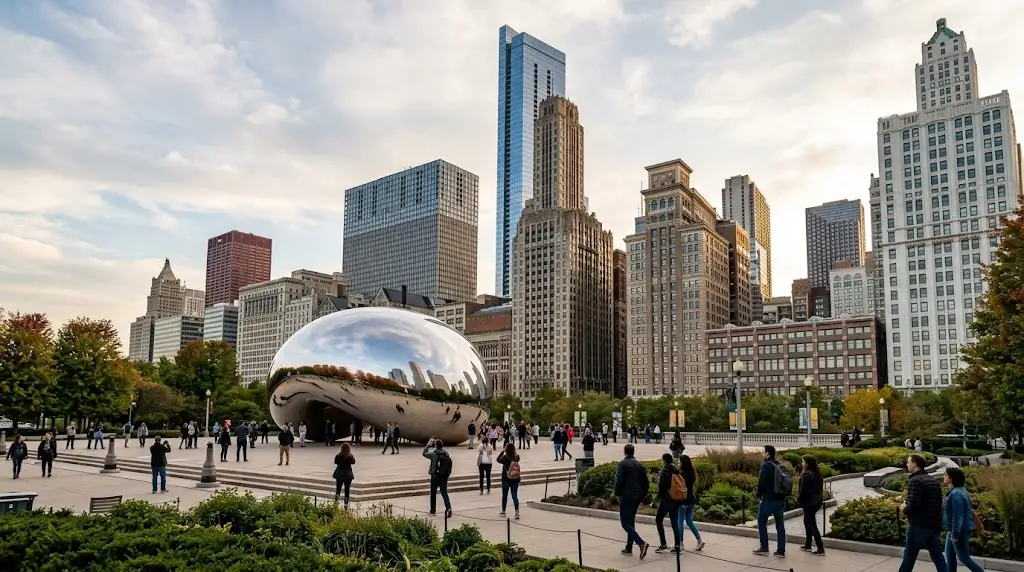
The park’s most famous attraction is Cloud Gate, better known as “The Bean.” Its polished surface reflects the surrounding skyline and creates one of Chicago’s most recognizable photo opportunities. Other highlights include Crown Fountain, Lurie Garden, and the Jay Pritzker Pavilion.
Millennium Park is particularly convenient for first-time visitors because the Art Institute of Chicago, Maggie Daley Park, Grant Park, and several downtown attractions are nearby.
2. Chicago Riverwalk
The Chicago Riverwalk is one of the best places to experience the city’s architecture from ground level. The pedestrian waterfront route follows the Chicago River through downtown and provides views of some of the city’s most distinctive skyscrapers.
You can walk along the river, stop at waterfront restaurants, join a boat tour, or simply find a place to sit and watch the city. The Riverwalk also offers access to activities such as kayaking and architectural experiences.
For many travelers, an architecture cruise combined with a Riverwalk stroll is one of the most effective ways to understand why Chicago is famous for architecture.
3. Art Institute of Chicago
The Art Institute of Chicago is one of the city’s premier cultural attractions and an excellent choice when you want to spend several hours indoors.
Its extensive collections cover thousands of years of art and include celebrated works across painting, sculpture, photography, prints, and other media. The museum is located beside Millennium Park, making it easy to combine the two attractions during the same day.
If you have limited time, check the museum’s current exhibitions and collection highlights before arriving so you can prioritize the galleries that interest you most. Chicago’s official tourism organization describes the Art Institute as one of the country’s oldest and largest art museums.
4. Navy Pier
Navy Pier extends into Lake Michigan and is one of Chicago’s best-known waterfront attractions. It combines lake views with restaurants, entertainment, shopping, cultural attractions, boat rides, and family activities.
The Centennial Wheel is one of the pier’s signature attractions, while seasonal events and performances add additional reasons to visit. Navy Pier is especially appealing to families, couples, and travelers who want a relaxed break from downtown sightseeing.
Official Chicago tourism guidance lists Navy Pier among the city’s must-see attractions and highlights its lakefront activities, restaurants, entertainment, and boat experiences.
5. Skydeck Chicago at Willis Tower
For a dramatic view over Chicago, visit Skydeck Chicago at Willis Tower. The observation deck provides a high-altitude perspective of the city and its surrounding landscape.
The Ledge, a glass viewing structure extending outside the building, adds an extra thrill for visitors comfortable with heights. Because observation decks can be busy, booking ahead can be useful, especially during popular travel periods.
Skydeck is particularly worthwhile near sunset when changing light transforms the skyline, although daytime visits can provide clearer views of Chicago’s streets, river, and lake.
6. Chicago Cultural Center
The Chicago Cultural Center is one of the best free attractions in downtown Chicago. Its historic interior, exhibitions, performances, and architectural details make it worth visiting even when you only have a short amount of time.
One of its most impressive features is the large Tiffany glass dome. The center also hosts cultural programming and public events throughout the year.
Its location near Millennium Park makes it easy to include on a walking itinerary without adding significant travel time.
7. Grant Park and Buckingham Fountain
Grant Park is often described as Chicago’s “front yard” and provides a broad green space between downtown and Lake Michigan. The park contains several landmarks and hosts major events and festivals.
Buckingham Fountain is one of its most recognizable features. When operating, the fountain creates an impressive centerpiece surrounded by open parkland and city views.
Grant Park is a good choice when you want to combine sightseeing with outdoor space rather than spending the entire day inside museums and buildings.
8. Maggie Daley Park
Maggie Daley Park sits next to Millennium Park and is particularly appealing to families and active travelers. Its recreation areas, climbing features, playgrounds, and seasonal activities make it different from the more traditional green spaces nearby.
The park is connected to Millennium Park by the BP Bridge, making it easy to add to a downtown walking route. During winter, the skating ribbon becomes one of the area’s seasonal highlights.
9. 360 CHICAGO
360 CHICAGO provides another opportunity to see Chicago from above. Located at 875 North Michigan Avenue, it offers panoramic views of the skyline, Lake Michigan, and surrounding neighborhoods.
Unlike Skydeck, which is in the Loop, 360 CHICAGO sits farther north near the Magnificent Mile. It therefore works particularly well for travelers combining downtown sightseeing with shopping and Michigan Avenue.
Choose between the two observation experiences based on your itinerary, preferred views, and interest in their different viewing environments. Chicago tourism guidance lists both 360 CHICAGO and Skydeck among the city’s major observation decks.
10. Chicago Theatre
The Chicago Theatre is one of the city’s most recognizable historic theater buildings. Its illuminated marquee has become an iconic part of the downtown streetscape.
Seeing a performance is the best way to experience the venue, but the theater’s exterior is also worth seeing while exploring the Loop. Chicago’s downtown theater district includes several historic venues presenting Broadway productions, concerts, comedy, and other performances.
11. Magnificent Mile
The Magnificent Mile along Michigan Avenue is one of Chicago’s best-known shopping and dining areas. It is a useful addition to a downtown itinerary if you want to combine sightseeing with retail stores, restaurants, hotels, and architectural landmarks.
The area is north of the Loop, so it can be paired naturally with 360 CHICAGO, River North, and other nearby attractions.
Even if shopping is not your priority, walking along Michigan Avenue gives you a sense of Chicago’s commercial energy and provides access to some of the city’s most recognizable buildings.
12. Chicago Architecture Cruise
A Chicago architecture cruise is one of the best ways to understand the city’s skyline. Instead of looking upward from the streets, you can travel along the Chicago River and view the buildings from the water.
Guided cruises typically explain the history and design of major buildings while providing unobstructed views for photography. Official Chicago tourism information describes architecture boat tours as an essential Chicago experience.
For first-time visitors, this can be one of the most rewarding activities because it combines sightseeing, history, architecture, and transportation into one experience.
13. The Loop
The Loop is the heart of downtown Chicago and a destination in itself. It is where many of the city’s most famous attractions, theaters, public spaces, restaurants, and architectural landmarks are concentrated.
Walking through the Loop allows you to see Chicago’s famous elevated train system, historic buildings, skyscrapers, public art, and busy streets. Official Chicago tourism information describes the Loop as the city’s central downtown neighborhood and highlights its architecture, Riverwalk, Millennium Park, theater district, shopping, and dining.
Rather than treating the Loop as one attraction, use it as the geographic center of your sightseeing itinerary.
14. Chicago River Architecture and Downtown Bridges
Chicago’s movable bridges and riverfront architecture are easy to overlook when you are focused on major attractions, but they are an important part of the city’s identity.
Walking along the Riverwalk lets you see the relationship between the river, bridges, historic structures, and modern skyscrapers. The McCormick Bridgehouse & Chicago River Museum provides additional context about the city’s bridges and river system.
This is a particularly good option for travelers who enjoy photography, architecture, engineering, and urban history.
15. Lake Michigan Lakefront
Downtown Chicago’s relationship with Lake Michigan is one of its defining characteristics. The lakefront provides open views, walking paths, beaches, parks, and a dramatic contrast to the city’s skyscrapers.
The Lakefront Trail runs along the waterfront and offers opportunities for walking, cycling, and sightseeing. Chicago’s official tourism organization highlights the city’s extensive lakefront and the Lakefront Trail as major outdoor assets.
Even if you do not have time for a long walk, spending some time near the lake gives you a different perspective on the city.
Best Places to Visit in Chicago Downtown by Interest
- For first-time visitors: Millennium Park, Chicago Riverwalk, Art Institute, and an architecture cruise.
- For families: Navy Pier, Maggie Daley Park, Millennium Park, and nearby museums.
- For architecture: Chicago Riverwalk, architecture cruises, the Loop, and historic downtown theaters.
- For art lovers: Art Institute of Chicago, Chicago Cultural Center, and public art throughout Millennium Park.
- For shopping: Magnificent Mile and State Street.
- For skyline views: Skydeck Chicago or 360 CHICAGO.
- For outdoor activities: Millennium Park, Grant Park, Maggie Daley Park, Riverwalk, and Lake Michigan.
- For evening entertainment: Chicago’s theater district, River North, and Navy Pier.
Best Free Places to Visit in Chicago Downtown
Chicago does not have to be an expensive destination. Several major downtown experiences can be enjoyed without paying an admission fee.
Millennium Park is free and open to the public, allowing visitors to see Cloud Gate, Crown Fountain, Lurie Garden, and the park’s outdoor spaces.
The Chicago Cultural Center is another excellent free stop, particularly for architecture and cultural programming. Walking along the Chicago Riverwalk, exploring Grant Park, and enjoying views around Lake Michigan can also provide memorable experiences without the cost of a major attraction ticket.
How Many Days Do You Need in Downtown Chicago?
A single day can cover several major attractions if you organize them geographically, but two days provide a much more comfortable experience.
One-Day Chicago Downtown Itinerary
- Start at Millennium Park and see Cloud Gate.
- Visit the Art Institute of Chicago.
- Walk through the Chicago Cultural Center.
- Explore the Chicago Riverwalk.
- Take an architecture cruise.
- Finish with dinner and an evening activity downtown.
Two-Day Chicago Downtown Itinerary
On the second day, add Navy Pier, the lakefront, Magnificent Mile, and one of Chicago’s observation decks. You can also spend more time in the theater district or choose another museum based on your interests.
This approach is consistent with current Chicago tourism recommendations, which suggest Millennium Park, the Art Institute, an observation deck, Riverwalk, and an architecture cruise for a one-day visit, with Navy Pier and other attractions added for longer stays.
When Is the Best Time to Visit Downtown Chicago?
Chicago can be enjoyable throughout the year, but the experience changes considerably by season.
Spring is a good time for parks and outdoor walking as temperatures become more comfortable. Summer is ideal for Riverwalk patios, lakefront activities, outdoor concerts, and festivals, although popular attractions can be busy. Fall offers comfortable sightseeing conditions and attractive colors in parks and along the lakefront. Winter can be cold, but museums, theaters, restaurants, indoor attractions, and seasonal skating provide plenty to do.
If outdoor sightseeing is your priority, check the forecast before planning long walking routes because Chicago weather can change quickly.
Tips for Exploring Downtown Chicago
Group Attractions by Location
Downtown Chicago has many attractions within walking distance, but the city is larger than it may appear on a map. Grouping nearby sights together saves time and reduces unnecessary travel.
Wear Comfortable Shoes
Walking is one of the best ways to experience downtown Chicago. Comfortable footwear can make a major difference when combining parks, museums, Riverwalk, shopping streets, and architectural landmarks.
Book Popular Experiences Ahead
Observation decks, architecture cruises, major museum exhibitions, and performances can become busy during peak periods. Check official attraction schedules and ticket requirements before your visit.
Use Public Transportation
Chicago’s public transportation system can help you move between downtown and other neighborhoods without relying entirely on a car. For a downtown-focused itinerary, walking combined with public transportation is often practical.
Leave Time for the River and Lake
Do not spend your entire Chicago trip looking at buildings from street level. The Riverwalk and Lake Michigan waterfront provide some of the city’s best perspectives and help explain what makes Chicago’s geography distinctive.
Final Thoughts
The best places to visit in Chicago downtown offer an unusually broad combination of architecture, culture, outdoor space, entertainment, and waterfront scenery. Millennium Park and Cloud Gate provide the classic introduction, while the Art Institute adds world-class culture and the Chicago Riverwalk reveals the city’s architectural character.
Navy Pier, the lakefront, Maggie Daley Park, the Magnificent Mile, observation decks, theaters, and architecture cruises give you plenty of ways to customize your trip. If you have only one day, focus on the Loop and its nearby attractions. With two or more days, expand toward the lakefront, Navy Pier, River North, and additional museums.
For more U.S. travel inspiration, explore our guides to popular places to visit in Boston, the best places to visit in Houston, Philadelphia’s Center City, Miami, and Atlanta.