
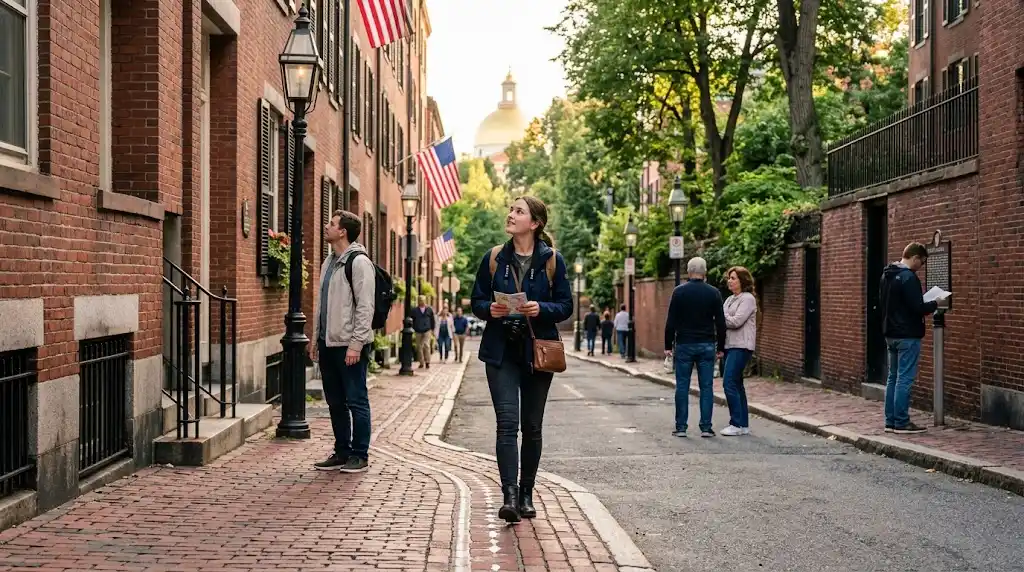

Boston is one of the most rewarding cities in the United States for travelers who enjoy history, culture, architecture, museums, sports, waterfront views, and walkable neighborhoods. From the historic Freedom Trail and Boston Common to Fenway Park, the North End, and Boston Harbor, the city offers attractions for almost every type of traveler.
For first-time visitors, Boston is especially convenient because many major attractions are concentrated around a relatively compact downtown area. You can spend one day exploring historic landmarks, another visiting museums and neighborhoods, and additional time enjoying the waterfront or nearby green spaces.
This guide covers the most popular places to visit in Boston, along with practical suggestions for organizing your sightseeing itinerary.
1. Freedom Trail
The Freedom Trail is one of the best places to begin a first visit to Boston. The historic route connects 16 significant sites associated with Boston’s colonial and Revolutionary-era history.
The trail passes landmarks including Faneuil Hall, the Old State House, Paul Revere House, Old North Church, and the Bunker Hill Monument. Because the route connects several attractions, it allows visitors to experience multiple parts of Boston without constantly relying on transportation.
The National Park Service maintains Boston National Historical Park and provides visitor information for exploring the historic sites along the trail.
Allow several hours if you want to explore multiple landmarks rather than simply following the route for photographs.
2. Boston Common
Boston Common is one of the city’s most recognizable public spaces and an excellent starting point for sightseeing. Established in 1634, it is widely recognized as America’s oldest public park.
The Common provides open lawns, walking paths, recreational areas, and convenient access to several downtown attractions. It sits next to the Boston Public Garden, making it easy to visit both parks during the same walk.
Boston Common is also close to the Freedom Trail and Beacon Hill, so visitors can combine several major attractions without traveling far.
3. Boston Public Garden
Located directly beside Boston Common, the Boston Public Garden offers a more formal landscaped setting. The garden is known for its seasonal flowers, lagoon, walking paths, monuments, and famous Swan Boats.
It is an ideal stop for travelers who want scenic surroundings without leaving the center of the city.
The Public Garden is particularly enjoyable in spring and during warmer months, although the surrounding area remains worthwhile throughout the year.
4. Fenway Park
Fenway Park is one of the most famous sports landmarks in Boston and an essential stop for baseball fans. Home of the Boston Red Sox, the historic ballpark has become part of the city’s cultural identity.
You do not necessarily need to attend a baseball game to experience Fenway Park. Stadium tours provide opportunities to learn about the ballpark’s history and see areas that are not normally visible during a regular city tour.
Sports travelers can dedicate several hours to the Fenway-Kenmore area and combine the visit with nearby museums and restaurants.
5. Museum of Fine Arts, Boston
The Museum of Fine Arts, Boston, is one of the city’s major cultural attractions. Its extensive collection covers art from different periods, regions, and artistic traditions.
Because the museum is large, visitors should identify the galleries or exhibitions they most want to see before arriving. Art enthusiasts can easily spend several hours exploring the collection.
The Museum of Fine Arts also works well as part of a cultural itinerary that includes the nearby Isabella Stewart Gardner Museum.
6. New England Aquarium
The New England Aquarium is one of Boston’s most popular waterfront attractions and a strong choice for families and travelers interested in marine life.
Its exhibits introduce visitors to ocean ecosystems and aquatic animals while emphasizing education and conservation.
After visiting the aquarium, you can continue exploring the Boston waterfront, walk along nearby harbor areas, or look into available harbor excursions.
7. Faneuil Hall and Quincy Market
Faneuil Hall is one of Boston’s most important historic landmarks and a major stop along the Freedom Trail. Its history is closely connected with public debate and the political development of Boston during the colonial and Revolutionary periods.
The surrounding Faneuil Hall Marketplace and Quincy Market area provide a much more contemporary experience, with food vendors, shops, public spaces, and entertainment.
This combination of history, dining, shopping, and street activity makes the area particularly popular with first-time visitors.
8. Boston Harbor
Boston Harbor provides a different perspective on the city. Instead of focusing on historic streets and museums, visitors can experience Boston from its waterfront.
Depending on the season, travelers may find harbor cruises, ferry services, sightseeing opportunities, and excursions toward the Boston Harbor Islands.
The waterfront is also a pleasant place for an evening walk after spending the day exploring downtown Boston.
9. USS Constitution and Charlestown Navy Yard
The Charlestown Navy Yard is an excellent destination for visitors interested in American naval history. It forms part of Boston National Historical Park and is home to the USS Constitution and related historic attractions.
The USS Constitution is particularly significant because of its connection to the early history of the United States Navy.
Visitors interested in history can combine the Charlestown Navy Yard with the Freedom Trail for a more complete historical itinerary.
10. Beacon Hill
Beacon Hill is one of Boston’s most recognizable historic neighborhoods. Its brick sidewalks, Federal-style architecture, narrow streets, and traditional residential buildings give it a distinctive character.
Walking through the neighborhood is one of the best ways to experience it. Rather than visiting only one famous street, allow time to explore several blocks and appreciate the architecture and atmosphere.
Beacon Hill is also close to Boston Common and the Public Garden, making it easy to add to a central Boston walking itinerary.
11. Boston Tea Party Ships & Museum
The Boston Tea Party Ships & Museum focuses on one of the most famous events associated with Boston’s Revolutionary-era history.
The attraction can complement a Freedom Trail itinerary by giving visitors a more focused look at the Boston Tea Party and its historical context.
Travelers interested in American history can combine this experience with Faneuil Hall, the Old State House, and other downtown landmarks.
12. Isabella Stewart Gardner Museum
The Isabella Stewart Gardner Museum offers a distinctive cultural experience for visitors interested in art, architecture, and museum design.
The museum is known for its unique setting and collection, giving visitors an experience that differs from a conventional large-scale art museum.
Because it is located near the Museum of Fine Arts, travelers interested in art can visit both museums as part of a dedicated cultural day.
13. Boston Public Library
The Boston Public Library is an important cultural and architectural landmark in the Back Bay area. Its location near Copley Square makes it easy to include in a sightseeing route through central Boston.
Visitors can combine the library with Copley Square, Newbury Street, the Back Bay neighborhood, and other nearby attractions.
Even if you are not planning an extended library visit, the surrounding architecture makes this area worth exploring.
14. North End
The North End is Boston’s historic Italian-American neighborhood and one of the city’s best areas for combining sightseeing with food.
The neighborhood contains important historic attractions including Paul Revere House and Old North Church, while its restaurants, cafés, bakeries, and narrow streets create a distinctive local atmosphere.
Rather than treating the North End as a quick stop, consider spending several hours exploring its historic sites and food scene.
15. Emerald Necklace
The Emerald Necklace offers travelers an opportunity to experience a greener side of Boston. The connected park system includes multiple parks and green spaces associated with landscape architect Frederick Law Olmsted.
It provides a useful alternative for visitors who want to balance museums and historic attractions with outdoor recreation.
You do not need to explore the entire system during one trip. Choose a section that fits your schedule and interests.
Best Places to Visit in Boston by Interest
| Travel Interest | Best Places to Visit |
|---|---|
| First-time visitors | Freedom Trail, Boston Common, Public Garden, Faneuil Hall |
| American history | Freedom Trail, USS Constitution, Boston Tea Party Ships & Museum |
| Families | New England Aquarium, Boston Common, Boston Harbor |
| Art and culture | Museum of Fine Arts, Isabella Stewart Gardner Museum, Boston Public Library |
| Sports | Fenway Park |
| Photography | Beacon Hill, Public Garden, Boston Common, Boston Harbor |
| Food and neighborhoods | North End, Faneuil Hall, Quincy Market |
| Outdoor experiences | Boston Common, Public Garden, Boston Harbor, Emerald Necklace |
How Many Days Do You Need in Boston?
One day: Focus on Boston Common, the Public Garden, the Freedom Trail, Faneuil Hall, and the North End.
Two days: Add Fenway Park, one major museum, Boston Harbor, and the Charlestown Navy Yard.
Three days or more: Add Beacon Hill, Back Bay, additional museums, waterfront experiences, and sections of the Emerald Necklace.
If you are also comparing Boston with other major U.S. destinations, you can explore our guides to places to visit in downtown Chicago, places to visit in Houston, places to visit in Atlanta, and places to visit in Philadelphia’s Center City.
Tips for Visiting Boston Attractions
- Wear comfortable shoes: Walking is one of the best ways to experience central Boston.
- Group nearby attractions: Boston Common, the Public Garden, Beacon Hill, and parts of the Freedom Trail can be visited together.
- Check official schedules: Museum hours, tours, seasonal attractions, and admission policies can change.
- Use public transportation: The MBTA can help connect downtown with neighborhoods and attractions farther away.
- Reserve popular experiences when appropriate: Stadium tours, museum programs, and seasonal activities may have limited availability.
- Plan around your interests: History, food, sports, museums, architecture, and outdoor experiences can each form the focus of a Boston itinerary.
Boston Compared With Other U.S. Travel Destinations
Boston is particularly appealing if you want a city where historic attractions and modern urban experiences are close together. Travelers interested in comparing different U.S. city experiences can also explore guides covering free places to visit in New York City, places to visit in Miami, and places to visit in Atlanta with kids.
These destinations offer very different combinations of attractions, neighborhoods, climate, and travel experiences, making them useful comparisons when planning a U.S. vacation.
Final Thoughts
The most popular places to visit in Boston showcase the city’s unusual combination of American history, cultural institutions, sports, architecture, neighborhoods, parks, and waterfront attractions.
For a first visit, start with the Freedom Trail, Boston Common, Boston Public Garden, Faneuil Hall, and the North End. Then add attractions based on your interests, such as Fenway Park for sports, the Museum of Fine Arts for culture, the New England Aquarium for families, or the USS Constitution for history.
Boston’s compact central areas make it possible to experience several major attractions in a single day, while a two- or three-day trip gives you enough time to explore beyond the basic tourist checklist.