
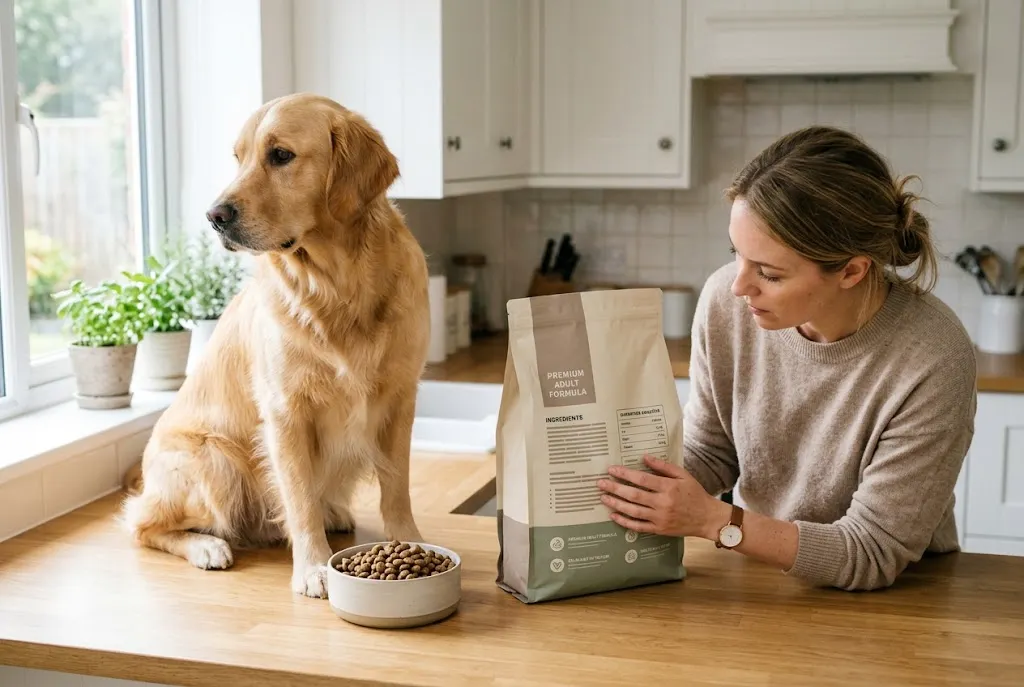

Choosing pet food can be confusing when a label contains a long list of ingredients, additives, preservatives, vitamins, minerals, and flavoring agents. The phrase ingredients you should avoid in pet food is often used broadly online, but not every unfamiliar ingredient is automatically dangerous.
A better approach is to learn which ingredients or food-related hazards deserve real concern, understand why they may be problematic, and know how to evaluate the entire label rather than judging a product by one ingredient alone.
In the United States, the FDA regulates pet food and requires animal foods to be safe, produced under sanitary conditions, free from harmful substances, and truthfully labeled. The agency also regulates food additives and evaluates whether ingredients have an appropriate and safe use. FDA’s pet food guidance is a useful reference when you want to verify a safety concern.
What Ingredients Should You Avoid in Pet Food?
There is no universal list of ingredients that every dog or cat must avoid. A food can contain an ingredient that is safe for most pets but unsuitable for an individual animal because of an allergy, medical condition, age, or dietary requirement.
Instead of automatically rejecting ingredients with complicated names, focus on ingredients and situations that present a recognized safety concern.
These include:
- Unapproved food additives
- Ingredients contaminated with harmful substances
- Known toxic foods or substances
- Spoiled, rancid, or decomposed ingredients
- Ingredients that conflict with a pet’s diagnosed medical needs
- Products with misleading or incomplete labeling
- Excessive or inappropriate nutrient supplementation
The FDA explains that an ingredient may be permitted because it has an approved food-additive use or is generally recognized as safe for a specific intended use. Safety therefore depends on the ingredient, amount, purpose, and conditions of use rather than simply whether the ingredient sounds artificial or unfamiliar.
1. Unapproved Food Additives
One of the clearest reasons for concern is an ingredient that is not legally approved or otherwise permitted for its intended use in animal food.
Food additives are substances added to food for a specific technical purpose. They can serve functions such as preserving freshness, improving stability, or providing other technological effects.
The FDA states that an unapproved food additive cannot legally be used in pet food. This is very different from saying that every additive is harmful.
When reviewing a commercial product, the more useful question is whether the ingredient has an accepted use in animal food and whether the product is properly manufactured and labeled.
2. Ingredients Associated With Contamination
Sometimes the greatest risk is not the name of an ingredient but contamination introduced during farming, storage, manufacturing, transportation, or processing.
Pet food can potentially be affected by contaminants such as certain bacteria, mycotoxins, or other harmful substances. For example, the FDA monitors animal food for contaminants and maintains alerts involving issues such as Salmonella and mycotoxins.
For this reason, owners should pay attention to recalls and safety advisories rather than assuming that a product is safe forever simply because it was previously available in stores.
The FDA maintains current pet-food advisories and recall information that can help owners check products when a safety concern arises.
3. Artificial Colors Are Not the Main Thing to Focus On
Artificial colors are frequently included on internet lists of ingredients to avoid. However, color alone should not be treated as proof that a pet food is dangerous.
The FDA regulates color additives used in animal foods and requires appropriate approvals for permitted uses. Therefore, the presence of a color additive does not automatically mean that a food is unsafe.
That said, color is usually not an important nutritional feature for a dog or cat. Pets do not need brightly colored kibble simply because it looks appealing to humans.
When comparing two otherwise suitable foods, it can be reasonable to prefer a simpler formulation, but that is different from claiming that every approved color additive is toxic.
4. Excessive or Unnecessary Supplementation
Vitamins and minerals are essential nutrients, but more is not always better.
Commercial pet foods are formulated to provide nutrients in specific amounts. Adding extra supplements on top of a complete diet can sometimes create an imbalance, particularly when an owner gives multiple products at the same time.
Some nutrients can become harmful when consumed in excessive amounts. Vitamin D is one example that has been involved in FDA pet-food safety investigations and recalls.
If your pet already eats a complete and balanced commercial diet, discuss additional vitamin or mineral supplements with a veterinarian before adding them routinely.
5. Toxic Human Foods in Pet Food or Treats
Some foods that are ordinary parts of a human diet can be dangerous for pets. The concern is especially important when owners share table food, homemade treats, or supplements with their animals.
For dogs, foods containing ingredients such as xylitol, onions, garlic, grapes, or raisins can present safety concerns. The exact risk varies by substance, amount, species, and individual circumstances.
These ingredients should not be confused with ordinary commercial pet-food ingredients that have been evaluated for appropriate use. Always check the complete ingredient list of treats, supplements, and flavored products.
If you believe a pet has consumed a potentially toxic substance, contact a veterinarian or an appropriate animal poison service promptly rather than waiting for symptoms to develop.
6. Spoiled or Rancid Ingredients
An ingredient can be nutritionally acceptable on paper and still become unsafe if it spoils or becomes contaminated.
Fats are particularly important because they can become rancid when exposed to oxygen, heat, light, or poor storage conditions. Rancid food may develop an unusual odor and can lose nutritional quality.
Pet owners should store food according to the manufacturer’s instructions, keep dry food in a clean sealed container, and avoid keeping opened products for unnecessarily long periods.
Do not feed food that has an unusual smell, visible mold, damaged packaging, or other signs of deterioration.
7. Ingredients That Do Not Fit Your Pet’s Medical Needs
An ingredient does not have to be universally toxic to be unsuitable for a particular pet.
For example, a dog with a diagnosed food allergy may need to avoid a specific protein. A cat with a veterinary-managed medical condition may require a specialized diet with controlled levels of particular nutrients.
In these situations, generic online lists are less useful than advice from your veterinarian.
Read the full ingredient list and guaranteed analysis, and make sure the product matches the nutritional requirements recommended for your pet.
8. Excessive Treat Ingredients
Pet owners often examine the main food carefully but overlook treats, dental chews, toppers, and supplements.
These products can contribute a meaningful amount of calories and nutrients to the overall diet. Giving several different products each day can also make it difficult to understand exactly what your pet is consuming.
Treats should complement the main diet rather than quietly replacing a large portion of it.
If your pet has dietary restrictions, check every treat and supplement rather than assuming that a small product cannot affect the overall diet.
9. Raw or Uncooked Animal Ingredients Require Extra Care
Raw pet food is not simply a question of whether an ingredient looks natural. Uncooked animal foods can carry harmful bacteria, creating risks for both pets and people who handle the food.
The FDA specifically warns that raw pet food can pose food-safety risks. Contamination with organisms such as Salmonella or Listeria can affect animals and can also create exposure risks for people in the household.
This is particularly important in homes with young children, older adults, pregnant people, or individuals with weakened immune systems.
If you are considering a raw diet, discuss the risks and nutritional adequacy with a veterinarian rather than relying only on marketing claims.
10. Ingredients With Vague or Misleading Labeling
Pet owners should also pay attention to the quality of the label itself.
A trustworthy product should provide required information about the manufacturer or distributor, product identity, quantity, and ingredients. In the United States, ingredients are generally listed in descending order by weight.
Vague marketing language should not replace a careful review of the actual label.
Claims such as “natural,” “premium,” or “holistic” may sound reassuring, but they do not automatically tell you whether the food is nutritionally appropriate for your particular pet.
What About Meat By-Products?
Meat by-products are often included on online lists of ingredients to avoid, but this deserves a more balanced explanation.
A by-product is not automatically a dangerous or low-quality ingredient. Animal tissues that are safe and appropriate for use in pet food can provide useful nutrients.
The important question is whether the complete product is appropriately formulated and manufactured, not whether the ingredient name sounds appealing to a human shopper.
Rejecting every by-product simply because of the term can lead owners to make decisions based on marketing rather than nutrition.
What About Corn, Wheat, Soy, and Other Grains?
Corn, wheat, and soy are also commonly placed on “avoid” lists. However, the presence of a grain does not automatically make a pet food unhealthy.
Pets can digest and use nutrients from properly processed plant ingredients, and individual dietary needs vary.
A pet with a confirmed allergy or intolerance may need to avoid a particular ingredient. But for a healthy animal without such a restriction, the ingredient should be considered in the context of the entire diet.
It is better to evaluate nutritional adequacy, ingredient quality, formulation, manufacturing standards, and your pet’s individual needs than to eliminate an entire category of ingredients based on internet lists.
How to Read a Pet Food Ingredient List
Learning how to read the label is often more useful than memorizing a list of supposedly bad ingredients.
Start With the Ingredient Order
Ingredients are generally listed by weight. The beginning of the list therefore provides useful information about the major components of the food.
Check the Product’s Nutritional Statement
Look for information indicating whether the product is intended to be complete and balanced for a particular life stage or purpose.
This matters because a food designed as an occasional treat is not necessarily suitable as a pet’s primary diet.
Consider Your Pet’s Life Stage
Puppies, kittens, adults, seniors, and pregnant or nursing animals can have different nutritional requirements.
Breed size and certain medical conditions can also affect dietary needs.
Look Beyond the Front of the Package
Marketing language and attractive ingredient photographs are designed to catch attention. The ingredient list, nutritional statement, feeding directions, and manufacturer information provide much more useful information for evaluating a product.
Ingredients You Should Avoid in Pet Food: A Better Checklist
Instead of using a rigid list of ingredients that every pet owner must avoid, use this checklist when evaluating a product:
- Check whether the product is appropriate for your pet’s species and life stage.
- Look for a clear ingredient list and nutritional statement.
- Be cautious about products with unclear or misleading labeling.
- Check whether unusual additives have an appropriate permitted use.
- Watch for recall notices and safety advisories.
- Do not assume that an unfamiliar ingredient is automatically dangerous.
- Consider your pet’s allergies and medical conditions.
- Avoid feeding spoiled, moldy, damaged, or rancid food.
- Store food properly after opening.
- Ask your veterinarian before making major dietary changes.
How to Choose Safer Pet Food
Choosing pet food should involve more than scanning for a few scary-sounding ingredients.
Start by selecting a product designed for your pet’s species and life stage. Then review the nutritional statement, ingredient list, feeding directions, manufacturer information, and storage instructions.
For pets with medical conditions or suspected food allergies, a veterinarian can help determine whether a therapeutic or limited-ingredient diet is appropriate.
You should also keep track of your pet’s response to a diet. Changes in appetite, stool quality, weight, skin, coat, or energy can sometimes indicate that the current diet needs to be reassessed.
How Pet Food Recalls Fit Into Ingredient Safety
Ingredient safety does not end when a food reaches the store. Manufacturing and contamination problems can result in recalls even when the listed ingredients themselves are normally acceptable.
The FDA maintains pet-food safety advisories and recall information. Recent FDA advisories have included concerns involving bacterial contamination and nutrient deficiencies in specific lots of pet food.
That is why responsible pet owners should periodically check current recall information, especially if their pet becomes sick after eating a particular product.
For current safety information, the FDA’s pet food and treats resources provide information about recalls, contaminants, safe handling, and other pet-food concerns.
Frequently Asked Questions
Are artificial preservatives always bad for pets?
No. A preservative should not be judged solely because it is synthetic. What matters is whether it is permitted for its intended use and used appropriately. FDA regulations distinguish between approved food additives, substances recognized as safe for specific uses, and unapproved additives.
Should I avoid pet food with by-products?
Not automatically. By-products can provide useful nutrients, and the term itself does not mean an ingredient is unsafe. Evaluate the complete formulation and the product’s nutritional adequacy instead.
Are corn and wheat bad for dogs?
Not automatically. Some individual dogs may need to avoid specific ingredients because of allergies or other dietary concerns, but grains are not inherently unsafe for every dog.
Should cats and dogs eat the same food?
No. Cats and dogs have different nutritional requirements, so their diets should be formulated for their respective species.
Can pet food ingredients cause allergies?
Yes. Individual pets can develop adverse reactions to particular food ingredients. If you suspect a food allergy, work with a veterinarian rather than eliminating multiple ingredients at random.
What should I do if my pet gets sick after eating its food?
Stop and assess the situation carefully, preserve the packaging and lot information, and contact your veterinarian if your pet is ill. If you suspect a product safety problem, you can also review FDA reporting and recall resources.
Final Thoughts
The most useful way to think about ingredients you should avoid in pet food is to separate genuine safety concerns from internet myths.
Unapproved additives, contaminated products, spoiled food, known toxic substances, inappropriate nutrient levels, and ingredients that conflict with a pet’s specific medical needs deserve serious attention. On the other hand, ingredients such as grains, properly regulated additives, and by-products should not automatically be labeled dangerous simply because they sound unfamiliar.
A good pet-food decision starts with the complete product: its formulation, nutritional adequacy, ingredient list, labeling, manufacturing standards, storage, and suitability for your individual pet.
When a pet has a medical condition, suspected allergy, persistent digestive problem, or unusual reaction to food, veterinary guidance is more reliable than a generic online ingredient blacklist.