

If you share your home with a cat, you have probably felt it: two front paws pressing rhythmically into your lap, a blanket, or a cushion, claws sliding in and out as your cat stares off into the distance, half asleep. This behaviour is called kneading — sometimes nicknamed “making biscuits” — and it is one of the most common, and most misunderstood, things cats do.
Kneading is almost always normal. It is a behaviour cats are born with, and most keep it for life. Understanding why your cat kneads helps you enjoy it, manage the claws, and spot the rare occasions when it signals a problem.
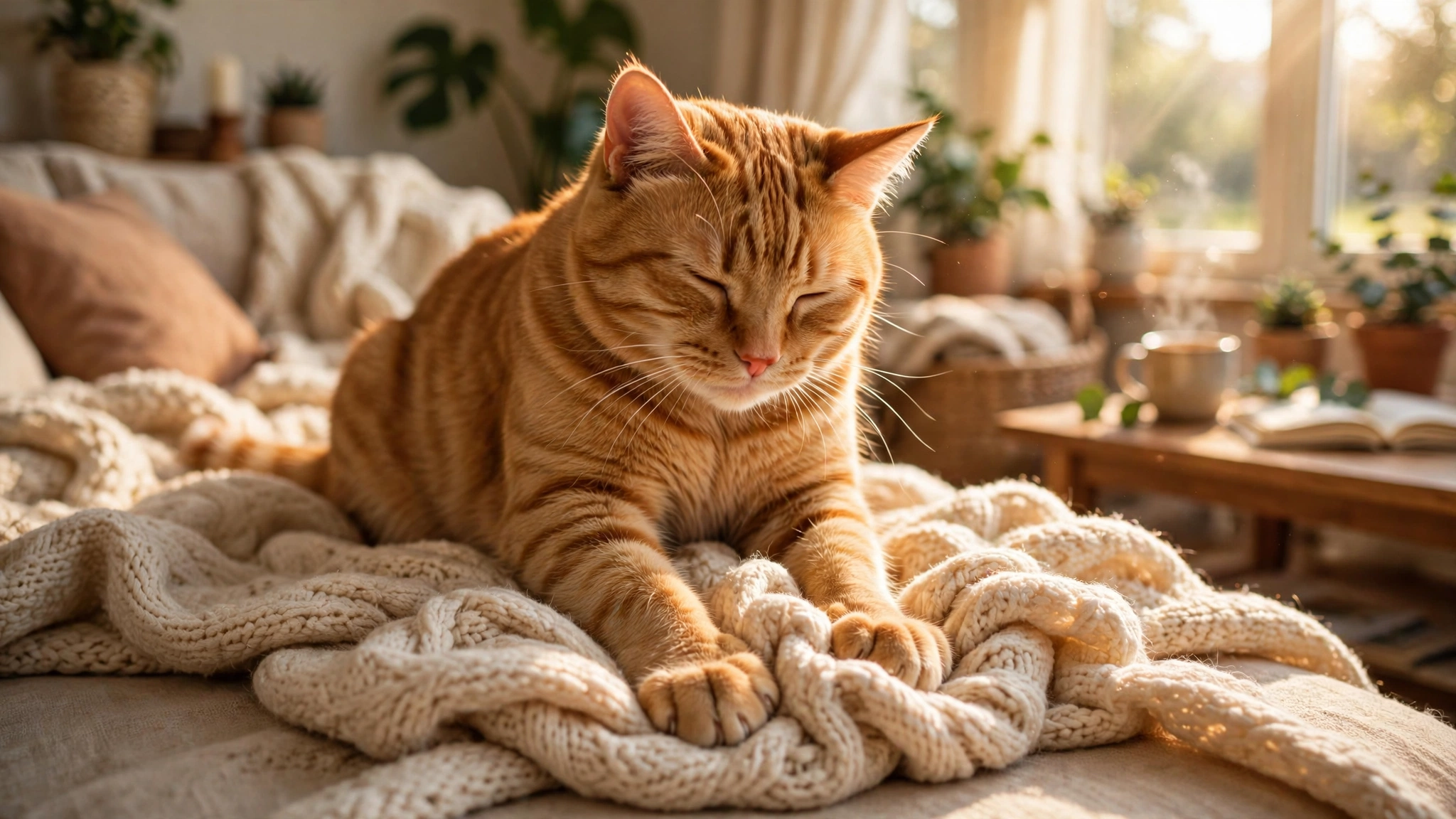
What Is Kneading, Exactly?
Kneading is a rhythmic pushing motion, usually with the front paws, alternating left and right. Cats often knead soft surfaces — blankets, cushions, clothing, and their favourite humans. Many cats purr while they knead, and some drool slightly or go into a trance-like, sleepy state.
Kittens begin kneading within days of birth. A nursing kitten presses its mother’s belly to stimulate milk flow, so the motion is wired into cats from their very first days. That early association between kneading, warmth, food, and safety is why the behaviour stays linked to comfort for the rest of a cat’s life.
Why Cats Knead: The Main Reasons
1. Comfort and Contentment
The most common reason is simple: your cat feels safe and happy. Adult cats often knead when they settle down for a nap, when they are being petted, or when they climb onto a favourite lap. Think of it as a self-soothing habit, a leftover from kittenhood that still brings comfort. If your cat kneads and purrs at the same time, it is a good sign that they are relaxed.
2. Marking Their Territory
Cats have scent glands in their paw pads. When they knead, they press those glands against a surface and leave their scent behind. That is one reason a cat may knead your lap, your bed, or a particular blanket again and again — they are quietly claiming it as theirs. It is not dominance or defiance; it is simply how cats mark the places and people they feel attached to.
3. Preparing a Sleeping Spot
Wild cats pat down grass and leaves to make a nest before lying down, and house cats have kept a version of that instinct. Kneading a blanket or cushion before curling up is your cat testing and softening the spot. If your cat kneads and then immediately falls asleep, this is almost certainly what is happening.
4. Stretching
Kneading also stretches the muscles in the paws, legs, and shoulders. Cats often knead after waking from a long nap, in the same way people stretch first thing in the morning. This kind of kneading tends to be brief and is usually followed by a big stretch of the whole body.
5. Affection and Bonding
When a cat kneads on you specifically, it is usually a compliment. The behaviour is tied to the comfort of nursing, so kneading on a person is often a sign of trust and attachment. Many cats knead most on the person they are closest to, and some will knead while head-butting or rubbing against you.
Why Does My Cat Knead Me and Not the Blanket?
If your cat chooses your lap over every blanket in the house, it is not random. You are warm, you smell familiar, and you are associated with safety and attention. Some cats also knead more when they want something — petting, food, or simply your company. If the kneading starts right when you sit down in the evening, your cat may have learned that kneading gets them a good lap session.
Is Kneading Ever a Problem?
For most cats, kneading is completely healthy. There are, however, a few situations worth watching:
- Sudden, excessive kneading: If a cat that rarely kneaded suddenly starts doing it constantly, or kneads obsessively to the point of ignoring food, play, or interaction, it can be a sign of stress or anxiety. Changes in the home — a move, a new pet, or a new baby — are common triggers.
- Kneading with signs of pain: If kneading is paired with limping, licking one paw, crying, or a reluctance to walk, the paws may be sore or injured. Check the paws gently and contact your vet if anything looks wrong.
- Kneading that damages skin: This is a management issue, not a behaviour problem. Sharp claws on bare skin hurt, but the answer is never punishment — kneading is instinctive, and scolding a cat for it only damages trust.
If you are worried about a sudden change in your cat’s behaviour, a vet visit is the right call. Behaviour changes are one of the earliest signs that something is off, and it is always better to check than to guess.
How to Live Happily With a Kneading Cat
- Keep a thick blanket nearby. Placing a folded blanket on your lap before your cat settles gives them a perfect kneading surface and protects your skin.
- Keep claws trimmed. Regular, gentle nail trims blunt the sharpest points and make kneading comfortable for everyone. If you are unsure how to trim safely, ask your vet or groomer to show you.
- Never declaw. Declawing is an amputation of the last bone of each toe, not a nail trim, and it can cause lasting pain and behaviour problems. It is banned or heavily restricted in many countries and should never be used to stop kneading.
- Redirect, don’t punish. If the claws come out on bare skin, calmly slide a blanket under your cat’s paws instead of pushing them away or scolding them.
- Give them an outlet. A cat that kneads a lot is often a cat that loves soft, cosy spots. Providing a warm bed, a soft blanket, and plenty of play helps channel that comfort-seeking energy. Our guide to indoor cat enrichment ideas has more ways to keep an indoor cat happy and settled.
Kneading often goes hand in hand with other kittenhood behaviours. If your cat is still young, you may also notice habits that trace back to those first weeks — which is why it helps to understand the whole picture of early cat care, from litter training a kitten onwards.
Frequently Asked Questions
Do all cats knead?
Most do, but not all. Some cats knead daily, some only occasionally, and a few rarely or never do. Cats separated from their mother very early sometimes knead more, while others simply express contentment in different ways — purring, head-butting, or slow blinking. A cat that never kneads is not unhappy; it just has a different style.
Why does my cat knead and drool at the same time?
Drooling while kneading is common and usually harmless. It is another leftover from nursing: the pleasure of kneading can trigger the same relaxed, almost sleepy state kittens experience while feeding. A small amount of drool on a blanket is normal. Excessive drooling, especially with mouth sores, bad breath, or eating problems, is worth a vet check.
Should I stop my cat from kneading?
No — kneading is a natural, healthy behaviour and a sign your cat feels safe. Manage it instead: use a blanket, keep claws trimmed, and redirect to a soft surface when needed. Trying to train it out of a cat is frustrating for both of you and usually fails.
Final Thoughts
Kneading is one of the clearest windows into how a cat feels. A cat kneading on your lap is, in most cases, a cat saying it feels safe, comfortable, and bonded to you. Enjoy it, protect your skin with a blanket, and only worry if the behaviour changes suddenly or comes with signs of pain or distress. For most cats, those rhythmic little paws are simply a sign of a happy home.