

Choosing a dog for apartment living is less about finding the smallest dog you can, and more about finding the right match for your space, schedule, and neighbours. A calm dog happy with two steady walks a day can be a far better apartment companion than a tiny dog that barks at every hallway sound.
This guide covers what actually matters in a smaller home — building rules, energy, noise, grooming, and alone time — plus breeds that often suit apartment life, with their honest trade-offs. Breed tendencies are a starting point only.
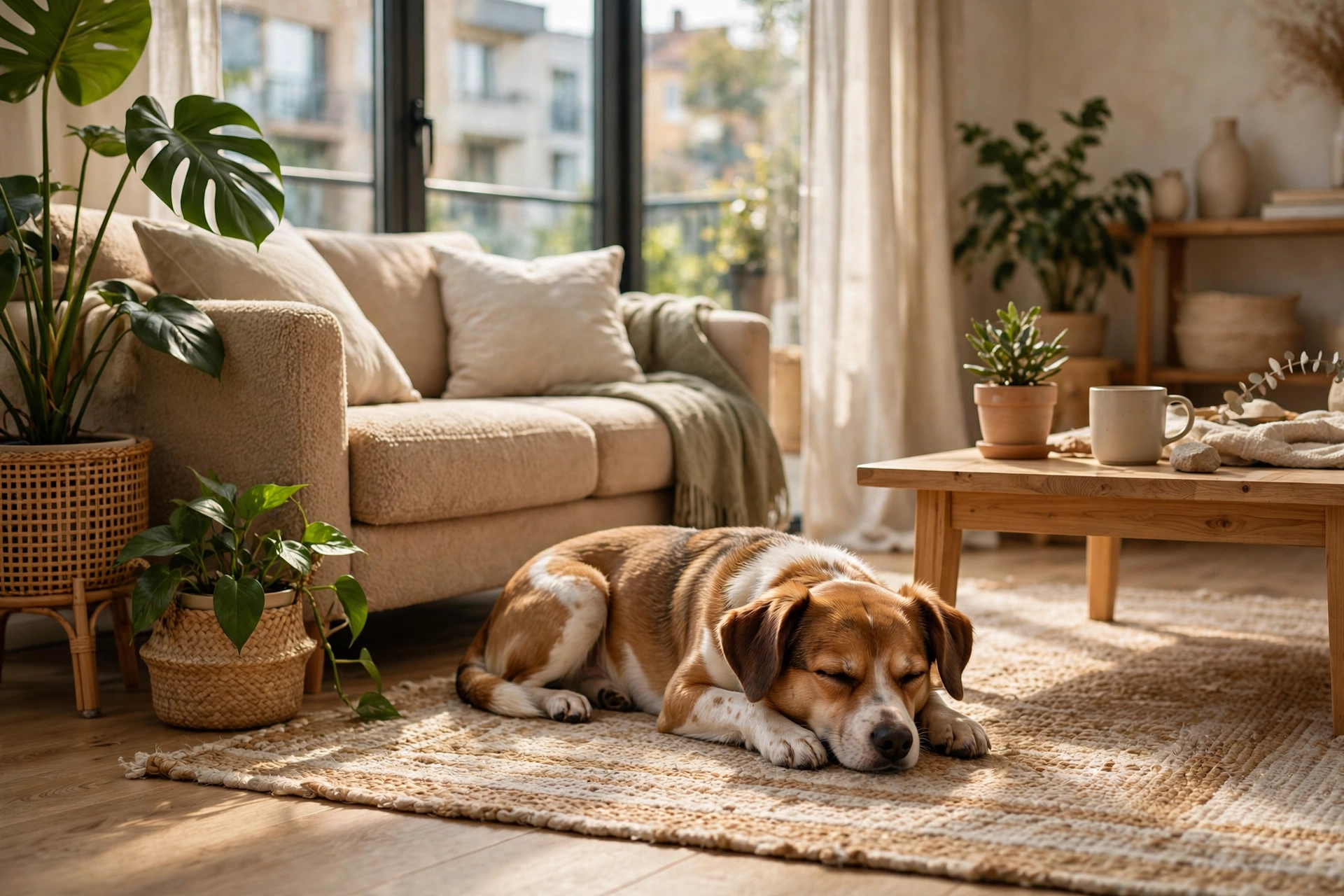
Start With Your Apartment, Not the Breed
Before you fall for a particular breed, check the practical limits of where you live. Many landlords set rules on dog size, weight, or breed, and some buildings restrict certain breeds altogether. Ask for the rules in writing, and check for extra deposits or pet fees.
Think about daily logistics too. Is there a lift, or will a large or older dog need to climb several flights of stairs? How far is the nearest green space? If you work long hours away, a dog that copes well with alone time — or a plan for a walker — matters more than the breed’s looks. Noise is the issue most new apartment owners underestimate: thin walls and shared hallways can turn a vocal dog into a neighbour problem, so noise level should be high on your list.
Size Is Only One Part of the Picture
Size matters practically: a very large dog needs more floor space, a bigger bed, and more food, and may be harder to manage in a lift. But size alone does not predict apartment suitability — some small breeds are busy and quick to bark, while some larger breeds are famously relaxed indoors.
Greyhounds are a good example: despite their size, many retired greyhounds are calm indoors and happy with a brisk walk followed by a long sleep. Judge a breed — and, better still, an individual dog — on energy and temperament, not on height alone.
Energy, Noise, and Time Alone
Ask three questions about any breed you are considering: how much daily exercise does it typically need, how vocal does it tend to be, and how does it cope when left alone? A high-energy working breed may need far more exercise and stimulation than a short walk can provide; without it, boredom can show up as chewing, restlessness, or barking.
Noise deserves its own honest conversation. Some breeds were developed to alert or guard, and may bark more readily at hallway sounds. Training helps, but rarely turns a naturally vocal dog into a silent one. If quiet matters, favour calmer dogs, and read our guide on how to stop a dog from barking excessively before problems start, not after neighbours complain.
Separation matters too. Dogs that bond intensely can struggle when left alone for long stretches, especially in a new home. If you are away most of the day, look for a more independent temperament and plan gradual alone-time training.
Grooming and Shedding in a Small Space
In a small flat, grooming is not a minor detail. A heavy shedder means hair on the sofa and bed, while a long-coated breed may need regular brushing and professional grooming. Neither rules a breed out, but both affect your routine and budget.
Be honest about the upkeep you will actually do: a low-shedding coat that mats without regular brushing is not low-maintenance. Do not rely on labels such as “hypoallergenic” either — no breed is guaranteed allergy-free, so spend time around the breed before deciding.
Breeds That Often Suit Apartment Living
The breeds below are often mentioned for apartment life because they tend to be smaller or calmer indoors. Treat this as a shortlist to research further, not a guarantee — lines, upbringing, and individual temperament all matter.
- Cavalier King Charles Spaniel: affectionate and usually gentle indoors, happy with moderate walks. Needs regular brushing and companionship.
- French Bulldog: compact, generally calm, and usually content with short walks. Flat-faced breeds can struggle in heat and may have breathing issues, so ask a vet about risks.
- Pug: small, sociable, and usually relaxed at home. Shares the same heat and breathing cautions as other flat-faced breeds, and needs weight watched carefully.
- Greyhound: larger than the others here, but often remarkably calm indoors after exercise. Needs a secure space to run and patience while adjusting to home life.
- Shih Tzu: small and usually easy-going, well suited to indoor life. Its coat needs regular grooming.
- Boston Terrier: compact, friendly, and usually adaptable, with moderate exercise needs. Can be lively and vocal at times, so early training still matters.
By contrast, think carefully before choosing a breed developed for long, intense work — such as high-energy herding or sled-type dogs — if you cannot offer the exercise and stimulation it needs every day.
Consider an Adult Dog From a Shelter or Rescue
If you are unsure how a puppy will turn out, an adult dog can remove much of the guesswork. Shelters and rescues can often tell you how a dog behaves in a home, reacts to visitors and hallway noises, and copes alone — information worth more than any breed description when space is limited.
Mixed-breed dogs can also be excellent apartment companions — judge the individual dog, not just its breed label.
Questions to Ask Before You Decide
- Does my building allow this size and breed, and are there any pet fees or restrictions?
- How much exercise and play does this dog typically need each day, and can I provide it in all weather?
- How vocal is this breed, and how does this individual dog react to strangers and everyday noises?
- How long will the dog be alone on a normal day, and what support can I arrange?
- What grooming, feeding, and veterinary costs should I expect, and do they fit my budget?
- What health issues is this breed prone to, and what has the breeder or rescue done to screen for them?
Settling In: The First Weeks in an Apartment
The first weeks set the pattern. Keep a consistent routine for walks, feeding, and toilet breaks, give your dog a quiet resting spot away from the front door, and introduce hallway sounds gradually. Short, positive training sessions from day one help far more than waiting until a habit forms — how to train a puppy at home covers the first steps in small, manageable sessions, and the same principles apply to an adult dog learning a new home.
Book a vet visit early, even if your dog seems healthy. It establishes a health baseline and gives you a professional to ask about diet, exercise, and breed-specific concerns. Our puppy first vet visit checklist explains what to bring and what usually happens, and most of it applies to a newly adopted adult dog too.
FAQ: Choosing a Dog Breed for Apartment Living
Is a small dog always better for an apartment? Not necessarily. Space helps, but energy, noise, and temperament matter more. A calm medium-sized dog often settles better than a small, highly vocal, high-energy one.
Can a large dog live happily in an apartment? Yes, if its exercise, training, and toilet needs are met and your building allows it. Calm, lower-energy large breeds can do well, but a large, high-energy dog in a small flat without enough exercise is a difficult combination.
Which breeds are the quietest for apartment living? No breed is guaranteed quiet, and individual dogs vary. Breeds often described as calmer and less vocal include Cavalier King Charles Spaniels, French Bulldogs, and greyhounds, but always judge the individual dog and plan for training.
Should I get a puppy or an adult dog for an apartment? A puppy lets you shape habits from the start, but needs intensive training and toilet breaks. An adult dog’s size and temperament are already clear, making apartment life more predictable.
Final Thoughts
The best apartment dog is not a breed on a list. It is a dog whose size, energy, noise level, and grooming needs fit your building, your routine, and your budget — and whose temperament you have seen, not just read about. Start with your apartment’s rules and daily life, shortlist breeds that fit, then meet individual dogs before you decide.