

Bringing a puppy home is exciting, and a little nerve-wracking too. Between house training, feeding times, and all that chewing, one appointment matters more than most: the first vet visit. It is not just a formality. It gives your puppy a health baseline, starts its vaccination and parasite-prevention plan, and gives you a trusted person to ask when questions come up later.
This checklist walks you through when to book, what to bring, what usually happens during the exam, and the questions worth asking before you leave. Every puppy is different, so treat this as general guidance — your vet’s advice for your puppy’s age, breed, and health history always comes first.
When to Book the First Visit
Aim to book the visit within the first few days after bringing your puppy home, or follow the timing your breeder, shelter, or rescue organisation suggested. If your puppy seems unwell — for example, it refuses food and water, has repeated vomiting or diarrhoea, or is unusually lethargic — contact a vet sooner rather than waiting for a routine slot.
When you call, mention your puppy’s age, where it came from, and whether it has had any vaccinations or deworming already. The clinic can then tell you what records to bring and how long to allow for the appointment. First visits are often a little longer than routine check-ups, because the vet needs time to take a full history.
What to Bring: A Simple Checklist
Packing a small bag the night before makes the morning much calmer. Bring:
- Any vaccination, deworming, or health records from the breeder, shelter, or previous vet
- A note of the food your puppy is currently eating, including brand and daily amount, if you know it
- A fresh stool sample if the clinic asks for one, in a sealed bag or container
- A list of questions — it is easy to forget them once a wiggly puppy takes over the room
- Treats, a favourite small toy, and a blanket that smells familiar, to help your puppy settle
- A secure carrier or a lead, plus towels in case of a car-sickness or toilet accident
- Your puppy’s microchip number, if it has already been chipped
Keep your puppy off the clinic floor and away from other animals in the waiting room until the vet advises otherwise. Young puppies have not finished their vaccination course yet, so carrying them or keeping them in a carrier is a sensible precaution.
What Happens During the Exam
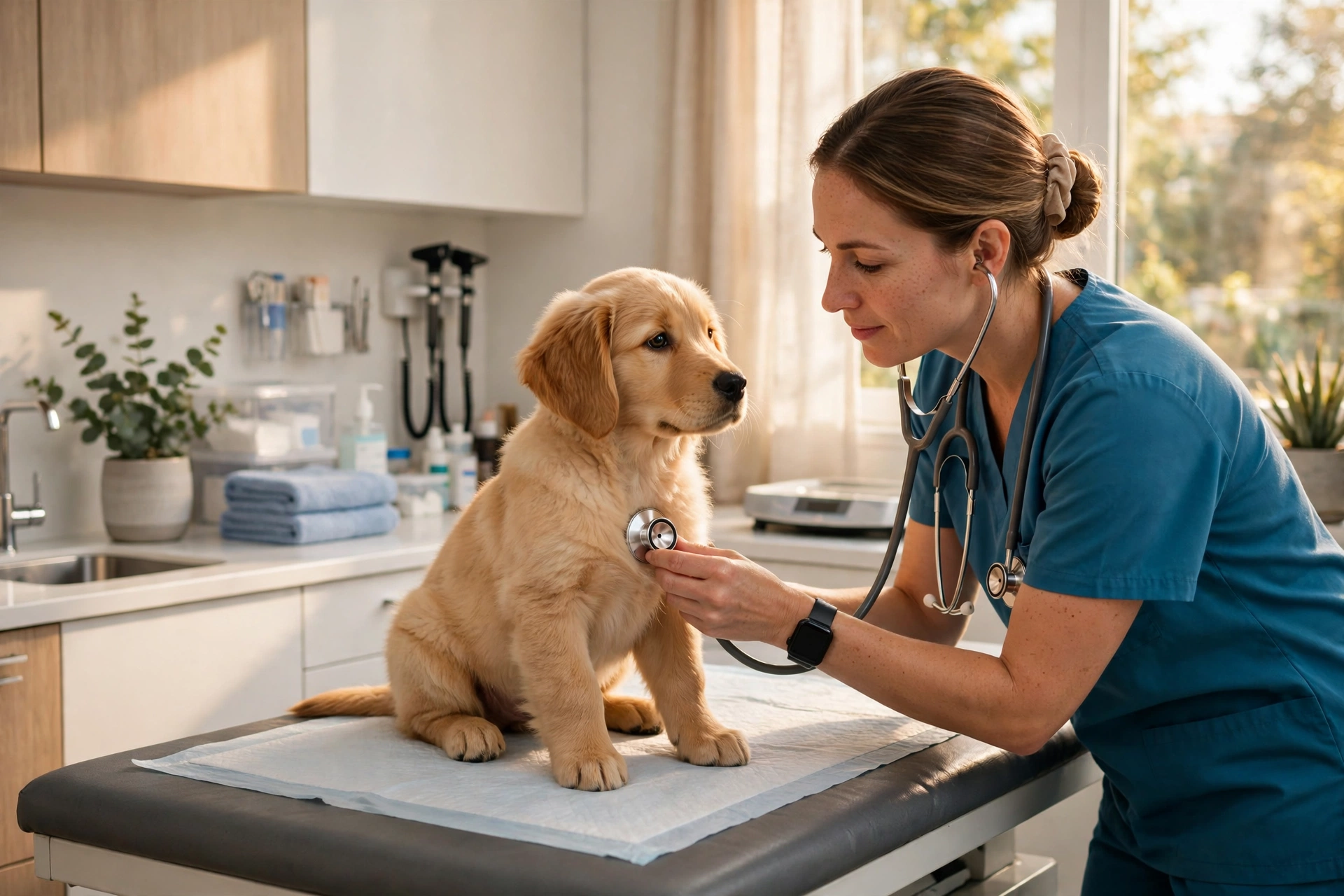
A first exam is usually gentle and unhurried. The vet will weigh your puppy, check its eyes, ears, mouth, teeth, skin, and coat, listen to its heart and lungs, and feel its belly and joints. They will also ask about appetite, toilet habits, sleep, energy levels, and anything that has worried you since the puppy arrived.
The vet may run a faecal test to check for intestinal parasites, which are common in young puppies and often treatable. They will also talk through the vaccination plan and parasite prevention for fleas, ticks, and worms. Exact timing and products vary with age, health, and where you live, so do not be surprised if your puppy’s plan differs from a friend’s puppy’s plan — the vet is tailoring it, not improvising.
Vaccines and Parasite Prevention: What to Understand
Vaccinations are usually given as a course over several weeks rather than in a single visit, followed by boosters later. Your vet will explain which vaccines your puppy needs, when each dose is due, and when it is safe to walk your puppy in public places and meet other dogs. Until the course is complete, follow the vet’s guidance on socialisation — short, controlled, positive experiences matter, but busy dog parks and unknown dogs are best avoided for now.
Parasite prevention is a separate conversation from vaccines. Ask what product the vet recommends, how often to give it, and what to do if you miss a dose. Keep a note of the dates on your phone or on the fridge so the schedule does not drift.
Questions Worth Asking Your Vet
You do not need to ask everything at once, but these questions cover the decisions most new owners face in the first weeks:
- What should I feed, how much, and how often — and when should portions change as my puppy grows?
- What signs of illness should I watch for, and when should I call the clinic rather than wait?
- When can my puppy go for walks, attend puppy classes, and meet other dogs safely?
- What is the plan for vaccinations, deworming, and flea and tick prevention?
- When should I book neutering or spaying, and what does that involve?
- How should I handle teething, chewing, and mouthing without encouraging biting?
- What grooming does this breed or coat type need, and how often?
Feeding is a good example of why the conversation matters: a vet can judge portions for your puppy’s expected adult size and activity level, rather than relying on a generic bag label alone. If you are comparing foods, it also helps to know what to avoid — our guide to ingredients you should avoid in pet food explains the common red flags to look for on a label.
Similarly, ask about grooming early. Coat type, nail growth, and ear shape all affect how often your puppy needs brushing or bathing, and starting gently while your puppy is young makes later grooming far easier. Our simple guide to keeping pets clean covers the basics of bathing, brushing, and nail care at home.
Finally, ask about training and socialisation. Once your vet confirms it is safe, short, positive training sessions build the habits that make daily life easier. If you need a starting point, how to train a puppy at home walks through the first steps, from house training to basic commands, in small, manageable sessions.
After the Visit: What to Do at Home
Most puppies are a little sleepy after a vet visit, and that is normal. Offer water, a small meal if it is due, and a quiet place to rest. A mild, short-lived soreness at an injection site can happen; if swelling, persistent vomiting, or unusual behaviour continues, call the clinic for advice rather than guessing.
Before you leave the house, or as soon as you get home, do three things: book the next appointment while the dates are fresh, save the clinic’s phone number where you can find it at night, and file the vaccination record somewhere safe. That record will be asked for by groomers, boarding kennels, trainers, and future vets, so keeping it in one place saves repeated chasing later.
Signs to Call the Vet Sooner
Call promptly if your puppy refuses food or water for a full day, has blood in vomit or stool, breathes with difficulty, has a swollen belly, or becomes suddenly very weak or unresponsive. Puppies can dehydrate and deteriorate faster than adult dogs, so an early phone call is never a waste of the clinic’s time. This article is general information, not a substitute for veterinary advice for your individual puppy.
FAQ: Puppy First Vet Visit
How long does a first vet visit take? Usually around 30 minutes, sometimes a little longer if it is your puppy’s first time at the clinic and there is a full history to take.
Should my puppy fast before the visit? Usually not, unless the clinic specifically asks you to. Feed normally and mention the last meal time when you arrive.
Can I hold my puppy during the exam? Often yes, or you can stay close and offer treats. Ask the vet what position works best — they will keep your puppy safe and comfortable.
What if my puppy was already seen by a shelter vet? Bring those records. Your new vet will review them, avoid duplicating vaccines unnecessarily, and fill any gaps in the plan.
Final Thoughts
A first vet visit is less about passing a health test and more about starting a relationship — between your puppy and its vet, and between you and the clinic you will call with every future question. Arrive with records and a few questions, and you will leave with a plan and a much clearer sense of what the next few months should look like.