

Your entryway is the first thing guests see when they walk through your door — and the last thing you see on your way out. It sets the tone for your entire home in about ten seconds flat. Yet most entryways get neglected: a pile of shoes here, a stack of mail there, and a bare wall that does nothing for the space. The good news is you don’t need a grand foyer to make a great first impression. With a few smart decor choices, even the tiniest hallway can feel welcoming, organized, and stylish. Here are 12 entryway decor ideas that actually work.
1. Start with a Slim Console Table
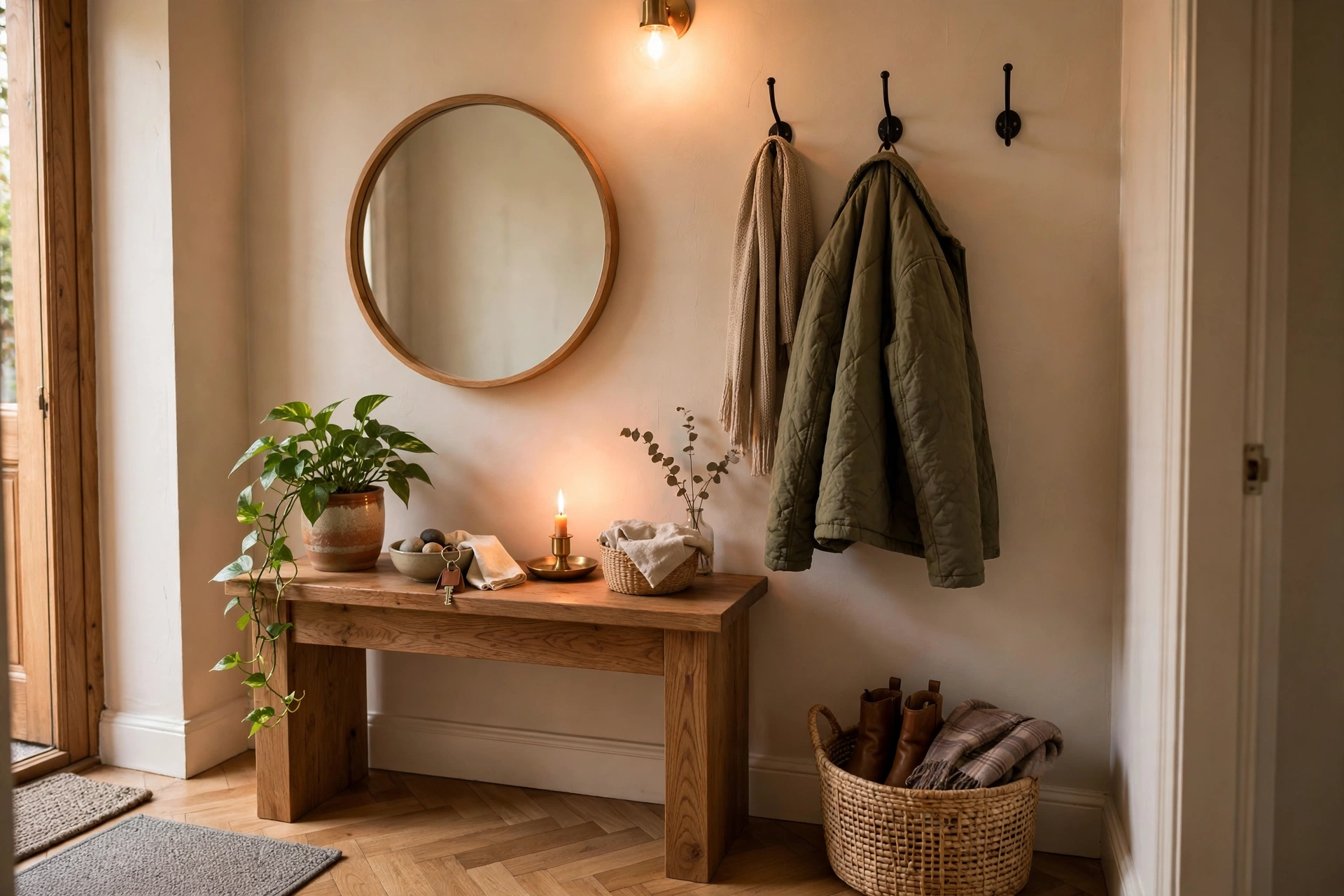
A console table is the backbone of entryway decor. It gives you a landing spot for keys, a surface for a small lamp, and a base for styling. In narrow hallways, choose a slim model — 10 to 12 inches deep is plenty. Place a tray on top to corral keys and sunglasses, add a small plant or candle, and you’ve got an entryway that feels intentional instead of empty.
2. Use Mirrors to Open Up the Space
A mirror is the single most transformative piece you can put in an entryway. It bounces light around, makes tight spaces feel twice as big, and gives you a last-minute hair and outfit check before heading out. Hang a round or arched mirror above your console table, or lean a tall mirror against the wall in a corner. Even a small mirror does serious work in a dark hallway.
3. Add Wall Hooks for Coats and Bags
Hooks are the unsung heroes of a tidy entryway. A row of sturdy wall hooks keeps coats, bags, and scarves off the furniture and within easy reach. For a cohesive look, match the hooks to your other hardware — brushed brass, matte black, or wood. If you’re short on wall space, a slim hook rack behind the door works just as well. The same principle applies elsewhere in the home; much like small living room ideas focus on vertical storage, entryways benefit from thinking upward instead of outward.
4. Solve the Shoe Problem
Shoes are the number-one source of entryway clutter. A closed shoe bench solves two problems at once: hidden storage plus a seat for putting shoes on. If a bench won’t fit, try a slim shoe cabinet with tilt-out doors, or a low tray that keeps pairs contained and off the floor. Set a “one pair per person” rule for what’s visible, and the space stays manageable without constant policing.
5. Layer Your Lighting
Overhead lighting alone makes entryways feel flat and uninviting. Layer it: a pendant or small chandelier for general light, plus a table lamp or wall sconce for warmth. Sconces are especially good in narrow hallways where floor and table space are precious. Warm-toned bulbs (2700K) make the space feel welcoming the moment someone steps inside.
6. Ground the Space with a Rug or Runner
A rug defines the entryway as its own zone, especially in open-plan homes where the door opens straight into the living area. Choose a low-pile, washable runner — entryways take a beating from foot traffic and wet shoes. Patterned rugs hide dirt better than solid light colors, and a long runner draws the eye down a narrow hallway, making it feel longer rather than cramped.
7. Go Vertical in Narrow Hallways
When floor space is tight, walls are your best friend. Mount a floating shelf above the console table for decor and storage, add a tall narrow bookcase for extra organization, or use a pegboard wall for total flexibility. Tall, narrow artwork draws the eye upward and makes low ceilings feel higher. In genuinely tiny spaces, a single floating shelf with a mirror above it can replace a whole console table setup.
8. Style on a Budget
Great entryways don’t require big spending. Thrift stores are full of mirrors, frames, and trays that work beautifully with a little cleaning. Spray paint can unify mismatched pieces — matte black or brass finishes make thrifted finds look expensive. Swap in fresh greenery from your yard, frame a favorite photo, and use baskets you already own for storage. If you’re hunting for more affordable inspiration, check out these budget-friendly bedroom wall decor ideas — many of the same tricks apply to hallways.
9. Add Seasonal Touches
The entryway is the easiest place in the house to refresh for the season. A small wreath on the door, a bowl of seasonal fruit or pinecones on the console, and a swap of throw colors keeps the space feeling current without a full redecoration. The trick is restraint: one or two seasonal accents read as charming, while ten read as clutter. Store off-season items in a single labeled bin so swaps take five minutes.
10. Build in Hidden Storage
Every entryway collects stuff — mail, umbrellas, dog leashes, sunscreen. The answer is closed storage that hides it all. A console with drawers, a storage bench, lidded baskets on a lower shelf, or a wall cabinet keeps the surfaces clear while the essentials stay accessible. The discipline of decluttering small spaces is the same everywhere in the home; the approach behind organizing a small kitchen — a place for everything, closed containers, regular purges — works just as well in a hallway.
11. Make It Personal
Entryways that feel personal are the ones people remember. Hang family photos in matching frames, display a piece of travel art, or lean a small chalkboard with a rotating welcome message. A framed quote, a kid’s drawing in a nice frame, or a collection of postcards turns a generic hallway into a space that tells your story. Just keep it to a curated few — a gallery wall is lovely, a bulletin board of everything is not.
12. Commit to Clutter-Free Maintenance
The best decor can’t save an entryway buried in stuff. Build a 60-second reset into your day: shoes on the rack, mail in its tray, jackets on their hooks. Do a monthly five-minute purge of anything that migrated there and doesn’t belong. A clear entryway stays styled; a styled entryway buried in clutter just looks messy. Maintenance is the real secret behind every beautiful entryway photo you’ve ever admired.
Conclusion
You don’t need a big budget or a spacious foyer to nail your entryway. Start with one anchor piece — a console table, a mirror, or a good rug — then layer in storage, lighting, and personal touches one at a time. Pick the ideas from this list that fit your space and your life, and your front door will start making the first impression your home deserves.