

A small living room does not have to feel cramped. With the right small living room ideas, a tiny space can feel open, airy and surprisingly generous — you just need to be intentional about light, scale and storage. Whether you live in a studio apartment, a cozy flat or a home where the living room doubles as the dining room and office, these 12 practical ideas will help you make the most of every square foot.
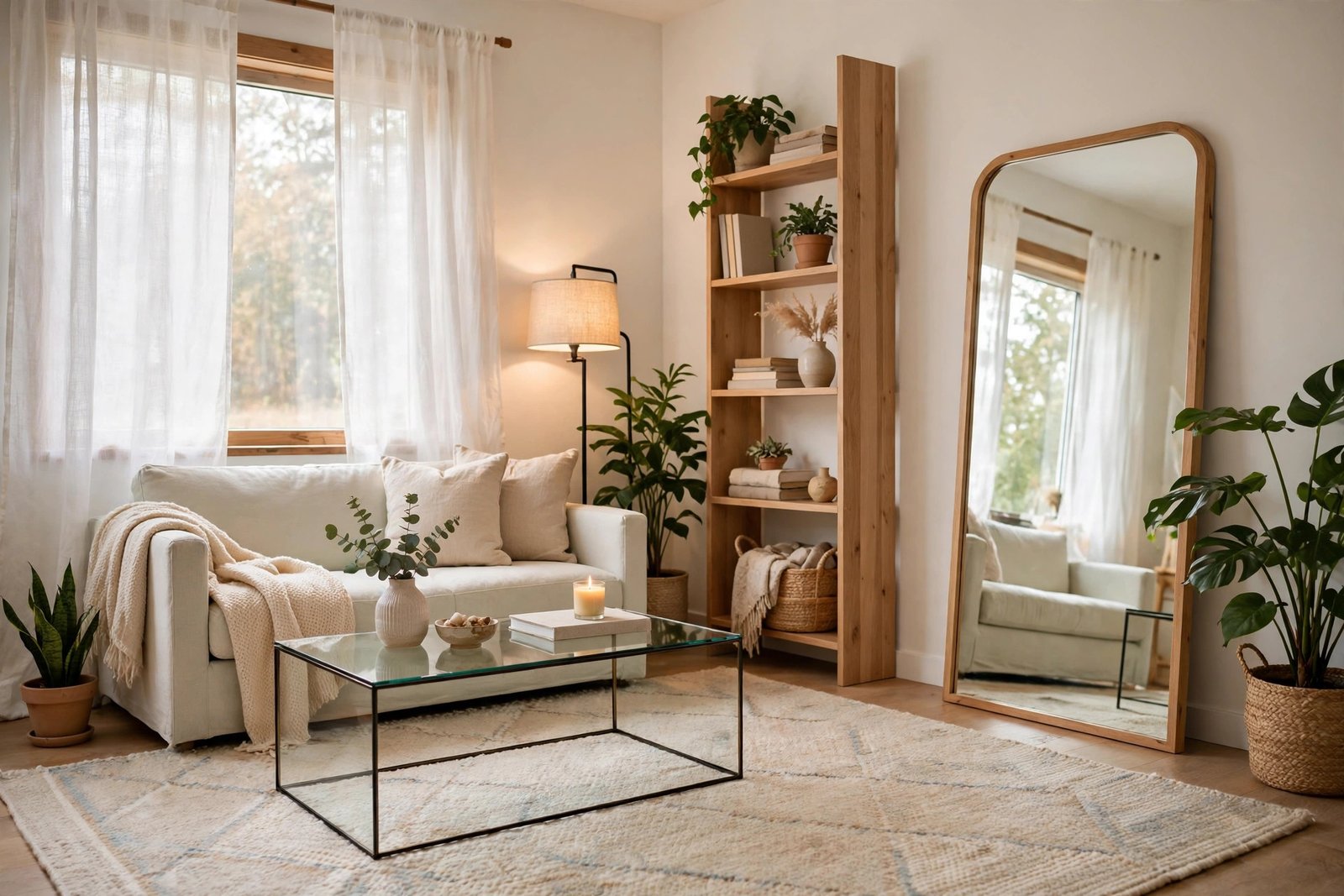
A compact living room that feels spacious: light tones, a large leaning mirror, vertical shelving and layered lighting.
1. Paint It Light
Color is the fastest way to change how big a room feels. Light shades — soft white, warm cream, pale gray, gentle beige — reflect daylight instead of absorbing it, so the walls seem to recede. You do not need an all-white box: pick one calm base tone and let texture (a knit throw, a woven basket, wood grain) add the interest. If you love bold color, keep it to one accent — a single deep-green wall behind the sofa can add depth without closing the room in.
2. Let Mirrors Do the Heavy Lifting
A large mirror opposite or beside a window bounces natural light around the room and creates the illusion of extra space. Go bigger than you think: a tall leaning floor mirror or one wide mirror over the sofa works far better than several small ones scattered about. Round mirrors soften the look, while rectangular ones echo the room’s lines and stretch them visually.
3. Choose Furniture That Works Twice
In a small living room, every piece should earn its place. A storage ottoman can be a footrest, extra seat and a place to hide blankets. A sleeper sofa hosts guests without needing a spare room. Nesting tables pull out when friends visit and tuck away when they leave. Look for slim silhouettes and raised legs — furniture you can see underneath feels lighter than blocky pieces that sit on the floor.
4. Go Vertical With Storage
When floor space is precious, the walls are your best friend. A tall, narrow bookcase draws the eye upward and uses barely any footprint. Floating shelves keep books, plants and decor off the floor. Even wall-mounted storage around the TV keeps cables and clutter contained. The goal is simple: store up, not out.
5. Anchor the Room With One Large Rug
It sounds counterintuitive, but one large rug makes a small living room look bigger than several small ones. A rug that extends under the front legs of the sofa and chairs pulls the seating together into a defined zone and tricks the eye into reading the whole area as one generous space. Choose a low-pile, light or subtly patterned design — busy, dark rugs visually shrink the floor.
6. Layer Your Lighting
One overhead light creates flat shadows and a cave-like feel. Layer three levels instead: ambient (ceiling or floor lamp), task (a reading lamp beside the chair) and accent (a small lamp on a shelf or warm candles). Warm-toned bulbs in corners make walls glow and feel farther away. Good lighting is one of the most underrated small living room ideas — it changes the mood of the room more than any single piece of furniture.
As you explore innovative strategies to maximize the potential of your small living room, it’s equally important to consider how the rest of your home can benefit from similar principles of intentional design and space optimization. For instance, the integration of thoughtful decor can transform not just your living space but also your private retreat. By refreshing wall aesthetics, you can create a cohesive flow throughout your home. Consider implementing affordable and creative solutions that elevate your bedroom’s ambiance, such as unique art pieces and customizable accents. Discover innovative bedroom wall decor ideas that can infuse your personal style into your space without straining your budget. Ultimately, a harmonious approach to decor across all rooms will enhance your living experience, making every inch of your home feel thoughtfully curated and spacious.
As you consider how to optimize your small living room, it’s essential to recognize that the principles of spatial design extend beyond just the living area. The entryway serves as the first impression of your home, and, much like your living room, it can be transformed to enhance the perception of space and functionality. Clever entryway decor ideas can create a seamless transition between your compact living space and the outside world, utilizing mirrors, strategic lighting, and smart storage solutions. Embracing these concepts will not only make your entryway inviting but also set a cohesive tone that resonates throughout your entire home, maximizing both aesthetic appeal and practical use.
As you thoughtfully curate your small living room to maximize space and enhance comfort, it’s equally important to consider the organization of adjacent areas, particularly the kitchen. Just as clever design choices can transform a compact living room into an inviting retreat, implementing smart strategies in your kitchen can lead to a harmonious living environment. Emphasizing efficiency and functionality, these small kitchen organization ideas will help you reclaim precious square footage, ensuring that every corner of your home feels both spacious and purposeful. By fostering a seamless flow between your living and cooking spaces, you can create a cohesive aesthetic that enhances both style and utility, allowing for a more enjoyable and practical living experience.
7. Declutter Ruthlessly (But Beautifully)
Clutter is the enemy of spaciousness. In a small room, even a little mess reads as a lot. Give everything a home: a basket for throws, a tray to corral remotes, a lidded box for the kids’ bits. Then be honest about what you keep — if you have not used it in months, it is costing you space. There is plenty of sustainable design inspiration out there for keeping fewer, better things you genuinely love.
8. Hang Curtains High and Wide
Mount your curtain rod close to the ceiling and extend it well beyond the window frame. When the curtains are open, the fabric stacks against the wall instead of covering the glass, so the window looks taller and wider and maximum daylight floods in. Sheer or light linen panels keep things airy while still softening the light.
9. Float Your Layout Off the Walls
Pushing every piece of furniture against the walls can make a small room feel smaller, not bigger. Pull the sofa even a few inches forward, angle a chair, or create a floating reading corner with a rug. Breathing room behind furniture creates shadow lines that suggest depth — the room feels layered instead of stuffed.
10. Respect Scale: Smaller Pieces, Bigger Impact
Oversized furniture overwhelms a small living room. Measure before you buy: a compact two-seater sofa often seats nearly as well as a bulky one, and armless or low-profile chairs free up visual space. Leave clear walkways of at least 30 inches so you can move without sidestepping. When proportions are right, the whole room feels calm and effortless. And remember that contrast adds character — a single statement piece, like a touch of bold steampunk home decor, can give a minimal room a personality without filling it up.
11. Try a Gallery Wall With Intent
One curated gallery wall beats many small frames scattered around. Keep frames in a consistent style or color, plan the layout on the floor first, and leave even spacing between pieces. A single bold art arrangement gives the room a focal point and makes the wall feel grander than bare, broken-up surfaces ever could.
12. Add Life With Plants
Plants bring color, texture and life into a small living room — and they do not take up much space. A tall snake plant fills an empty corner, trailing pothos softens a shelf, and a small eucalyptus bunch adds calm to the coffee table. Greenery also improves air quality and mood. Start with two or three low-maintenance plants and build from there.
Bringing It All Together
You do not need to apply all twelve ideas at once. Start with the ones that give the biggest return for the least effort: lighter colors, a big mirror, ruthless decluttering and layered lighting. Then tune the layout and scale piece by piece. A small living room is not a limitation — it is an invitation to design with purpose. Every choice matters more in a tiny space, which means every good choice shows more, too.
Quick FAQs
What colors make a small living room look bigger?
Light, warm neutrals — soft white, cream, pale beige and light gray — reflect the most light. Keep the ceiling a shade lighter than the walls for extra lift.
Should I avoid dark furniture in a small living room?
Not necessarily. One dark piece, like a charcoal chair or a walnut side table, adds depth and contrast. The trick is keeping the surrounding palette light so the dark piece reads as an accent, not a weight.
Is a sectional okay in a small living room?
A compact, low-profile sectional can work if it is scaled to the room and one side stays open. Avoid deep, bulky sectionals that block walkways.