
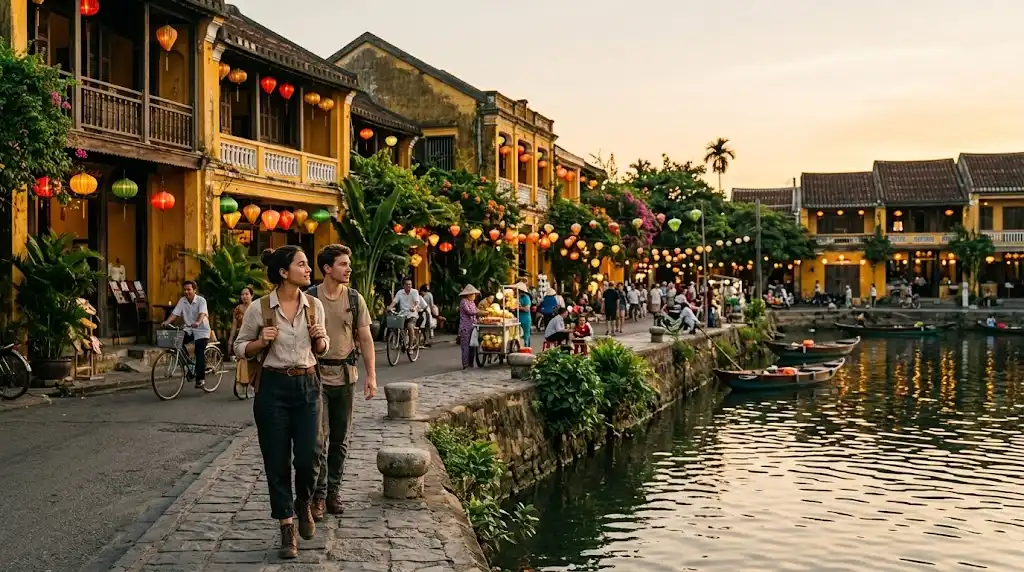

Planning your first trip to Vietnam can feel overwhelming because the country offers an impressive mix of historic cities, dramatic landscapes, beaches, islands, ancient towns, and vibrant food culture. The good news is that you do not need to see everything on your first visit. Choosing a few destinations that complement each other can give you a memorable introduction to the country.
Best Places to Visit in Vietnam for First-Time Travelers
1. Hanoi
Hanoi is one of the best starting points for a first trip to Vietnam because it combines history, local culture, street food, architecture, and everyday city life. The capital is more than a gateway to northern Vietnam; it is a destination worth exploring on its own.
Start in the Old Quarter, where narrow streets, traditional businesses, cafés, markets, and street-food stalls create one of the city’s most recognizable atmospheres. Hoan Kiem Lake is another convenient place to explore while visiting the central area.
First-time visitors can also see the Temple of Literature, One Pillar Pagoda, the Imperial Citadel of Thang Long, and other historic sites. Hanoi’s food culture is equally important, with dishes such as pho and bun cha offering an easy introduction to northern Vietnamese cuisine.
If you have never visited Vietnam before, spending at least two or three days in Hanoi gives you enough time to experience both its major attractions and its local rhythm.
2. Ha Long Bay
Ha Long Bay is one of Vietnam’s most recognizable landscapes and a natural choice for a first-time itinerary. The bay is known for emerald-colored waters and limestone islands and is especially memorable when experienced from the water.
A cruise allows travelers to appreciate the scale of the landscape while visiting caves, viewpoints, beaches, and smaller islands. Depending on your schedule, you can choose a day trip or an overnight cruise.
Because Ha Long Bay is commonly combined with Hanoi, it works particularly well during a first visit. Vietnam Tourism’s recommended highlights itinerary places Hanoi and Ha Long Bay together before continuing south toward central Vietnam.
3. Ninh Binh
Ninh Binh is an excellent choice for travelers who want spectacular scenery without giving up cultural experiences. The region is famous for limestone mountains, rivers, rice fields, temples, and peaceful rural landscapes.
The Trang An landscape area is particularly impressive when explored by boat. Instead of navigating a busy urban environment, visitors travel through waterways surrounded by towering karst formations.
Ninh Binh can be visited as a day trip from Hanoi, but staying overnight can make the experience more relaxed. It is especially suitable for photographers, nature lovers, couples, and travelers who want a slower pace.
4. Hoi An
Hoi An is arguably one of the easiest Vietnamese destinations for first-time travelers to fall in love with. Its historic center has a distinctive architectural character, while lantern-lit evenings, riverside streets, cafés, restaurants, markets, and nearby beaches create a relaxed atmosphere.
Walk through the Ancient Town, visit historic buildings, sample local specialties, and explore the surrounding countryside by bicycle. You can also visit An Bang Beach or make a trip to My Son Sanctuary.
Hoi An is particularly useful in a first-time itinerary because it provides a contrast to the larger cities. After the energy of Hanoi or Ho Chi Minh City, the slower pace of Hoi An can make the trip feel more balanced.
For more destination inspiration outside Vietnam, see our guide to places to visit around the world.
5. Da Nang
Da Nang combines beaches, modern city attractions, mountains, food, and convenient access to central Vietnam’s major destinations. It is also a practical base for visiting Hoi An and other nearby attractions.
My Khe Beach is one of the city’s most recognizable coastal areas, while the Marble Mountains provide opportunities to explore caves, temples, and viewpoints. Travelers can also explore the Son Tra Peninsula or take a scenic trip toward the Hai Van Pass.
Da Nang works especially well for first-time visitors who want to combine cultural sightseeing with a few days beside the sea.
6. Hue
Hue is one of Vietnam’s most important destinations for travelers interested in history and heritage. The former imperial capital is associated with the Nguyen Dynasty and contains historic structures, temples, tombs, and the Imperial City.
The Imperial Citadel should be high on the itinerary, while the Tombs of the Emperors and Thien Mu Pagoda provide additional insight into the region’s history and culture.
Hue is particularly easy to combine with Hoi An and Da Nang, creating a compact central Vietnam route that gives first-time visitors several different experiences without excessive travel.
7. Ho Chi Minh City
Ho Chi Minh City offers a completely different atmosphere from Hanoi. It is fast-moving, energetic, modern, and packed with restaurants, cafés, markets, museums, shopping areas, and historic landmarks.
Visitors can explore the War Remnants Museum, Independence Palace, Central Post Office, Ben Thanh Market, and historic neighborhoods. The city’s street-food scene is another major attraction, with everything from casual food stalls to modern restaurants.
Ho Chi Minh City is also a useful base for exploring southern Vietnam, including the Mekong Delta and the Cu Chi Tunnels.
8. Mekong Delta
The Mekong Delta offers a slower and more rural side of Vietnam. Rivers, canals, orchards, villages, floating markets, and agricultural communities create a landscape that feels very different from the country’s major cities.
Many travelers visit the delta from Ho Chi Minh City as a day trip, while others choose an overnight experience to explore more slowly. Boat rides, local markets, fruit farms, and village communities are among the experiences that make the region worthwhile.
For a first-time visitor, the Mekong Delta is especially valuable because it shows how life outside Vietnam’s major urban centers can look and feel.
9. Phu Quoc
If you want to add a beach-focused section to your first Vietnam trip, Phu Quoc is a strong option. The island offers beaches, resorts, seafood, water activities, and opportunities to slow down after several days of sightseeing.
Phu Quoc can work particularly well at the end of an itinerary. After exploring busy cities and historic sites, several days on the island can provide a more relaxed finish.
Because weather patterns vary across Vietnam, check the conditions for your travel dates before committing to a beach-heavy itinerary.
10. Sapa
Sapa is a popular northern destination known for mountain scenery, rice terraces, valleys, and opportunities for trekking. It is a good choice for travelers who want to experience a more mountainous side of Vietnam.
Outdoor activities can range from easy scenic walks to longer treks through surrounding villages and landscapes. The area is also known for its ethnic communities and distinctive local culture.
Sapa requires more travel time than destinations around Hanoi, so it is best suited to first-time visitors who have at least several days available for northern Vietnam.
11. Ha Giang
Ha Giang is one of Vietnam’s most spectacular choices for adventurous travelers. The northern region is known for dramatic mountain roads, valleys, karst landscapes, and rural communities.
The famous Ha Giang Loop attracts travelers interested in road trips and mountain scenery. However, the journey requires more planning than a conventional city break, so first-time visitors should consider transportation, weather, road conditions, and safety carefully.
If your idea of a perfect first Vietnam trip includes adventure and dramatic scenery rather than major tourist attractions, Ha Giang deserves consideration.
12. Nha Trang
Nha Trang is a coastal destination known for beaches, seafood, island excursions, and water-based activities. It can be a useful addition for travelers who want a more traditional seaside vacation within a longer Vietnam itinerary.
You can combine beach time with boat trips, snorkeling, local food, and visits to cultural attractions. Nha Trang is particularly appealing to travelers who want a mixture of relaxation and activity.
13. Phong Nha
Phong Nha is the destination to consider if caves and adventure are high on your Vietnam wish list. The region is famous for its dramatic karst landscape and extensive cave systems.
Visitors can explore caves, rivers, national park landscapes, and surrounding countryside. The area is more specialized than Hanoi or Ho Chi Minh City, so it may be better suited to travelers who have enough time to include an additional stop.
14. Da Lat
Da Lat provides a different climate and atmosphere from Vietnam’s coastal and lowland cities. Located in the Central Highlands, the city is known for pine-covered landscapes, gardens, lakes, cafés, and a cooler climate.
It is a good option for couples, photographers, nature lovers, and travelers who want to add a quieter mountain destination to their itinerary.
15. Can Tho
Can Tho is one of the main cities of the Mekong Delta and offers a convenient way to experience southern river life. The city is particularly associated with waterways, local markets, food, and agricultural landscapes.
A visit can be combined with boat excursions and nearby delta communities. It is worth considering if you want to spend more than a single day exploring the Mekong region.
Best Vietnam Destinations by Travel Style
- For first-time culture: Hanoi, Hoi An, and Hue.
- For natural scenery: Ha Long Bay, Ninh Binh, Sapa, and Ha Giang.
- For beaches: Da Nang, Phu Quoc, and Nha Trang.
- For food: Hanoi, Hoi An, and Ho Chi Minh City.
- For history: Hue, Hanoi, Hoi An, and Ho Chi Minh City.
- For adventure: Ha Giang, Phong Nha, Sapa, and Ninh Binh.
- For relaxation: Hoi An, Phu Quoc, Da Nang, and Da Lat.
- For a first Vietnam road trip: Hanoi, Ninh Binh, Ha Long Bay, Hoi An, Hue, and Ho Chi Minh City.
Best First-Time Vietnam Itinerary
If you have around 10 days, you can create a well-rounded route without trying to see every part of the country.
Days 1–2: Hanoi
Explore the Old Quarter, Hoan Kiem Lake, historic landmarks, local markets, and Vietnamese food.
Day 3: Ha Long Bay
Travel from Hanoi toward Ha Long Bay and spend the day exploring the limestone landscape. An overnight cruise can provide a more immersive experience.
Days 4–5: Hoi An
Fly or travel south toward central Vietnam and spend time exploring Hoi An’s historic center, local food, countryside, and nearby beaches.
Day 6: Hue
Visit Hue’s imperial heritage and historic landmarks before continuing south.
Days 7–8: Ho Chi Minh City
Explore the city’s museums, markets, historic buildings, food scene, and neighborhoods.
Day 9: Mekong Delta
Take a day trip into the Mekong Delta to experience waterways, rural communities, markets, and local agriculture.
Day 10: Departure
Keep your final day flexible for shopping, food, or an additional city experience before departure.
This north-to-south structure closely follows the logic of Vietnam Tourism’s official 10-day highlights route, which connects Hanoi, Ha Long Bay, Hoi An, Hue, Ho Chi Minh City, the Cu Chi Tunnels, and the Mekong Delta.
How Many Days Do You Need in Vietnam for Your First Trip?
A trip of 7 to 10 days is enough for a first introduction to Vietnam, but travelers with two weeks or more can explore at a much more comfortable pace.
With seven days, concentrate on one or two regions instead of crossing the entire country. With 10 days, a north-to-south itinerary becomes more practical. With two weeks, you can add destinations such as Sapa, Ninh Binh, Phong Nha, Phu Quoc, or the Mekong Delta without making every day a travel day.
When Is the Best Time to Visit Vietnam?
Vietnam stretches a considerable distance from north to south, so weather conditions vary by region. There is no single month that guarantees ideal weather everywhere.
For a first trip covering multiple regions, consider the weather patterns of your specific route rather than choosing dates based only on a nationwide seasonal label. If beaches are a major priority, check the conditions for the particular coastal destination you plan to visit.
Tips for First-Time Visitors to Vietnam
- Do not try to see everything. Vietnam is long and geographically diverse, so too many destinations can turn a vacation into a transportation schedule.
- Build your itinerary by region. Group northern, central, and southern destinations together whenever possible.
- Allow time for food. Street food and local restaurants are part of the travel experience rather than simply something to fit between attractions.
- Use domestic flights strategically. Flying can save substantial travel time when moving between distant regions.
- Keep flexible time in your schedule. Weather, traffic, transfers, and unexpected discoveries can change your plans.
- Check entry requirements before traveling. Visa rules can change, so verify current requirements through Vietnam’s official immigration and tourism resources before departure.
- Carry comfortable walking shoes. Historic neighborhoods, markets, temples, and city centers are often best explored on foot.
Final Thoughts
The best places to visit in Vietnam for first-time travelers are the destinations that give you variety without making the trip unnecessarily complicated. Hanoi introduces you to Vietnamese history, food, and urban culture, while Ha Long Bay and Ninh Binh provide spectacular northern scenery.
In central Vietnam, Hoi An, Da Nang, and Hue combine heritage, beaches, food, and architecture. Further south, Ho Chi Minh City and the Mekong Delta reveal another side of the country, while destinations such as Phu Quoc, Sapa, Ha Giang, and Phong Nha can be added according to your interests.
The key to a successful first trip is balance. Choose a manageable route, leave enough time in each destination, and allow yourself to experience Vietnam rather than simply checking places off a list.
If you enjoy building international travel itineraries, you can also explore our broader guide to the world’s most amazing places to visit for additional destination ideas.
Frequently Asked Questions
What are the best places to visit in Vietnam for the first time?
Hanoi, Ha Long Bay, Ninh Binh, Hoi An, Hue, Da Nang, and Ho Chi Minh City are among the strongest choices for a first Vietnam trip because they provide a good combination of culture, history, scenery, food, and city experiences.
Is Hanoi or Ho Chi Minh City better for a first trip to Vietnam?
Neither is universally better. Hanoi is particularly strong for historic atmosphere, traditional culture, and northern Vietnamese food, while Ho Chi Minh City offers a faster-paced urban experience and convenient access to southern destinations.
How many days are enough for Vietnam for first-time visitors?
Seven to 10 days can provide a good introduction, while two weeks allows a more relaxed itinerary with additional destinations and fewer rushed travel days.
Should I visit Hanoi and Ho Chi Minh City on my first Vietnam trip?
If your schedule allows, visiting both cities is worthwhile because they offer noticeably different experiences and give you a broader understanding of Vietnam.
What is the best place in Vietnam for first-time beach travelers?
Da Nang, Phu Quoc, and Nha Trang are strong options. The best choice depends on your travel dates, preferred activities, and whether you want to combine beach time with cultural sightseeing.
Is Hoi An worth visiting on a first trip to Vietnam?
Yes. Hoi An combines historic architecture, local food, countryside experiences, nearby beaches, and a relaxed atmosphere, making it one of the easiest destinations to add to a first-time Vietnam itinerary.