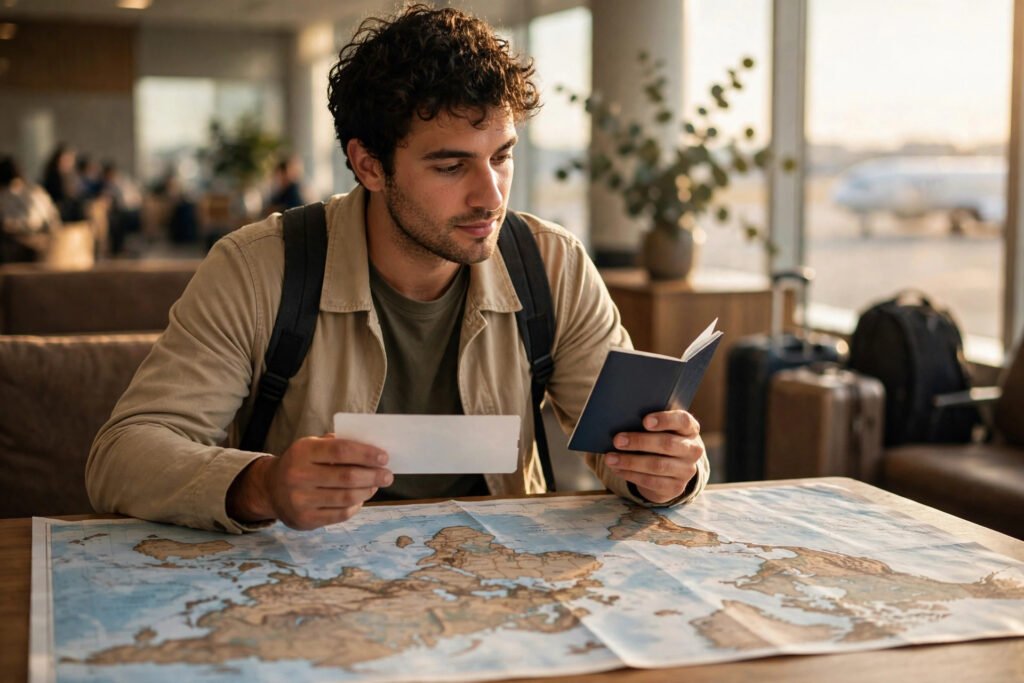

Your first trip abroad is equal parts exciting and intimidating. The paperwork, the bookings, the money questions — a lot when you have never done it before. The good news: the process is genuinely straightforward once you break it into steps. This guide walks you through exactly how to plan an international trip in 2026, in the right order, with realistic timelines so nothing sneaks up on you.
## 1. Start 3–6 Months Out: Passport and Visa Basics
Your passport is the single most important document of the trip, and it takes longer than most people expect. If you do not have one, apply at least three months before travel — four to six months if your destination requires a visa, since embassies often hold your passport during processing.
Check these before you book anything:
– **Validity:** Most countries require your passport to be valid at least six months beyond your travel dates.
– **Blank pages:** Some destinations demand one or two blank pages for stamps and visas.
– **Visa rules:** These vary enormously — some countries stamp you in on arrival, others need an e-visa weeks ahead, a few still require an embassy visit. Always check the country’s official immigration website, and apply early enough to survive processing delays.
Scan your passport and store a copy in your email or cloud storage. If the original is lost or stolen, that copy makes replacement dramatically easier.
## 2. Set a Realistic Budget
Do the honest math before falling in love with a destination. An international trip has six cost buckets: flights, accommodation, food, local transport, activities, and insurance. First-timers typically underestimate food and daily transport, which can add 30–40% on top of flights and hotels.
Pick your total budget first, then work backward. If you have $2,500, check whether your dream destination fits in your travel season — and if not, adjust the destination or dates rather than the budget. Shoulder seasons (just before or after peak) are the classic sweet spot: decent weather and prices that can be half of peak.
For a deeper dive, our budget travel tips show where the biggest savings hide, from fare alerts to cheap-eats strategies that actually work. Track spending in a simple spreadsheet or budgeting app each evening — five minutes a night keeps the budget honest.
## 3. Book Flights at the Right Time
For international routes, the sweet spot is **6 to 10 weeks before departure**. Much earlier and you pay for certainty; the last two weeks and you pay for desperation.
Tactics that consistently save money:
– **Be flexible on dates.** Shifting departure by two or three days can cut fares by 20% or more — use the flexible-dates calendar on any major flight search engine.
– **Check nearby airports.** Flying into a secondary airport and taking a train the last leg often beats the big-hub price.
– **Search in private mode.** Fare algorithms track repeated searches, and prices genuinely creep up when they sense a committed buyer.
– **Compare one-way pairs.** Two one-way tickets from different airlines sometimes undercut a round trip on competitive routes.
For unusual itineraries — island hops or remote regions — some travelers explore on-demand air travel, where charter operators fly schedules commercial airlines do not serve.
## 4. Build an Itinerary That Actually Works
The classic first-timer mistake is five cities in seven days — all transit, no memories. Rule of thumb: no more than one location change every three nights, and at least one completely unscheduled day per week.
Build it in this order:
1. **Landmarks first:** List the 3–5 things you absolutely do not want to miss.
2. **Geography second:** Group sights by neighborhood so each day flows naturally.
3. **Buffer third:** Add jet-lag recovery on day one plus contingency for weather or transport hiccups.
Book limited-availability experiences (guided tours, popular museums, day trips) in advance, but leave some mornings and evenings open. The best travel stories come from unplanned afternoons.
## 5. Choose Where to Stay
Location beats luxury. A modest hotel in the right neighborhood is a far better base than a five-star property an hour from everything. Prioritize a safe area, walking distance to transit, and reviews from the last six months.
Hostels with private rooms are the budget traveler’s secret weapon — hotel privacy at a fraction of the cost. Vacation rentals suit groups or stays longer than a week. Wherever you book, read the cancellation policy before paying, and prefer free cancellation while plans are still fluid.
## 6. Pack Smart
Overpacking is the first-timer’s trademark — you will not wear half of what you pack, and you will carry every kilogram. Pack for a week regardless of trip length, since laundry is available everywhere.
Essentials people forget:
– **Power adapters and voltage converter** for your destination’s plug type (laptops usually handle dual voltage; hair tools often do not).
– **Medications in original packaging**, plus a basic kit: painkillers, anti-diarrheal, bandages, motion-sickness tablets.
– **Digital backups:** passport, visa, insurance, and hotel confirmations saved offline on your phone.
– **A packable day bag** for daily outings while your main bag stays at the hotel.
Bringing a pet on a future trip? Read our complete guide to traveling with your dog ahead of time — airlines and countries have strict pet-import rules that take months to arrange.
## 7. Health, Vaccines, and Travel Insurance
See a travel clinic or your doctor **6–8 weeks before departure** to check required or recommended vaccines — yellow fever, typhoid, and hepatitis A are common for parts of Africa, Asia, and South America.
Then buy real travel insurance: medical emergencies (at least $100,000 cover), trip cancellation, and baggage loss. Read the medical-evacuation clause — it is the difference between a covered emergency and a five-figure air-ambulance bill. If you take prescription medication, confirm it is legal at your destination, since some common prescriptions are controlled substances elsewhere.
## 8. Money Abroad: Cards, Cash, and Currency
Never exchange money at the airport kiosk — the worst rates anywhere. Better options:
1. **A card with no foreign transaction fees** for most purchases.
2. **Local bank-owned ATMs** for small amounts of cash.
3. **A backup card from a different network**, kept separately from your wallet.
Notify your bank of your travel dates so a fraud alert does not freeze your card mid-trip, and keep about $100 USD in cash as an emergency reserve — it is exchangeable almost everywhere.
## 9. Stay Connected: SIM Cards and eSIMs
Check whether your phone is unlocked, then choose:
– **eSIM:** Buy a data plan online before departure — you land with working data in minutes.
– **Local SIM:** Cheaper for longer stays; bring your passport, since many countries require ID for registration.
– **Offline maps:** Download map areas for every city you will visit, so navigation works without data.
Share your itinerary with someone at home and agree on a daily check-in message.
## 10. Stay Safe Without Spoiling the Fun
International travel is overwhelmingly safe, but first-timers are prime pickpocket targets because everything is unfamiliar. Habits that cover most of it:
– Keep valuables in the hotel safe; carry only the day’s essentials.
– Use a crossbody bag in crowds and on public transport.
– Be skeptical of overly friendly strangers offering deals or “free” tours.
– Register with your country’s embassy travel program so officials can reach you in an emergency.
Research common scams at your specific destination beforehand — forewarned is forearmed.
## 11. Arrival Logistics: From Touchdown to Hotel
Arrange your airport-to-hotel transfer **before you land** — know whether you will use the official taxi queue, metro, or ride-hailing pickup. Save the hotel’s address in the local language on your phone and show it to the driver.
Keep your first night’s hotel confirmation saved offline, and resist sightseeing on zero sleep. Check in, rest, and start exploring the next morning.
## Frequently Asked Questions
**How far in advance should I plan my first international trip?**
Three to six months is ideal — time for passport processing, visa applications, vaccinations, and booking flights in the 6–10 week sweet spot.
**How much does a first international trip cost?**
A one-week trip typically runs $1,500–$4,000 per person including flights, mid-range hotels, food, and activities. Shoulder-season travel pulls that down significantly.
**What is the biggest first-timer mistake?**
Over-scheduling. Fewer places, more time, and one unscheduled day per week is the formula that works.
**Do I really need travel insurance?**
Yes. One hospital visit abroad can cost more than the whole trip, and a decent policy runs just 4–8% of your total.
## The Bottom Line
Planning your first international trip feels complex only because every step is unfamiliar. Work through them in order — passport, budget, flights, itinerary, stays, packing, health, money, connectivity, safety, arrival — and each one is small. Start early, book the big things first, and leave room for spontaneity.