
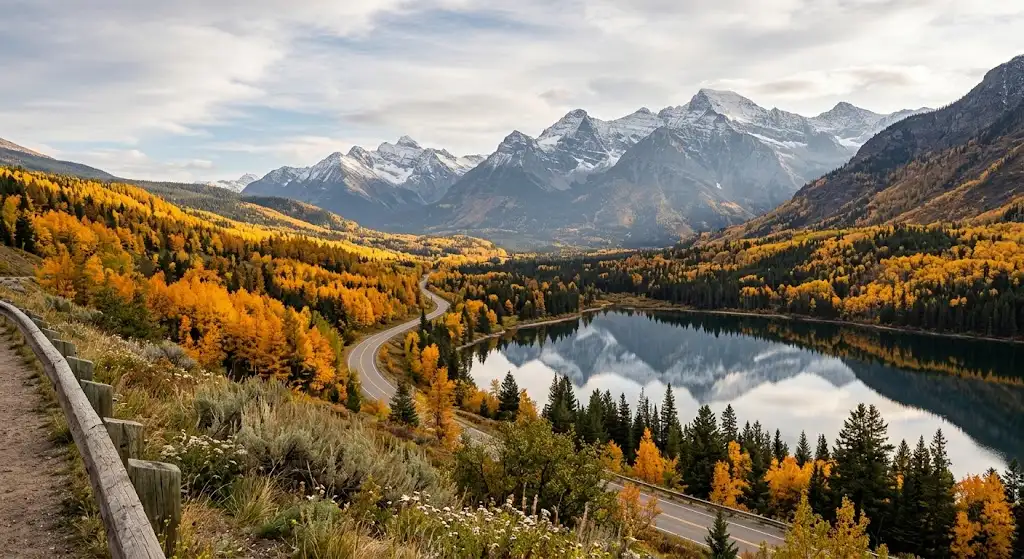

Montana’s official tourism resources identify western larch forests, the Rocky Mountain Front, the Missouri River breaks, Yellowstone, Glacier Country, and several state parks as particularly worthwhile fall destinations. Peak foliage varies by elevation and region, so flexibility is useful when planning an autumn road trip.
Quick Guide to the Best Places to Visit in Montana in Fall
| Destination | Best For | Ideal Fall Experience |
|---|---|---|
| Glacier National Park | Mountains and fall foliage | Scenic drives, hiking and wildlife |
| Yellowstone National Park | Wildlife and dramatic landscapes | Wildlife watching and photography |
| Missoula | City and outdoor experiences | Fall colors, hiking and local culture |
| Flathead Lake | Lake and mountain scenery | Scenic drives and photography |
| Seeley-Swan Valley | Forests and lakes | Fall foliage and scenic drives |
| Bitterroot Valley | Foliage and wildlife | Road trips and outdoor recreation |
| Whitefish | Mountain town atmosphere | Fall getaway near Glacier |
| Bozeman | Outdoor adventure and culture | Hiking, scenery and nearby attractions |
| Great Falls | Fall landscapes and culture | Scenic drives and city attractions |
| Bannack State Park | History and autumn scenery | Ghost town exploration |
| Beaverhead-Deerlodge National Forest | Mountain scenery | Hiking and foliage |
| Pioneer Mountains Scenic Byway | Scenic driving | Mountain colors and road-trip views |
| Sluice Boxes State Park | Hiking and canyon scenery | Autumn trails and photography |
| Makoshika State Park | Badlands and stargazing | Fall landscapes and dark skies |
| Medicine Rocks State Park | Unique rock formations | Photography and stargazing |
1. Glacier National Park
Best for: Fall foliage, mountain scenery, hiking, wildlife and photography
Glacier National Park is arguably one of the most spectacular places to experience autumn in Montana. The combination of rugged peaks, alpine valleys, forests, lakes, and changing foliage creates dramatic scenery throughout the park.
Fall colors begin appearing at different elevations and locations as the season progresses. Lower-elevation forests can remain colorful while higher elevations begin experiencing colder weather and occasional snow.
The official National Park Service notes that fall is generally less crowded, wildlife becomes more active, and trees begin changing color around mid-September. Western larch trees can provide another major burst of yellow later in the season, often around mid-October.
Popular areas for fall scenery include the North Fork, Essex, Bowman Lake, Two Medicine, Lake McDonald, and portions of Going-to-the-Sun Road. However, road and facility conditions can change quickly during autumn, so visitors should check current conditions before traveling.
Things to do in Glacier National Park in fall
- Drive scenic roads while conditions allow.
- Photograph golden forests and mountain peaks.
- Hike lower-elevation trails.
- Watch wildlife from a safe distance.
- Visit Lake McDonald.
- Explore Two Medicine.
- Look for western larch colors later in the season.
For travelers who want more seasonal destination ideas, our guide to winter destinations in Minnesota offers another example of how seasonal conditions can shape a U.S. travel itinerary.
2. Yellowstone National Park
Best for: Wildlife, geothermal features and autumn landscapes
Yellowstone National Park is another outstanding destination for a Montana fall trip. Although the park extends beyond Montana, its northern and western gateways make it an important part of many Montana itineraries.
Autumn brings cooler temperatures, changing vegetation, fewer visitors in many areas, and excellent opportunities for wildlife viewing. Elk activity is particularly notable during the fall rut, while the park’s mountains, rivers, forests, geysers, and hot springs create varied scenery for photographers.
West Yellowstone is one of the most convenient bases for exploring the park from Montana. The town also offers outdoor recreation and services that can complement a fall road trip.
Montana’s tourism authority describes Yellowstone as a year-round destination featuring wildlife, geothermal areas, forests, lakes, mountains, and extensive natural landscapes.
Why visit Yellowstone in fall?
- Look for elk during the fall rut.
- Explore geothermal features.
- Photograph autumn landscapes.
- Enjoy cooler hiking conditions.
- Experience changing scenery with fewer visitors in many areas.
- Use West Yellowstone as a Montana gateway.
3. Missoula
Best for: Fall colors, outdoor recreation, food and local culture
Missoula combines the atmosphere of a lively Montana city with easy access to mountains, rivers, forests, and hiking trails. That combination makes it one of the most versatile places to visit in Montana during fall.
Autumn brings golden foliage to areas around the city, while nearby recreation areas provide opportunities for hiking and scenic drives. The Rattlesnake area is particularly appealing for visitors looking for accessible fall scenery close to town.
Downtown Missoula also provides an alternative to outdoor activities. Visitors can explore galleries, independent shops, coffeehouses, restaurants, breweries, and local cultural attractions.
The city’s official tourism organization highlights fall as a season of crisp mornings, golden landscapes, outdoor recreation, local markets, and cultural experiences.
Things to do in Missoula in fall
- Hike through autumn forests.
- Explore downtown Missoula.
- Walk along the Clark Fork River.
- Visit local galleries and shops.
- Enjoy seasonal food and drinks.
- Take scenic drives around the surrounding valleys.
4. Flathead Lake
Best for: Lake views, mountains, photography and scenic drives
Flathead Lake is one of western Montana’s most recognizable landscapes. In fall, the combination of water, mountain ranges, changing vegetation, and quieter lakeside communities creates a particularly peaceful atmosphere.
The lake is surrounded by the Mission, Salish, Swan, and Whitefish mountain ranges. A road trip around the lake can provide multiple perspectives of the landscape, especially when autumn colors begin appearing in the surrounding valleys.
Bigfork and Polson are useful bases for exploring different portions of the lake. Visitors can combine scenic drives with local restaurants, galleries, hiking, and lakeside viewpoints.
If you enjoy lake and mountain destinations, Montana’s fall scenery can also serve as inspiration for planning other seasonal U.S. trips.
5. Seeley-Swan Valley
Best for: Forests, lakes, larches and peaceful autumn scenery
The Seeley-Swan Valley is one of the strongest choices for travelers who want a quieter fall experience. Located between mountain ranges, the valley contains forests, lakes, scenic roads, and outdoor recreation opportunities.
Golden tamaracks and other changing trees create colorful scenery as autumn progresses. The combination of mountain reflections, forest roads, and lakes makes this area particularly attractive to photographers.
The route can also be incorporated into a broader western Montana road trip that includes Missoula, Flathead Lake, and Glacier National Park.
6. Bitterroot Valley
Best for: Fall foliage, wildlife and scenic road trips
South of Missoula, the Bitterroot Valley stretches between the Bitterroot and Sapphire mountain ranges. The valley is a particularly good choice for travelers who enjoy road trips rather than spending an entire vacation inside one attraction.
U.S. Highway 93 provides access to communities including Hamilton, Stevensville, and Victor. In fall, the surrounding mountains and cottonwood-filled areas take on rich seasonal colors.
Lee Metcalf National Wildlife Refuge is another interesting stop for wildlife enthusiasts. Migrating birds and other wildlife can add another dimension to an autumn drive through the valley.
For travelers who enjoy walking and cycling, the Bitterroot Trail provides another way to experience the region.
7. Whitefish
Best for: Mountain-town atmosphere and access to Glacier National Park
Whitefish is a popular base for exploring northwestern Montana and Glacier National Park. During fall, the town becomes a comfortable place to return to after a day of hiking or scenic driving.
The surrounding mountains provide dramatic autumn scenery, while the downtown area offers restaurants, shops, galleries, and places to relax.
Whitefish is especially convenient for travelers who want a balance between outdoor adventure and comfortable accommodations. Its location also makes it easy to combine a Montana fall vacation with Glacier National Park.
8. Bozeman
Best for: Outdoor recreation, culture and access to southwest Montana
Bozeman is another excellent base for a fall trip. The city has a strong outdoor culture and provides access to mountain landscapes, hiking trails, museums, restaurants, and nearby communities.
Fall is a good season for exploring trails around the Gallatin Valley before winter conditions become more widespread at higher elevations.
Bozeman can also serve as a starting point for trips toward Yellowstone National Park, making it useful for travelers who want to combine city amenities with national park experiences.
9. Great Falls
Best for: River landscapes, fall colors, culture and scenic drives
Great Falls provides a different perspective on Montana. Instead of focusing entirely on mountain resorts, visitors can experience river scenery, museums, trails, historic sites, and surrounding landscapes.
Fall itineraries in the Great Falls area can include scenic drives, hiking, cycling, cultural attractions, and outdoor viewpoints. The region also provides access to nearby landscapes such as the Little Belt Mountains.
The city’s visitor resources highlight fall itineraries that combine foliage viewing, museums, hiking, cycling, dining, and cultural attractions.
10. Bannack State Park
Best for: Montana history, photography and autumn scenery
Bannack State Park preserves one of Montana’s best-known historic ghost towns. The abandoned buildings and surrounding landscape create a fascinating setting for an autumn visit.
Fall adds another layer to the experience as vegetation around the historic buildings changes color. The combination of Old West history and seasonal scenery makes Bannack particularly appealing to photographers and history enthusiasts.
Because the park is located in southwestern Montana, it can be incorporated into a broader road trip through the Beaverhead region.
11. Beaverhead-Deerlodge National Forest
Best for: Mountain scenery, hiking and fall foliage
The Beaverhead-Deerlodge National Forest covers a large area of southwestern Montana and offers numerous opportunities to experience the state’s forests and mountains during autumn.
Visitors can find hiking routes, scenic roads, wildlife habitats, mountain viewpoints, and colorful forests. Because conditions vary significantly across elevations, it is important to check weather and trail conditions before heading into remote areas.
This is an especially good choice for travelers who prefer less-developed outdoor destinations to busy tourist attractions.
12. Pioneer Mountains Scenic Byway
Best for: Autumn road trips and mountain scenery
If your ideal Montana vacation is a scenic drive, the Pioneer Mountains Scenic Byway deserves a place on your itinerary.
The route passes through mountain landscapes where fall colors can contrast beautifully with rocky peaks and open valleys. It is best experienced slowly, with time to stop at viewpoints and explore suitable trails along the way.
Montana’s official fall tourism guidance specifically identifies the Pioneer Mountains Scenic Byway as a southwest Montana location worth considering for autumn foliage.
13. Sluice Boxes State Park
Best for: Hiking, canyon scenery and photography
Sluice Boxes State Park is located near Belt in central Montana and provides a different kind of fall landscape. The park features canyon scenery, rugged terrain, waterways, and hiking opportunities.
Autumn can be an attractive time to explore the area because cooler weather makes outdoor activities more comfortable than during the hottest part of summer.
As with other Montana outdoor destinations, visitors should check trail and weather conditions before setting out, particularly later in the season when snow can arrive quickly.
14. Makoshika State Park
Best for: Badlands scenery, fossils and dark skies
Makoshika State Park offers a completely different visual experience from Montana’s forested mountain regions. The park’s badlands landscapes, unusual rock formations, and wide-open views make it one of the state’s most distinctive destinations.
Fall is a good time to explore the park when temperatures are more comfortable for hiking and photography. The shorter days also create opportunities for stargazing after sunset.
Montana’s official tourism resources identify Makoshika as a location with little light pollution and strong opportunities for experiencing the night sky.
15. Medicine Rocks State Park
Best for: Unique landscapes, photography and stargazing
Medicine Rocks State Park in southeastern Montana is known for its unusual sandstone formations. The landscape looks very different from the alpine scenery associated with Glacier and Yellowstone, making it an excellent addition to a Montana road trip.
Fall provides comfortable conditions for exploring the formations during the day, while the area’s limited light pollution creates excellent opportunities for viewing the night sky.
For travelers interested in unusual destinations, Medicine Rocks is a good reminder that Montana’s autumn landscapes extend well beyond the state’s famous mountain parks.
Best Places to See Fall Colors in Montana
Montana’s fall foliage does not peak everywhere at the same time. Elevation, latitude, weather, and tree species all influence when colors appear.
Western larch is particularly important to Montana’s autumn landscape. Unlike most evergreen conifers, western larch is deciduous and turns bright yellow before losing its needles.
Some of the strongest areas for fall color include:
- Glacier National Park
- Seeley-Swan Valley
- Bitterroot Valley
- Missoula and surrounding recreation areas
- Flathead Valley
- Pioneer Mountains
- Beaverhead-Deerlodge National Forest
- Great Falls and central Montana
- Yellowstone Country
Montana’s tourism department has identified fall foliage locations across northwest, southwest, central, and eastern Montana, including Jewel Basin, Seeley Lake, Bison Range, Bannack State Park, Pioneer Mountains Scenic Byway, Sluice Boxes State Park, and several eastern Montana wildlife areas.
When Is the Best Time to Visit Montana in Fall?
There is no single statewide peak foliage date because Montana covers a large geographic area with major differences in elevation.
In many western Montana locations, fall colors begin appearing around mid-September. Higher elevations can change earlier, while western larch displays may continue into October.
Glacier National Park’s official guidance notes that trees begin changing color around mid-September and that western larch can turn yellow around mid-October. Western Montana tourism guidance generally identifies mid-September through early October as a strong period for the region’s golden season.
For the best experience, check current local foliage conditions shortly before your trip rather than relying on a fixed calendar date.
Best Montana Fall Activities
Scenic drives
Fall is one of the best seasons for a Montana road trip. Cooler temperatures, changing forests, mountain views, and fewer visitors in many areas make scenic driving especially enjoyable.
Wildlife watching
Autumn is an excellent time for wildlife viewing. Elk activity becomes particularly noticeable during the rut, while many animals prepare for winter.
Always observe wildlife from a safe distance and never approach, feed, or attempt to interact with wild animals.
Hiking
Cooler temperatures can make hiking more comfortable, especially at lower elevations. However, Montana weather can change quickly in fall, and snow may arrive at higher elevations earlier than expected.
Photography
Montana’s combination of golden foliage, mountains, lakes, wildlife, historic buildings, and open landscapes makes autumn particularly attractive for photographers.
Stargazing
As daylight becomes shorter, fall also creates more opportunities for nighttime photography and stargazing. Makoshika State Park and Medicine Rocks State Park are particularly interesting options for travelers seeking dark skies.
Hot springs
Cool autumn temperatures make Montana’s hot springs especially appealing. A warm soak after a day of hiking or driving can be a memorable part of a fall itinerary.
Montana Fall Road Trip Ideas
Western Montana fall road trip
Start in Missoula and travel north toward Flathead Lake, Whitefish, and Glacier National Park. This route combines city experiences, mountain scenery, lakes, wildlife, and some of the state’s most impressive fall foliage.
Southwestern Montana fall road trip
Begin around Bozeman and continue toward Yellowstone, the Pioneer Mountains, Bannack, and the Beaverhead-Deerlodge region. This route works well for travelers interested in wildlife, history, mountain scenery, and scenic drives.
Central Montana fall road trip
Great Falls provides a useful base for exploring central Montana. Combine city attractions with scenic drives toward the Little Belt Mountains and destinations such as Sluice Boxes State Park.
Eastern Montana fall road trip
Travelers who want a different side of the state can explore the badlands and open landscapes around Makoshika State Park and Medicine Rocks State Park.
Montana in Fall vs. Other Seasons
Fall offers a different experience from summer, winter, and spring in Montana. Summer generally provides the broadest access to high-elevation trails and outdoor services, while winter transforms the state into a destination for snow sports and cold-weather recreation.
If you are planning multiple seasonal trips across the United States, our guide to places to visit in Minnesota during winter provides another seasonal travel comparison.
Travelers planning summer mountain vacations may also enjoy our guide to unique places to visit in Colorado in summer.
For another fall-focused destination, you can compare Montana’s autumn landscapes with the recommendations in our guide to the best places to visit in Canada in fall.
Tips for Visiting Montana in Fall
Pack for changing weather
Montana can experience warm afternoons, cold mornings, wind, rain, and snow during the same trip. Layers are essential.
Check road conditions
Mountain roads can become difficult or close temporarily as winter approaches. Always check current road conditions before driving into higher elevations.
Book accommodations strategically
Some services and lodging options in national parks and mountain communities become limited as the season progresses. Booking ahead is particularly important if you are traveling around popular destinations.
Do not depend entirely on peak foliage predictions
Weather can shift the timing of fall color. Use local foliage reports as a guide rather than treating a predicted date as guaranteed.
Prepare for shorter days
Daylight decreases quickly through September and October. Plan hikes and scenic drives accordingly and avoid starting remote activities too late.
Respect wildlife
Fall is an active wildlife season. Carry binoculars or a long camera lens instead of approaching animals. Follow park and wildlife-management guidance at all times.
Frequently Asked Questions
What is the prettiest place in Montana in the fall?
Glacier National Park is one of the strongest choices because it combines colorful forests, alpine mountains, lakes, and wildlife. However, destinations such as the Bitterroot Valley, Seeley-Swan Valley, and Yellowstone also offer exceptional autumn scenery.
What month is best for fall colors in Montana?
September and October are generally the most useful months for fall colors, but exact timing varies by region and elevation. Western Montana can begin changing around mid-September, while western larch can provide bright yellow color into mid-October.
Is Montana worth visiting in October?
Yes. October can be an excellent time for fall scenery, wildlife watching, scenic drives, and fewer crowds. However, visitors should be prepared for colder weather, shorter days, and possible snow, especially at higher elevations.
Is Glacier National Park open in fall?
Glacier National Park is open year-round, but roads, facilities, lodging, and services vary by season. The National Park Service advises fall visitors to plan ahead and be self-sufficient because services begin closing as winter approaches.
Where can I see larches in Montana in fall?
Western larch can be found across parts of western Montana, including areas around Glacier Country and the southern boundary of Glacier National Park. Their needles turn brilliant yellow in autumn before falling.
Places to Visit in Montana in Fall: Final Thoughts
The best places to visit in Montana in fall offer much more than colorful leaves. Autumn brings together mountain scenery, wildlife, scenic drives, hiking, historic towns, lakes, badlands, dark skies, and quieter outdoor experiences.
Glacier National Park is an excellent choice for dramatic mountain scenery and fall foliage, while Yellowstone is ideal for wildlife and geothermal landscapes. Missoula combines outdoor recreation with city culture, while Flathead Lake and the Seeley-Swan Valley are excellent for peaceful scenic drives.
For history and unusual landscapes, consider Bannack State Park, Makoshika State Park, and Medicine Rocks State Park. If you prefer a longer road trip, the Bitterroot Valley, Pioneer Mountains Scenic Byway, and Beaverhead-Deerlodge National Forest provide plenty of opportunities to explore.
Montana’s fall season rewards travelers who leave room for changing conditions. Check local road and weather information, plan around daylight, pack layers, and be prepared for an early taste of winter at higher elevations. With the right preparation, autumn can be one of the most memorable times of year to explore Big Sky Country.