

Looking for the top places to visit in Oslo Norway? Norway’s capital is a fascinating mix of historic landmarks, modern architecture, world-class museums, waterfront neighborhoods, sculpture parks, forests, and outdoor experiences. Oslo is compact enough to explore comfortably while still offering plenty of attractions for a multi-day trip.
Best Places to Visit in Oslo Norway
Oslo has a diverse collection of attractions spread across the city. The following places are among the best options for first-time visitors and travelers who want to experience different sides of the Norwegian capital.
1. Oslo Opera House
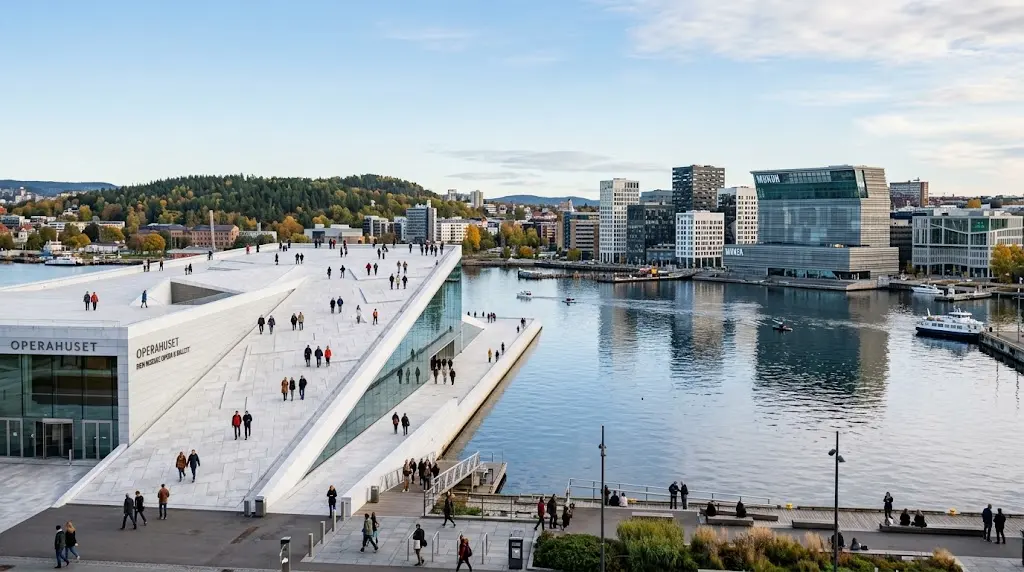
The Oslo Opera House is one of the most recognizable landmarks in Norway’s capital. Its distinctive white, sloping design appears to rise directly from the waterfront, creating one of the city’s most photographed architectural scenes.
One of the best things about visiting the Opera House is that you do not need to attend a performance to appreciate the building. Visitors can walk across its accessible roof and enjoy views over the harbor, Oslo’s modern skyline, and the surrounding waterfront.
The Opera House is located in the Bjørvika area, making it easy to combine with other nearby attractions such as MUNCH and Deichman Bjørvika.
2. Vigeland Sculpture Park
Vigeland Sculpture Park is one of the most famous places to visit in Oslo and a must-see for first-time travelers. Located within Frogner Park, the sculpture area contains hundreds of works by Norwegian artist Gustav Vigeland.
The sculptures explore themes such as relationships, childhood, aging, emotions, and the different stages of human life. The Monolith and surrounding sculptures are particularly impressive.
Unlike a traditional indoor museum, the park allows visitors to experience art while walking through an expansive outdoor setting. It is also an excellent place for photography.
If you are interested in combining Oslo sightseeing with other destinations around the world, you can also explore our guide to the world’s most amazing places to visit.
3. MUNCH Museum
The MUNCH Museum is one of Oslo’s leading cultural attractions and an essential stop for art lovers. It is dedicated to Norwegian artist Edvard Munch, best known internationally for works such as The Scream.
The museum’s modern waterfront building is located in Bjørvika, close to the Oslo Opera House. This makes it easy to visit both attractions during the same sightseeing route.
Even travelers who are not dedicated art enthusiasts can find the museum worthwhile because it provides insight into one of Norway’s most influential artists and the country’s artistic heritage.
4. Akershus Fortress
Akershus Fortress is one of the most important historic places to visit in Oslo. The medieval fortress overlooks the harbor and has played a major role in the history and defense of the city.
Visitors can explore its historic surroundings, courtyards, walls, and viewpoints while enjoying views across the Oslo waterfront.
The fortress is particularly useful for travelers who want to balance Oslo’s modern architecture with a sense of its medieval past.
5. Holmenkollen Ski Museum and Ski Jump
Holmenkollen is one of Oslo’s most famous landmarks and a great destination for anyone interested in skiing, sports, or panoramic views.
The massive ski jump dominates the surrounding landscape, while the ski museum explores the long history of skiing in Norway. The elevated location also provides impressive views across Oslo and the surrounding forests.
During winter, Holmenkollen becomes especially appealing because the surrounding landscape can take on a classic Scandinavian snowy appearance.
Travelers visiting Norway during the colder months can also compare Oslo with other seasonal destinations featured in our guide to winter travel destinations.
6. The National Museum
The National Museum is one of the best places in Oslo for travelers interested in art, architecture, and design. Its extensive collection covers different periods and artistic styles, providing a broad introduction to Norwegian and international cultural heritage.
The museum is particularly useful when weather conditions make outdoor sightseeing less comfortable.
If you enjoy cultural travel, Oslo can easily become part of a wider European itinerary. You may also want to explore our guide to the best places to visit in Europe.
7. Fram Museum
The Fram Museum is located on Bygdøy and focuses on Norway’s history of polar exploration. Its centerpiece is the historic Fram ship, which visitors can explore while learning about some of the country’s most famous expeditions.
The museum provides an excellent introduction to the extreme conditions faced by explorers in Arctic and Antarctic environments.
Bygdøy is especially convenient for travelers because several museums are located in the same general area. This makes it possible to create an entire cultural sightseeing day without constantly crossing the city.
8. Norsk Folkemuseum
Norsk Folkemuseum, also known as the Norwegian Museum of Cultural History, offers visitors a different perspective on Norway.
Instead of focusing only on paintings or famous historical figures, the museum explores Norwegian daily life, traditions, architecture, and culture through historic buildings, interiors, artifacts, and exhibitions.
The open-air character of the museum makes it particularly interesting for travelers who want something different from conventional galleries.
9. Oslo City Hall
Oslo City Hall is another important landmark in the city center. Its distinctive architecture and waterfront location make it easy to include in a walking itinerary.
The building is closely associated with Oslo’s civic identity and international reputation. The surrounding area also provides convenient access to other central attractions, restaurants, waterfront areas, and historic streets.
10. Aker Brygge
Aker Brygge is one of Oslo’s most popular waterfront districts. The former industrial area has been transformed into a lively destination featuring restaurants, shops, public spaces, modern buildings, and harbor views.
You do not need a formal attraction ticket to enjoy the atmosphere. Walking along the waterfront, watching boats, taking photographs, or stopping for a meal can easily become part of a relaxed Oslo itinerary.
Aker Brygge is especially enjoyable during the warmer months when visitors can spend more time outdoors.
11. Oslofjord
The Oslofjord is an important part of the city’s identity. Water surrounds many of Oslo’s most recognizable neighborhoods, creating opportunities for waterfront walks, sightseeing cruises, island visits, and photography.
If you have additional time, consider exploring parts of the fjord by boat. Travelers on a tighter budget can simply enjoy the public waterfront areas and harbor views.
For people building a larger international travel bucket list, our guide to the top places to visit in the world provides additional destination inspiration.
12. Ekebergparken Sculpture Park
Ekebergparken is an excellent choice for travelers who enjoy combining art with nature. The sculpture park contains works displayed throughout a green hillside environment overlooking Oslo.
The elevated setting provides attractive views toward the city and Oslofjord, making this one of the better locations for photographers.
Because the sculptures are integrated into the landscape, the experience feels very different from visiting an indoor museum.
13. Oslo Botanical Garden
The Oslo Botanical Garden is a peaceful destination in the Tøyen area. It offers landscaped gardens, plant collections, walking paths, and green spaces where visitors can slow down after exploring the city’s busier attractions.
Spring and summer are particularly enjoyable seasons for visiting the gardens, although the surrounding neighborhood can be explored throughout the year.
14. Deichman Bjørvika
Deichman Bjørvika is Oslo’s main public library and one of the city’s most interesting examples of contemporary public architecture.
The building is located near the Opera House and MUNCH, making it easy to add to a Bjørvika walking route.
It demonstrates how Oslo combines culture, architecture, public spaces, and everyday city life rather than keeping attractions isolated from local communities.
15. Akerselva River
The Akerselva River offers one of the best ways to experience Oslo’s greener side. The river runs through the city and connects urban neighborhoods with parks, historic buildings, waterfalls, and natural areas.
Visitors do not necessarily need to complete the entire route. You can choose a shorter section based on your schedule and enjoy a peaceful walk away from busy tourist streets.
The river is especially attractive during spring, summer, and autumn when the surrounding vegetation adds color to the landscape.
16. Royal Palace
The Royal Palace stands at the end of Karl Johans gate and is one of Oslo’s most recognizable historic landmarks.
The surrounding gardens and public areas make it a worthwhile stop even if you do not take an interior tour. Its central location also makes it easy to combine with Oslo Cathedral, the National Theatre, Parliament, and other attractions along Karl Johans gate.
Visitors interested in European city sightseeing can use Oslo as one stop within a broader itinerary featuring destinations such as Kuala Lumpur or other major international cities.
17. Nobel Peace Center
The Nobel Peace Center introduces visitors to the history of the Nobel Peace Prize and the people and ideas associated with it.
Its central location near the waterfront means you can easily combine it with Oslo City Hall, Aker Brygge, and other attractions.
This is an especially good choice for travelers interested in history, international affairs, social movements, and influential personalities.
18. Natural History Museum
The Natural History Museum provides a different type of experience from Oslo’s art museums. It explores natural science, biodiversity, geology, and the natural world.
It can be a particularly useful attraction for families because younger visitors can learn about science and nature through exhibits that are different from traditional historical museums.
If you are traveling with children, you may also want to explore our guide to family-friendly travel attractions for ideas when planning future trips.
19. Tjuvholmen
Tjuvholmen is a modern waterfront district known for contemporary architecture, public spaces, restaurants, art, and harbor views.
It works particularly well as an extension of an Aker Brygge visit because the two areas are connected by the waterfront.
Travelers interested in photography can find plenty of modern architectural details and waterfront compositions here.
20. Frogner Park
Frogner Park is one of Oslo’s most enjoyable green spaces and is home to Vigeland Sculpture Park.
You can combine a walk through the park with the sculpture installations, making it possible to experience one of Oslo’s most famous cultural attractions while also enjoying an expansive outdoor environment.
Best Places to Visit in Oslo for First-Time Visitors
If you only have a short amount of time in Oslo, focus on attractions that represent different sides of the city.
- For history: Akershus Fortress and the Royal Palace
- For art: MUNCH and Vigeland Sculpture Park
- For architecture: Oslo Opera House and Deichman Bjørvika
- For Norwegian culture: Norsk Folkemuseum
- For polar history: Fram Museum
- For panoramic views: Holmenkollen
- For waterfront experiences: Aker Brygge and Oslofjord
- For outdoor walks: Akerselva and Frogner Park
Best Free Places to Visit in Oslo
Oslo does not have to be an expensive destination. Several outdoor experiences can be enjoyed without purchasing a major attraction ticket.
Walking around the Opera House, exploring public waterfront areas, spending time in parks, walking along parts of Akerselva, and enjoying the atmosphere around Oslo’s central neighborhoods can all be incorporated into a budget-friendly itinerary.
If you enjoy finding inexpensive travel experiences, you can also explore our guide to places to visit in the UAE for free for another destination-focused budget guide.
Best Places to Visit in Oslo in Summer
Summer is one of the best seasons for exploring Oslo because longer daylight hours make it easier to combine indoor attractions with outdoor sightseeing.
Start with the Opera House and MUNCH, then continue toward Aker Brygge and the waterfront. Another day can be dedicated to Bygdøy museums followed by an outdoor walk.
Summer is also a good time to explore Oslo’s parks, gardens, cycling routes, and surrounding natural areas.
Best Places to Visit in Oslo in Winter
Winter gives Oslo a completely different atmosphere. Snow-covered landscapes, shorter daylight hours, and skiing opportunities make the city particularly appealing to travelers looking for a Nordic winter experience.
Holmenkollen is one of the obvious winter highlights, while museums such as MUNCH, the National Museum, Fram Museum, and the Natural History Museum provide warm indoor alternatives.
If you enjoy seasonal travel, you may also want to explore our guide to winter destinations and experiences.
Best Places to Visit in Oslo for Families
Families can find plenty to do in Oslo without relying entirely on traditional sightseeing.
The Fram Museum is an excellent educational experience, while the Natural History Museum offers opportunities to learn about science and nature. Vigeland Sculpture Park and Frogner Park provide outdoor space for walking and relaxing.
Holmenkollen can also be exciting for children interested in skiing and sports.
If family travel is your priority, you can compare these experiences with other family destinations using our guide to places to visit with kids.
Best Places to Visit in Oslo at Night
Oslo becomes especially atmospheric in the evening. The waterfront, modern architecture, restaurants, public squares, and illuminated city streets provide plenty of opportunities for an evening walk.
Bjørvika and Aker Brygge are particularly attractive after sunset because of their waterfront settings and modern architecture.
If you enjoy evening sightseeing, you can also explore our guide to places to visit in Dubai at night for another city-night travel comparison.
How Many Days Do You Need in Oslo?
A three-day Oslo trip provides a comfortable starting point for first-time visitors.
One Day in Oslo
Focus on central attractions such as Akershus Fortress, Oslo City Hall, Aker Brygge, the Royal Palace, and the Opera House.
Two Days in Oslo
Add MUNCH, the National Museum, Vigeland Sculpture Park, or another major cultural attraction.
Three Days in Oslo
Use your third day for Bygdøy museums, Holmenkollen, the Oslofjord, or a longer outdoor experience.
Four or More Days
With additional time, explore Oslo’s neighborhoods, parks, hiking areas, islands, and nearby destinations.
How to Get Around Oslo
Oslo is relatively easy to explore because many attractions are located within walkable areas of the city center. Public transportation can then be used for attractions farther away.
A good strategy is to organize your sightseeing geographically. For example, MUNCH, the Opera House, and Deichman Bjørvika can be visited together, while Bygdøy museums can form a separate day trip.
Walking between attractions also gives you the opportunity to experience Oslo’s neighborhoods instead of seeing only individual tourist sites.
Best Time to Visit Oslo
The best time to visit depends on the type of experience you want.
- Summer: Ideal for long days, parks, waterfront walks, and outdoor activities.
- Spring: Excellent for gardens, walking, and gradually warmer weather.
- Autumn: Attractive for fall colors, museums, and quieter sightseeing.
- Winter: Best for snow, skiing, winter scenery, and a classic Nordic atmosphere.
Tips for Visiting Oslo
- Group attractions by neighborhood to reduce travel time.
- Wear comfortable walking shoes.
- Check attraction opening hours before visiting.
- Allow time for outdoor areas instead of filling every hour with museums.
- Check the weather before planning long outdoor activities.
- Compare attraction tickets if you plan to visit several museums.
- Consider public transportation for attractions outside central Oslo.
- Keep some flexibility in your itinerary for weather changes.
Oslo as Part of a Larger Norway Trip
Oslo works particularly well as the beginning or end of a broader Norway itinerary. You can spend a few days exploring the capital before continuing toward fjords, mountains, coastal towns, or other Norwegian destinations.
Travelers creating a larger international itinerary can also compare Oslo with other major destinations in our collection of amazing places around the world.
Final Thoughts
The top places to visit in Oslo Norway offer an impressive combination of culture, history, architecture, art, nature, and waterfront experiences.
You can explore medieval history at Akershus Fortress, admire modern architecture at the Opera House, discover Edvard Munch’s work at MUNCH, see Norwegian sculpture at Vigeland Sculpture Park, learn about polar exploration at the Fram Museum, and enjoy panoramic views from Holmenkollen.
The best Oslo itinerary is not necessarily the one with the most attractions. Instead, combine several major landmarks with parks, waterfront walks, local neighborhoods, and outdoor experiences. That balance allows you to experience what makes Oslo different from other European capitals.
Whether you have one day, a long weekend, or an entire week, Oslo offers enough variety to make your Norway trip memorable.
Frequently Asked Questions
What are the top places to visit in Oslo Norway?
Some of the best places include the Oslo Opera House, Vigeland Sculpture Park, MUNCH, Akershus Fortress, Holmenkollen, the National Museum, Fram Museum, Norsk Folkemuseum, Oslo City Hall, Aker Brygge, and the Oslofjord.
How many days are enough for Oslo?
Three days is a good starting point for first-time visitors. It gives you enough time to explore major landmarks, museums, waterfront areas, and at least one outdoor attraction without rushing through the city.
What is the most famous attraction in Oslo?
There is no single attraction that defines Oslo, but the Opera House, Vigeland Sculpture Park, MUNCH, Akershus Fortress, and Holmenkollen are among the city’s most recognizable landmarks.
What can you do in Oslo for free?
Visitors can enjoy several outdoor experiences without paying an attraction admission fee, including public waterfront walks, parks, parts of the Akerselva route, and exploring the exterior of major architectural landmarks.
Is Oslo worth visiting?
Yes. Oslo is particularly appealing if you want a destination that combines museums, architecture, historic attractions, green spaces, waterfront scenery, and easy access to nature.
What is the best time to visit Oslo?
Summer is excellent for outdoor activities and long daylight hours, while winter is ideal for snow and skiing. Spring and autumn offer comfortable opportunities for sightseeing and seasonal scenery.